CONNECT for Health Act of 2025
Analysis under review: This bill has generated analysis that may be too generic or incomplete. Clause-level evidence remains available below.
Summary
What This Bill Does
The CONNECT for Health Act of 2025 makes permanent the expanded Medicare telehealth coverage that was temporarily authorized during the COVID-19 pandemic. It removes geographic restrictions that previously limited telehealth to rural areas, allowing any Medicare beneficiary to receive telehealth services from their home regardless of location.
Who Benefits and How
Medicare beneficiaries gain permanent access to telehealth services from home, eliminating travel requirements and expanding healthcare access. Healthcare providers and telehealth companies benefit from a stable, expanded market as the bill removes practitioner restrictions and allows federally qualified health centers, rural health clinics, and Native American health facilities to serve as telehealth sites with Medicare reimbursement. Technology companies providing remote patient monitoring devices benefit from a safe harbor protecting them from anti-kickback laws when providing devices to patients.
Who Bears the Burden and How
The HHS Inspector General receives new oversight responsibilities and must conduct audits and investigations of telehealth services. Physicians and practitioners with outlier billing patterns face notification requirements and potential scrutiny. CMS must develop new quality measures, publish quarterly telehealth utilization data, and create educational resources, creating administrative burdens.
Key Provisions
- Permanently removes geographic restrictions for Medicare telehealth services effective October 1, 2025
- Repeals the 6-month in-person visit requirement for telemental health services
- Allows FQHCs, rural health clinics, and Native American health facilities to serve as telehealth originating sites
- Creates safe harbor for providers giving technology devices to patients for telehealth
- Authorizes $3 million annually for HHS IG telehealth oversight (FY2026-2030)
Evidence Chain:
This summary is generated from the full bill text using AI analysis. Expand "Detailed Analysis" below for identified beneficiaries/burden bearers.
At a Glance
What This Bill Does
Permanently expands Medicare telehealth access by removing geographic restrictions, expanding eligible practitioners and facilities, and establishing quality and oversight frameworks
Key Policy Areas
Healthcare, Medicare, Telehealth, Rural Health, Native American Health
Primary Purpose
Permanently expands Medicare telehealth access by removing geographic restrictions, expanding eligible practitioners and facilities, and establishing quality and oversight frameworks
Policy Domains
Title I - Expanding Telehealth Coverage Under Medicare
Identified Gains
Contextual inference, no direct clause citation- Medicare beneficiaries
- Healthcare providers
- Telehealth companies
- Federally Qualified Health Centers
- Rural health clinics
- Native American health facilities
Contextual inference, no direct clause citation
Identified Costs
Contextual inference, no direct clause citation- CMS (Centers for Medicare & Medicaid Services)
Contextual inference, no direct clause citation
Title II - Telehealth Oversight and Integrity
Identified Gains
Contextual inference, no direct clause citation- Healthcare technology companies
- Remote patient monitoring providers
Contextual inference, no direct clause citation
Identified Costs
Contextual inference, no direct clause citation- HHS Inspector General
- Physicians with outlier billing patterns
Contextual inference, no direct clause citation
Title III - Beneficiary and Provider Engagement
Identified Gains
Contextual inference, no direct clause citation- Underserved patient populations
- Individuals with disabilities
- Individuals with limited English proficiency
Contextual inference, no direct clause citation
Identified Costs
Contextual inference, no direct clause citation- CMS
- Healthcare providers
Contextual inference, no direct clause citation
Sponsors
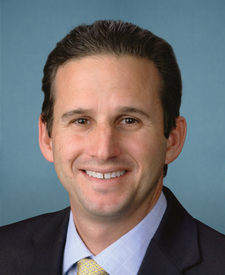
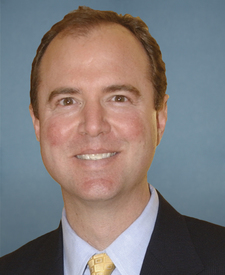



Legislative Progress
In CommitteeMr. Schatz (for himself, Mr. Wicker, Mr. Warner, Mrs. Hyde-Smith, …
Read twice and referred to the Committee on Finance.
Introduced in Senate
Stakeholder Effects
cui bono?How this legislation distributes effects. Mention counts reflect frequency, not effect magnitude.
Medicare beneficiaries, Medicare beneficiaries during emergencies, Medicare beneficiaries receiving hospice care
CMS, Comptroller General / GAO, HHS
Medicare program faces effects in multiple directions
Positive-direction: HHS Office of Inspector General
Negative-direction: CMS, Comptroller General / GAO, HHS, HHS Secretary and CMS
Healthcare quality measurement organizations, Healthcare technology device manufacturers, Indian Health Service facilities
Healthcare professionals providing telehealth, Healthcare providers billing for telehealth, Healthcare providers during emergencies
Positive-direction: Healthcare professionals providing telehealth, Healthcare providers during emergencies, Healthcare providers furnishing telehealth, Healthcare providers offering telehealth, Non-physician healthcare practitioners, Nurse practitioners and physician assistants
Negative-direction: Healthcare providers billing for telehealth, Physicians with high-volume telehealth billing
Remote patient monitoring companies, Telehealth service providers, Telemental health service companies
Telehealth service providers faces effects in multiple directions
Bill Structure & Actor Mappings
Who is "The Secretary" in each section?
- "the_secretary"
- → Secretary of Health and Human Services
- "the_secretary"
- → Secretary of Health and Human Services
- "the_secretary"
- → Secretary of Health and Human Services
Key Definitions
Terms defined in this bill
Has the meaning given that term in section 1834(m)(4)(F) of the Social Security Act
Have the meaning given those terms for purposes of section 1834(m) of the Social Security Act
We use a combination of our own taxonomy and classification in addition to large language models to assess meaning and potential beneficiaries. High confidence means strong textual evidence. Always verify with the original bill text.
Learn more about our methodology