Rural Housing Service Reform Act of 2025
Analysis under review: This bill has generated analysis that may be too generic or incomplete. Clause-level evidence remains available below.
Summary
What This Bill Does
The bill requires the Secretary of Agriculture to study and report on the Section 521 rural housing loan subsidy program, including total subsidies provided, recapture rates, and costs of recapturing subsidies, authorizes appropriations for USDA Rural Housing Service staffing increases and IT upgrades for fiscal years 2026-2030, and authorizes appropriations for FY 2026 for technology improvements at USDA Rural Housing Service, with a 5-year availability period. It relies on grants, definition changes, reporting requirements, and appropriations. The main policy areas are Finance, Rural Housing, Affordable Housing, and Social Welfare.
Who Benefits and How
USDA Rural Housing Service could gain revenue opportunities, Rural housing voucher recipients could gain revenue opportunities, and Owners of rural multifamily housing (Section 514/515/516 properties) could gain revenue opportunities.
Who Bears the Burden and How
USDA Rural Housing Service would take on compliance duties and Government Accountability Office would take on compliance duties.
Key Provisions
- Requires the Secretary of Agriculture to study and report on the Section 521 rural housing loan subsidy program, including total subsidies provided, recapture rates, and costs of recapturing subsidies.
- Authorizes appropriations for USDA Rural Housing Service staffing increases and IT upgrades for fiscal years 2026-2030.
- Authorizes appropriations for FY 2026 for technology improvements at USDA Rural Housing Service, with a 5-year availability period.
- Establishes a permanent housing preservation and revitalization program for rural multifamily housing projects financed under Sections 514, 515, or 516.
- Creates detailed statutory text establishing the housing preservation program with loan restructuring authority and technical assistance grants.
Evidence Chain:
This summary is generated from the full bill text using AI analysis. Expand "Detailed Analysis" below for identified beneficiaries/burden bearers with clause-level evidence links.
At a Glance
What This Bill Does
The bill requires the Secretary of Agriculture to study and report on the Section 521 rural housing loan subsidy program, including total subsidies provided, recapture rates, and costs of recapturing subsidies, authorizes appropriations for USDA Rural Housing Service staffing increases and IT upgrades for fiscal years 2026-2030, and authorizes appropriations for FY 2026 for technology improvements at USDA Rural Housing Service, with a 5-year availability period.
Key Policy Areas
Finance, Rural Housing, Affordable Housing, Social Welfare
Primary Purpose
The bill requires the Secretary of Agriculture to study and report on the Section 521 rural housing loan subsidy program, including total subsidies provided, recapture rates, and costs of recapturing subsidies, authorizes appropriations for USDA Rural Housing Service staffing increases and IT upgrades for fiscal years 2026-2030, and authorizes appropriations for FY 2026 for technology improvements at USDA Rural Housing Service, with a 5-year availability period.
Policy Domains
Title I - General Provisions
Identified Gains
- USDA Rural Housing Service
- Rural housing voucher recipients
- Owners of rural multifamily housing (Section 514/515/516 properties)
- Original Section 502 guaranteed loan borrowers
- Native Community Development Financial Institutions
Identified Costs
- USDA Rural Housing Service
- Government Accountability Office
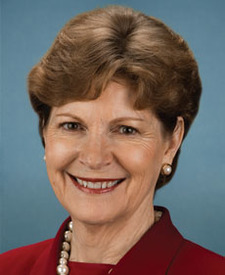
Sponsors
Legislative Progress
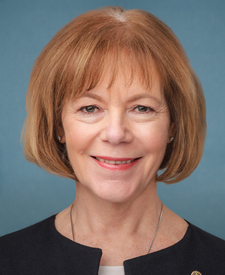
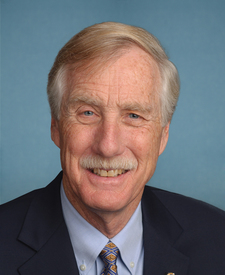
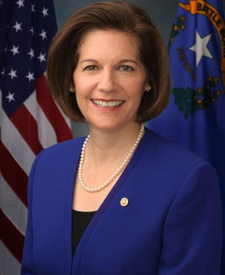
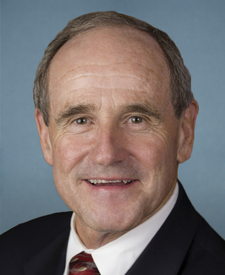
In CommitteeMs. Smith (for herself, Mr. Rounds, Mr. Daines, Mr. Fetterman, …
Read twice and referred to the Committee on Banking, Housing, …
Introduced in Senate
Stakeholder Effects
cui bono?How this legislation distributes effects. Mention counts reflect frequency, not effect magnitude.
Low-income rural farm housing owners, Low-income rural residents, Low-income rural tenants
Government Accountability Office, Public housing authorities, USDA Rural Housing Service
USDA Rural Housing Service faces effects in multiple directions
Positive-direction: Public housing authorities
Negative-direction: Government Accountability Office
Nonprofit affordable housing organizations, Nonprofit community development organizations, Nonprofit housing organizations
Federal IT contractors and service providers, Information technology vendors
Home-based childcare providers in rural areas, Tribal organization-regulated childcare providers
Native Community Development Financial Institutions
Bill Structure & Actor Mappings
Who is "The Secretary" in each section?
- "the_secretary"
- → Secretary of Agriculture
- "the_secretary"
- → Secretary of Agriculture
- "the_secretary"
- → Secretary of Agriculture
- "the_secretary"
- → Secretary of Agriculture
- "the_secretary"
- → Secretary of Agriculture
- "the_secretary"
- → Secretary of Agriculture
- "the_comptroller_general"
- → Comptroller General of the United States (GAO)
- "the_secretary"
- → Secretary of Agriculture
- "the_secretary"
- → Secretary of Agriculture
- "the_secretary"
- → Secretary of Agriculture
- "the_secretary"
- → Secretary of Agriculture
- "the_secretary"
- → Secretary of Agriculture
Note: The Secretary refers to Secretary of Agriculture consistently throughout all titles of this bill
Key Definitions
Terms defined in this bill
Has the meaning given the term Native in section 3(b) of the Alaska Native Claims Settlement Act (43 U.S.C. 1602(b))
A private, nonprofit community-based housing or community development organization; a rural community; or a federally recognized Indian Tribe
Has the meaning given in section 658P of the Child Care and Development Block Grant Act of 1990 (42 U.S.C. 9858n)
A single, habitable living unit with means of separate ingress and egress, that is usually subordinate in size, that can be added to, created within, or detached from a primary 1-family dwelling
A community development financial institution (as defined in section 103 of the Riegle Community Development and Regulatory Improvement Act of 1994) that primarily serves and is governed by Alaska Natives, members of Indian Tribes, or Native Hawaiians
A qualified private, nonprofit organization or public organization
Has the meaning given in section 658P of the Child Care and Development Block Grant Act of 1990 (42 U.S.C. 9858n)
We use a combination of our own taxonomy and classification in addition to large language models to assess meaning and potential beneficiaries. High confidence means strong textual evidence. Always verify with the original bill text.
Learn more about our methodology