SHIELD U Act
Analysis under review: This bill has generated analysis that may be too generic or incomplete. Clause-level evidence remains available below.
Summary
The SHIELD U Act (Stopping Harmful Incidents to Enforce Lawful Drone Use Act) creates a comprehensive legal framework for detecting and neutralizing threatening drones at airports and in communities. It authorizes DHS, state/local law enforcement, and airport police to conduct counter-drone operations at commercial service airports with airport operator consent. Off-airport, state and local law enforcement can take counter-drone actions within their jurisdictions, including establishing testing areas. The bill authorizes federal departments (DOD, DHS, DOJ, DOE) to contract with private companies for counter-drone technology and services. It mandates counter-UAS training curricula through the Federal Law Enforcement Training Centers. Airports can use Airport Improvement Program funds to purchase counter-drone equipment, and must develop tactical response plans within two years. The bill also amends the Communications Act to permit limited use of jamming technology against drones, with FCC notification requirements.
Evidence Chain:
This summary is generated from the full bill text using AI analysis. Expand "Detailed Analysis" below for identified beneficiaries/burden bearers.
At a Glance
What This Bill Does
Authorizes Counter-UAS (unmanned aircraft system) activities at commercial service airports and off-airport by state and local law enforcement, establishes procurement and training frameworks, authorizes contracts for federal counter-drone programs, and amends the Communications Act to allow limited jamming technology use against threatening drones.
Who Benefits
- Counter-drone technology companies (new procurement market)
- Commercial airports (security equipment and AIP funding)
- State and local law enforcement (new authorities and training)
Who Bears Costs
- Commercial drone operators (risk of disruption or destruction)
- FCC and NTIA (new consultation and notification duties)
- Airport operators (tactical response plan development)
Key Policy Areas
{'domain': 'Transportation', 'evidence': 'Focuses on commercial service airport security from drone threats'}, {'domain': 'Defense', 'evidence': 'Authorizes DOD counter-UAS contracts and extends military counter-drone authorities'}, {'domain': 'Homeland Security', 'evidence': 'DHS authorized for counter-UAS activities; training through FLETC'}, {'domain': 'Telecommunications', 'evidence': 'Amends Communications Act Section 301 to allow jamming equipment against drones'}
Primary Purpose
Authorizes Counter-UAS (unmanned aircraft system) activities at commercial service airports and off-airport by state and local law enforcement, establishes procurement and training frameworks, authorizes contracts for federal counter-drone programs, and amends the Communications Act to allow limited jamming technology use against threatening drones.
Policy Domains
Legislative Strategy
"Create comprehensive legal authority for counter-drone operations that currently exist in a legal gray area, allowing local law enforcement to act without waiting for federal response"
Sponsors
Legislative Progress
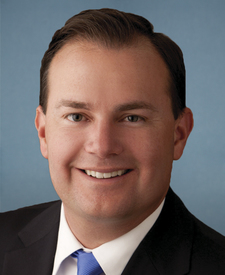
In CommitteeMr. Lee introduced the following bill; which was read twice …
Read twice and referred to the Committee on Commerce, Science, …
Introduced in Senate
Stakeholder Effects
cui bono?How this legislation distributes effects. Mention counts reflect frequency, not effect magnitude.
FCC, Federal Law Enforcement Training Centers, Law enforcement officers
Positive-direction: Law enforcement officers, State and local law enforcement
Negative-direction: FCC, Federal Law Enforcement Training Centers
Authorized counter-UAS operators, Counter-drone technology companies, Defense and security contractors
Bill Structure & Actor Mappings
Who is "The Secretary" in each section?
- "airport_operator"
- → Commercial service airport operator
- "secretary_of_homeland_security"
- → Secretary of Homeland Security
- "state_local_law_enforcement"
- → State and local law enforcement agencies
- "faa_administrator"
- → FAA Administrator
- "tsa_administrator"
- → TSA Administrator
Key Definitions
Terms defined in this bill
As defined in 49 USC 47102(7), including navigable airspace for safe takeoff and landing
Detecting, identifying, monitoring, tracking, warning, disrupting, seizing, or destroying unmanned aircraft or UAS
Equipment used to intercept or access communications controlling a UAS, or to disrupt UAS control
Unauthorized UAS activity reasonably believed to create potential for bodily harm, loss of life, or severe economic damage
We use a combination of our own taxonomy and classification in addition to large language models to assess meaning and potential beneficiaries. High confidence means strong textual evidence. Always verify with the original bill text.
Learn more about our methodology