To prohibit contracting with persons that have business operations with the Maduro regime, and for other purposes.
Sponsors
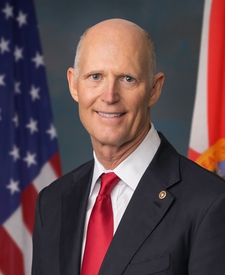
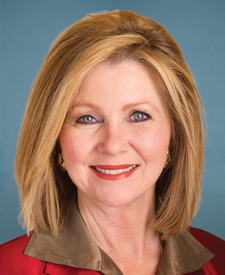
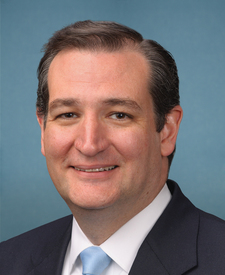
Legislative Progress
IntroducedMr. Scott of Florida (for himself, Mr. Cruz, and Mrs. …
Summary
What This Bill Does
The BOLIVAR Act prohibits federal agencies from awarding contracts to companies or individuals that conduct significant business with the Maduro government in Venezuela, which the U.S. does not recognize as the legitimate Venezuelan government. The prohibition lasts for three years after the bill becomes law. The goal is to economically isolate the Maduro regime by cutting off its access to entities that want to do business with the U.S. government.
Who Benefits and How
U.S. national security interests benefit from reduced economic engagement with an adversarial regime that the U.S. views as illegitimate. The Venezuelan political opposition benefits indirectly, as the bill applies pressure on the Maduro government by limiting its economic partnerships. Federal contractors who do not operate in Venezuela may gain a competitive advantage, as competitors with Venezuelan business ties become ineligible for federal contracts.
Who Bears the Burden and How
Companies with significant business operations in Venezuela face a choice: continue their Venezuelan business relationships and lose eligibility for U.S. federal contracts, or exit Venezuela to maintain federal contracting opportunities. This particularly affects businesses in sectors like energy, logistics, and services that may operate in both markets. Federal agencies must implement compliance procedures to verify contractor business activities and coordinate determinations with the Secretary of State.
Key Provisions
- Core prohibition: Federal agencies cannot contract with any person or entity that "knowingly engages in significant business operations" with Venezuelan authorities not recognized by the U.S.
- Humanitarian exceptions: Contracts necessary for humanitarian aid, disaster relief, life-saving measures, and noncombatant evacuations are exempt.
- National security waiver: The Secretary of State can waive the prohibition if doing so is in the national interest.
- OFAC license exemption: Entities holding a valid license from the Office of Foreign Assets Control to operate in Venezuela are exempt.
- Congressional oversight: The Secretary of State must notify relevant House and Senate committees about contracts granted under exceptions.
- Sunset provision: The prohibition applies only to contracts entered during the three-year period following enactment.
Evidence Chain:
This summary is derived from the structured analysis below. See "Detailed Analysis" for per-title beneficiaries/burden bearers with clause-level evidence links.
Primary Purpose
The bill aims to prohibit contracting with entities that engage in business operations with the Maduro regime in Venezuela, except for specific exemptions related to humanitarian aid, national security interests, and US government activities.
Policy Domains
Bill Structure & Actor Mappings
Who is "The Secretary" in each section?
- "the_secretary"
- → Secretary of State
Key Definitions
Terms defined in this bill
A ban on executive agencies entering contracts with entities engaging in significant business operations with Venezuelan authorities not recognized by the US.
Exemptions for humanitarian aid, disaster relief, noncombatant evacuations, and US national security interests.
Contracts supporting US government activities in Venezuela, including maintenance of facilities and operations at consular offices and diplomatic posts.
The Secretary of State can waive the prohibition if it's deemed in the US national interest.
The Secretary of State must notify congressional committees about contracts granted under exceptions.
Entities with valid licenses from the Office of Foreign Assets Control are exempt.
Contracts related to the operation and maintenance of US consular offices and diplomatic posts in Venezuela are exempt.
The Senate's Committee on Homeland Security and Governmental Affairs, the Senate's Committee on Foreign Relations, the House's Committee on Homeland Security, and the House's Committee on Foreign Affairs.
Engaging in commerce, including activities related to equipment, facilities, personnel, products, services, and property.
As defined in Section 133 of Title 41, United States Code.
Includes the government, political subdivisions, and agencies or instrumentalities.
As defined in Section 1603(b) of Title 28, United States Code, with references to a foreign state deemed as Venezuela.
Includes natural persons, corporations, companies, associations, partnerships, societies, trusts, and other entities.
The prohibition applies to contracts entered into during the three years following enactment.
We use a combination of our own taxonomy and classification in addition to large language models to assess meaning and potential beneficiaries. High confidence means strong textual evidence. Always verify with the original bill text.
Learn more about our methodology