Heating and Cooling Relief Act
Summary
What This Bill Does
The bill creates congressional findings documenting that low-income households face energy burdens 3x higher than other households, with 54% reducing basic necessities to pay energy bills, authorizes appropriations of billion for fiscal year 2026 plus additional sums as necessary for emergency energy assistance, and billion for just transition grants. Removes the previous billion cap and allows funding, and adds definitions for extreme heat and extreme cold, HEAP coordinator, local coordinating agency, and State agency to the Low-Income Home Energy Assistance Act. Extreme heat/cold includes periods with increased risk. It relies on compliance mandates, definition changes, appropriations, and reporting requirements. The main policy areas are Energy, Social Welfare, Trade, and Housing.
Who Benefits and How
State and local governments could gain revenue opportunities, Low-income households receiving LIHEAP could see lower costs, and Low-income households in disaster areas could face fewer barriers.
Who Bears the Burden and How
State agencies administering LIHEAP would take on compliance duties, Natural gas utilities could lose revenue opportunities, and Home energy suppliers and utilities would take on compliance duties.
Key Provisions
- Creates congressional findings documenting that low-income households face energy burdens 3x higher than other households, with 54% reducing basic necessities to pay energy bills.
- Authorizes appropriations of billion for fiscal year 2026 plus additional sums as necessary for emergency energy assistance, and billion for just transition grants. Removes the previous billion cap and allows funding...
- Adds definitions for extreme heat and extreme cold, HEAP coordinator, local coordinating agency, and State agency to the Low-Income Home Energy Assistance Act. Extreme heat/cold includes periods with increased risk...
- Expands emergency assistance provisions to include extreme heat and extreme cold as qualifying disasters.
- Requires raises income eligibility threshold to 250% of poverty level or 80% of state median income.
Evidence Chain:
This summary is generated from the full bill text using AI analysis. Expand "Detailed Analysis" below for identified beneficiaries/burden bearers with clause-level evidence links.
At a Glance
What This Bill Does
The bill creates congressional findings documenting that low-income households face energy burdens 3x higher than other households, with 54% reducing basic necessities to pay energy bills, authorizes appropriations of billion for fiscal year 2026 plus additional sums as necessary for emergency energy assistance, and billion for just transition grants. Removes the previous billion cap and allows funding, and adds definitions for extreme heat and extreme cold, HEAP coordinator, local coordinating agency, and State agency to the Low-Income Home Energy Assistance Act. Extreme heat/cold includes periods with increased risk.
Key Policy Areas
Energy, Social Welfare, Trade, Housing
Primary Purpose
The bill creates congressional findings documenting that low-income households face energy burdens 3x higher than other households, with 54% reducing basic necessities to pay energy bills, authorizes appropriations of billion for fiscal year 2026 plus additional sums as necessary for emergency energy assistance, and billion for just transition grants. Removes the previous billion cap and allows funding, and adds definitions for extreme heat and extreme cold, HEAP coordinator, local coordinating agency, and State agency to the Low-Income Home Energy Assistance Act. Extreme heat/cold includes periods with increased risk.
Policy Domains
Funding Authorization
Identified Gains
- State and local governments
- Low-income households receiving LIHEAP
- Low-income households in disaster areas
- Low-income households
- Households between 150-250% of poverty level
Identified Costs
- State agencies administering LIHEAP
- Natural gas utilities
- Home energy suppliers and utilities
- Home energy suppliers
- Fossil fuel furnace and boiler manufacturers
Sponsors
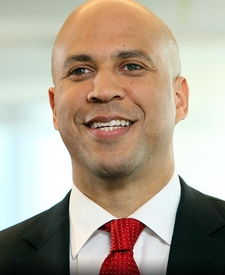
Legislative Progress
In CommitteeMr. Markey (for himself, Mr. Blumenthal, Ms. Blunt Rochester, Mr. …
Read twice and referred to the Committee on Health, Education, …
Introduced in Senate
Stakeholder Effects
cui bono?How this legislation distributes effects. Mention counts reflect frequency, not effect magnitude.
Households between 150-250% of poverty level, Immigrant households, Low-income homeowners
State LIHEAP administrators, State agencies administering LIHEAP, State and local governments
Positive-direction: State and local governments, State energy assistance programs
Negative-direction: State LIHEAP administrators, State agencies administering LIHEAP
Home energy suppliers, Home energy suppliers and utilities, Home energy suppliers receiving LIHEAP payments
Home energy suppliers faces effects in multiple directions
Positive-direction: Home energy suppliers receiving LIHEAP payments
Negative-direction: Home energy suppliers and utilities
Renewable energy and electrification contractors, Weatherization contractors
Electric heat pump and HVAC manufacturers, Fossil fuel furnace and boiler manufacturers
Positive-direction: Electric heat pump and HVAC manufacturers
Negative-direction: Fossil fuel furnace and boiler manufacturers
Bill Structure & Actor Mappings
Who is "The Secretary" in each section?
- "the_secretary"
- → Secretary of Health and Human Services
- "the_secretary"
- → Secretary of Health and Human Services
- "the_secretary"
- → Secretary of Health and Human Services
- "the_secretary"
- → Secretary of Health and Human Services
- "secretary_of_energy"
- → Secretary of Energy
- "the_secretary"
- → Secretary of Health and Human Services
- "secretary_of_energy"
- → Secretary of Energy
Key Definitions
Terms defined in this bill
A period in which there is an increased risk of heat-related or cold-related illness, hospitalization, or death; or failures or energy shutoffs of home cooling or heating.
An employee who administers a program funded under section 2602(b) and whose salary is paid with funds made available under that section.
Any local organization or local office that receives funds under section 2602(b) to perform customer intake, or approval of benefits, on behalf of the State agency.
A major disaster or emergency declared under the Stafford Act; a public health emergency determined under section 319 of the Public Health Service Act; or a period of extreme heat or extreme cold.
We use a combination of our own taxonomy and classification in addition to large language models to assess meaning and potential beneficiaries. High confidence means strong textual evidence. Always verify with the original bill text.
Learn more about our methodology