AID Youth Employment Act
Analysis under review: This bill has generated analysis that may be too generic or incomplete. Clause-level evidence remains available below.
Summary
The AID Youth Employment Act creates two new federal competitive grant programs to fund subsidized summer and year-round jobs for young people ages 14 to 24. The bill authorizes up to $375 million per year for summer employment grants and $500 million per year for year-round employment grants from 2026 through 2030. States, local governments, Indian tribes, and community-based organizations can apply for planning grants (up to $250,000 for one year) or implementation grants (up to $6 million for three years). Programs must prioritize marginalized youth, including those who are homeless, in foster care, or involved in the justice system. Grant recipients must partner with local schools, workforce agencies, child welfare agencies, and employers. The bill also requires performance tracking to measure outcomes like employment and education attainment after program exit.
Evidence Chain:
This summary is generated from the full bill text using AI analysis. Expand "Detailed Analysis" below for identified beneficiaries/burden bearers.
At a Glance
What This Bill Does
Creates competitive grant programs for summer and year-round subsidized youth employment for ages 14-24 by amending the Workforce Innovation and Opportunity Act
Who Benefits
- Youth ages 14-24
- Marginalized youth
- Tribal communities
Who Bears Costs
- Federal budget (authorizes M/year for FY2026-2030)
- Employers participating in subsidized employment programs
Key Policy Areas
Workforce Development, Youth Employment, Education
Primary Purpose
Creates competitive grant programs for summer and year-round subsidized youth employment for ages 14-24 by amending the Workforce Innovation and Opportunity Act
Policy Domains
Legislative Strategy
"Amend existing WIOA framework to add new subtitle for competitive youth employment grants with two tracks: summer and year-round"
Sponsors
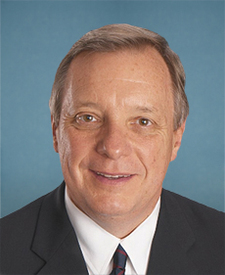
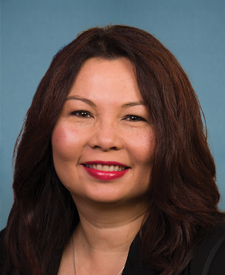
Legislative Progress
In CommitteeMr. Durbin (for himself and Ms. Duckworth) introduced the following …
Read twice and referred to the Committee on Health, Education, …
Introduced in Senate
Stakeholder Effects
cui bono?How this legislation distributes effects. Mention counts reflect frequency, not effect magnitude.
Marginalized youth (homeless, foster care, justice-involved), Youth ages 14-24, Youth ages 14-24 (in-school, out-of-school, unemployed)
Federal budget, Grant recipient entities, Local workforce development agencies
Positive-direction: Local workforce development agencies, State and local governments
Negative-direction: Federal budget, Grant recipient entities
Bill Structure & Actor Mappings
Who is "The Secretary" in each section?
- "the_secretary"
- → Secretary of Labor
Key Definitions
Terms defined in this bill
Individual aged 14-24 who is an in-school youth, out-of-school youth, or unemployed
Individuals who are homeless, in foster care, involved in justice system, or at risk of dropping out and living in underserved communities
Employment for which the employer receives total or partial subsidy to offset costs
We use a combination of our own taxonomy and classification in addition to large language models to assess meaning and potential beneficiaries. High confidence means strong textual evidence. Always verify with the original bill text.
Learn more about our methodology