Accountability Through Electronic Verification Act
Analysis under review: This bill has generated analysis that may be too generic or incomplete. Clause-level evidence remains available below.
Summary
What This Bill Does
The bill defines makes the E-Verify program permanent by removing the sunset provision that would have terminated it on September 30, 2015, mandates E-Verify participation for all federal agencies, federal contractors, critical employers (within 30 days), and all employers nationwide (within 2 years), with phased implementation timelines, and requires dramatically increases civil penalties for E-Verify violations (from $250-$10,000 to $2,500-$25,000) and creates rebuttable presumption of immigration law violations for non-compliance. It relies on compliance mandates, reporting requirements, definition changes, and liability protections. The main policy areas are Foreign Policy, Labor, Finance, and Technology.
Who Benefits and How
U.S. Immigration and Customs Enforcement could gain revenue opportunities, Identity verification technology providers could gain revenue opportunities, and Employers using E-Verify could face reduced risk.
Who Bears the Burden and How
All U.S. employers would take on compliance duties, Unauthorized workers could face increased risk, and U.S. Citizenship and Immigration Services could face higher costs.
Key Provisions
- Defines makes the E-Verify program permanent by removing the sunset provision that would have terminated it on September 30, 2015.
- Mandates E-Verify participation for all federal agencies, federal contractors, critical employers (within 30 days), and all employers nationwide (within 2 years), with phased implementation timelines.
- Requires dramatically increases civil penalties for E-Verify violations (from $250-$10,000 to $2,500-$25,000) and creates rebuttable presumption of immigration law violations for non-compliance.
- Exempts preempts state and local laws that prohibit E-Verify use and provides liability protection for employers who terminate workers in good faith based on E-Verify results.
- Expands E-Verify to allow pre-hire verification with worker consent, requires verification within 3 days of hire, and mandates verification of all previously unverified employees within 1 year.
Evidence Chain:
This summary is generated from the full bill text using AI analysis. Expand "Detailed Analysis" below for identified beneficiaries/burden bearers with clause-level evidence links.
At a Glance
What This Bill Does
The bill defines makes the E-Verify program permanent by removing the sunset provision that would have terminated it on September 30, 2015, mandates E-Verify participation for all federal agencies, federal contractors, critical employers (within 30 days), and all employers nationwide (within 2 years), with phased implementation timelines, and requires dramatically increases civil penalties for E-Verify violations (from $250-$10,000 to $2,500-$25,000) and creates rebuttable presumption of immigration law violations for non-compliance.
Key Policy Areas
Foreign Policy, Labor, Finance, Technology
Primary Purpose
The bill defines makes the E-Verify program permanent by removing the sunset provision that would have terminated it on September 30, 2015, mandates E-Verify participation for all federal agencies, federal contractors, critical employers (within 30 days), and all employers nationwide (within 2 years), with phased implementation timelines, and requires dramatically increases civil penalties for E-Verify violations (from $250-$10,000 to $2,500-$25,000) and creates rebuttable presumption of immigration law violations for non-compliance.
Policy Domains
Whole Bill - Uyghur Genocide Accountability
Identified Gains
- U.S. Immigration and Customs Enforcement
- Identity verification technology providers
- Employers using E-Verify
- Department of Homeland Security E-Verify program
- Department of Homeland Security
Identified Costs
- All U.S. employers
- Unauthorized workers
- U.S. Citizenship and Immigration Services
- Identity document fraudsters
- Federal government agencies
Sponsors
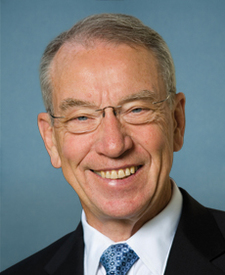

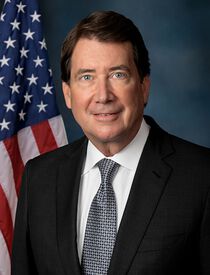


Legislative Progress
In CommitteeMr. Grassley (for himself, Mr. Tuberville, Mr. Lee, Mr. Cruz, …
Read twice and referred to the Committee on the Judiciary.
Introduced in Senate
Stakeholder Effects
cui bono?How this legislation distributes effects. Mention counts reflect frequency, not effect magnitude.
Department of Homeland Security, Department of Homeland Security E-Verify program, Department of State passport services
Department of Homeland Security faces effects in multiple directions
Positive-direction: Department of Homeland Security E-Verify program, Federal prosecutors, Immigration and Customs Enforcement
Negative-direction: Department of State passport services, Federal government agencies, Internal Revenue Service, Social Security Administration, U.S. Citizenship and Immigration Services
All U.S. employers, Employers of workers with temporary work authorization, Employers using E-Verify
Positive-direction: Employers using E-Verify
Negative-direction: All U.S. employers, Employers of workers with temporary work authorization, Employers who hire unauthorized workers, Employers who knowingly use fraudulent documents, Employers who retain workers after nonconfirmation, Employers with I-9 violations
Unauthorized workers, Workers receiving tentative nonconfirmation, Workers with temporary employment authorization
HR compliance consulting firms, Immigration compliance attorneys, Immigration enforcement attorneys
E-Verify compliance software providers, Identity verification technology providers, Technology industry employers of H-1B workers
Positive-direction: E-Verify compliance software providers, Identity verification technology providers
Negative-direction: Technology industry employers of H-1B workers
State DMV agencies, State and local governments
Small businesses in rural areas, Small businesses without internet access
Bill Structure & Actor Mappings
Who is "The Secretary" in each section?
- "the_president"
- → President of the United States
- "the_secretary_of_state"
- → Secretary of State
- "the_secretary_of_defense"
- → Secretary of Defense
- "the_secretary_of_treasury"
- → Secretary of the Treasury
Key Definitions
Terms defined in this bill
Short title for this Act
We use a combination of our own taxonomy and classification in addition to large language models to assess meaning and potential beneficiaries. High confidence means strong textual evidence. Always verify with the original bill text.
Learn more about our methodology