To amend title 35, United States Code, to establish an interagency task force between the United States Patent and Trademark Office and the Food and Drug Administration for purposes of sharing information and providing technical assistance with respect to patents, and for other purposes.
Sponsors
Legislative Progress
ReportedReported by Mr. Grassley, with amendments
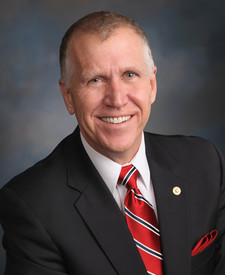
Mr. Durbin (for himself, Mr. Tillis, Mr. Grassley, Mr. Coons, …
Summary
What This Bill Does
Creates interagency task force between USPTO and FDA to improve patent examination through sharing of information and prior art, with required reporting to Congress after 4 years.
Who Benefits and How
Patent examiners gain access to FDA information for prior art assessment. Patent quality improves through better interagency coordination. Generic drug approval may accelerate with improved patent clarity.
Who Bears the Burden and How
USPTO Director leads task force implementation. FDA must share relevant information with USPTO. Report due 4 years after enactment on frequency of information sharing.
Key Provisions
- Establishes Interagency Task Force on Patents
- Information sharing between FDA and USPTO
- Report to Judiciary Committees after 4 years
- Focuses on prior art and state of science assessment
Evidence Chain:
This summary is derived from the structured analysis below. See "Detailed Analysis" for per-title beneficiaries/burden bearers with clause-level evidence links.
Primary Purpose
Establishes interagency patent coordination task force between USPTO and FDA
Policy Domains
Legislative Strategy
"Improve patent quality through FDA-USPTO information sharing"
Bill Structure & Actor Mappings
Who is "The Secretary" in each section?
- "the_director"
- → Under Secretary of Commerce for Intellectual Property and Director of USPTO
We use a combination of our own taxonomy and classification in addition to large language models to assess meaning and potential beneficiaries. High confidence means strong textual evidence. Always verify with the original bill text.
Learn more about our methodology