Land Manager Housing and Workforce Improvement Act of 2025
Summary
What This Bill Does
The bill establishes key definitions for the Act including covered agencies (NPS, BLM, FWS, Forest Service), appropriate Congressional committees, and defining "Secretary" as Secretary of the Interior, amends existing law to add workforce housing for field employees as a priority for National Park Service resource management planning, and authorizes the Secretary of Interior to acquire up to 20 acres of land outside park boundaries through donation, exchange, or federal transfer for workforce housing development. It relies on exemptions, procurement rules, reporting requirements, and grants. The main policy areas are Public Lands, Federal Workforce, Housing, and Finance.
Who Benefits and How
National Park Service could gain revenue opportunities, National Park Service field employees could gain revenue opportunities, and Philanthropic organizations supporting NPS could gain revenue opportunities.
Who Bears the Burden and How
Secretary of Agriculture would take on compliance duties, Government Accountability Office would take on compliance duties, and Secretary of the Interior would take on compliance duties.
Key Provisions
- Establishes key definitions for the Act including covered agencies (NPS, BLM, FWS, Forest Service), appropriate Congressional committees, and defining "Secretary" as Secretary of the Interior.
- Amends existing law to add workforce housing for field employees as a priority for National Park Service resource management planning.
- Authorizes the Secretary of Interior to acquire up to 20 acres of land outside park boundaries through donation, exchange, or federal transfer for workforce housing development.
- Provides allows rental receipts collected by the National Park Service and deposited in a special fund to be used for development, construction, maintenance, and operation of employee housing at park units.
- Exempts extends Forest Service permit terms from 30 to 50 years specifically for workforce housing and related infrastructure. Also modifies competitive bidding requirements from "competitive sale" to requiring at least...
Evidence Chain:
This summary is generated from the full bill text using AI analysis. Expand "Detailed Analysis" below for identified beneficiaries/burden bearers with clause-level evidence links.
At a Glance
What This Bill Does
The bill establishes key definitions for the Act including covered agencies (NPS, BLM, FWS, Forest Service), appropriate Congressional committees, and defining "Secretary" as Secretary of the Interior, amends existing law to add workforce housing for field employees as a priority for National Park Service resource management planning, and authorizes the Secretary of Interior to acquire up to 20 acres of land outside park boundaries through donation, exchange, or federal transfer for workforce housing development.
Key Policy Areas
Public Lands, Federal Workforce, Housing, Finance
Primary Purpose
The bill establishes key definitions for the Act including covered agencies (NPS, BLM, FWS, Forest Service), appropriate Congressional committees, and defining "Secretary" as Secretary of the Interior, amends existing law to add workforce housing for field employees as a priority for National Park Service resource management planning, and authorizes the Secretary of Interior to acquire up to 20 acres of land outside park boundaries through donation, exchange, or federal transfer for workforce housing development.
Policy Domains
Title I - National Park Service Workforce Housing
Identified Gains
- National Park Service
- National Park Service field employees
- Philanthropic organizations supporting NPS
- NPS field employees
- Congress
Identified Costs
- Secretary of Agriculture
- Government Accountability Office
- Secretary of the Interior
- Covered agency heads
- Office of Management and Budget
Sponsors
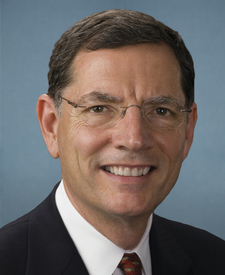
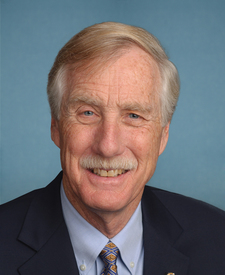
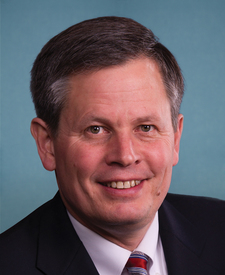
Legislative Progress
In CommitteeMr. Barrasso (for himself, Mr. Daines, and Mr. King) introduced …
Read twice and referred to the Committee on Energy and …
Introduced in Senate
Stakeholder Effects
cui bono?How this legislation distributes effects. Mention counts reflect frequency, not effect magnitude.
Bureau of Land Management, Congress, Covered agency heads
Positive-direction: Congress, Federal employees assigned to partner entities, Federal land management agencies, Federal land management workforce, Federal workforce in covered agencies, Forest Service employees, NPS field employees, National Park Service, National Park Service field employees, Seasonal National Park Service employees
Negative-direction: Covered agency heads, Government Accountability Office, Office of Management and Budget, Secretary of Agriculture, Secretary of the Interior
Local governments with adjacent parkland, State and Tribal park employees, State and local governments
Forest Service workforce housing developers, Private developers on Forest Service land, Private housing developers
Philanthropic organizations supporting NPS
Gateway community residents, Local residents near federal land units
Bill Structure & Actor Mappings
Who is "The Secretary" in each section?
- "the_secretary"
- → Secretary of the Interior
- "the_secretary"
- → Secretary of the Interior
- "the_secretary"
- → Secretary of the Interior
- "secretary_of_agriculture"
- → Secretary of Agriculture
- "the_secretary"
- → Secretary of the Interior
- "comptroller_general"
- → Comptroller General of the United States
- "secretary_of_agriculture"
- → Secretary of Agriculture
Note: The Secretary refers to Secretary of the Interior throughout most of the bill, but some provisions in Titles III and IV also reference the Secretary of Agriculture for Forest Service matters
Key Definitions
Terms defined in this bill
The Committee on Energy and Natural Resources of the Senate; the Committee on Agriculture, Nutrition, and Forestry of the Senate; the Committee on Appropriations of the Senate; the Committee on Natural Resources of the House; the Committee on Agriculture of the House; and the Committee on Appropriations of the House
The National Park Service; the Bureau of Land Management; the United States Fish and Wildlife Service; and the Forest Service
The Secretary of the Interior
We use a combination of our own taxonomy and classification in addition to large language models to assess meaning and potential beneficiaries. High confidence means strong textual evidence. Always verify with the original bill text.
Learn more about our methodology