To create a Council on Emergency Response Protocols to ensure the establishment of accessible, developmentally appropriate, culturally aware, and trauma-informed emergency response protocols in public schools, early child care and education settings, and institutions of higher education, and for other purposes.
Summary
What This Bill Does
The bill provides findings Congress finds the following: The lack of accessible, developmentally appropriate, culturally aware, and trauma-informed emergency response protocols for children and youth in public schools, early, provides definitions In this Act: The terms elementary school, local educational agency, paraprofessional, school leader, secondary school, and specialized instructional support personnel have the meanings given, and establishes Council on Emergency Response Protocols There is established a Council on Emergency Response Protocols. It relies on compliance mandates, appropriations, reporting requirements, and definition changes. The main policy areas are Education, Criminal Justice, Environment, and Technology.
Who Benefits and How
Educational institutions and students affected by the bill could gain revenue opportunities, Disaster response agencies and disaster-affected communities could gain revenue opportunities, and Telecommunications providers and users affected by the bill could gain revenue opportunities.
Who Bears the Burden and How
Federal, state, or local agencies responsible for implementing the clause would take on compliance duties, Educational institutions and students affected by the bill would take on compliance duties, and Law enforcement, justice-system actors, and affected communities would take on compliance duties.
Key Provisions
- Provides findings Congress finds the following: The lack of accessible, developmentally appropriate, culturally aware, and trauma-informed emergency response protocols for children and youth in public schools, early...
- Provides definitions In this Act: The terms elementary school, local educational agency, paraprofessional, school leader, secondary school, and specialized instructional support personnel have the meanings given...
- Establishes Council on Emergency Response Protocols There is established a Council on Emergency Response Protocols.
- Provides duties The Council shall hold a hearing with relevant stakeholders, including students and educators, principals and other school leaders, child care experts, disability advocates, civil rights advocates, law...
- Creates council personnel matters Only members of the Council representing categories described in subparagraphs (G) through (K) of section 4(b)(2) shall be compensated for their work for the Council.
Evidence Chain:
This summary is generated from the full bill text using AI analysis. Expand "Detailed Analysis" below for identified beneficiaries/burden bearers with clause-level evidence links.
At a Glance
What This Bill Does
The bill provides findings Congress finds the following: The lack of accessible, developmentally appropriate, culturally aware, and trauma-informed emergency response protocols for children and youth in public schools, early, provides definitions In this Act: The terms elementary school, local educational agency, paraprofessional, school leader, secondary school, and specialized instructional support personnel have the meanings given, and establishes Council on Emergency Response Protocols There is established a Council on Emergency Response Protocols.
Key Policy Areas
Education, Criminal Justice, Environment, Technology
Primary Purpose
The bill provides findings Congress finds the following: The lack of accessible, developmentally appropriate, culturally aware, and trauma-informed emergency response protocols for children and youth in public schools, early, provides definitions In this Act: The terms elementary school, local educational agency, paraprofessional, school leader, secondary school, and specialized instructional support personnel have the meanings given, and establishes Council on Emergency Response Protocols There is established a Council on Emergency Response Protocols.
Policy Domains
Whole bill
Identified Gains
- Educational institutions and students affected by the bill
- Disaster response agencies and disaster-affected communities
- Telecommunications providers and users affected by the bill
- Law enforcement, justice-system actors, and affected communities
- Environmental and public health interests affected by the bill
Identified Costs
- Federal, state, or local agencies responsible for implementing the clause
- Educational institutions and students affected by the bill
- Law enforcement, justice-system actors, and affected communities
- Homeowners, tenants, or housing market participants affected by the bill
- Environmental and public health interests affected by the bill
Sponsors

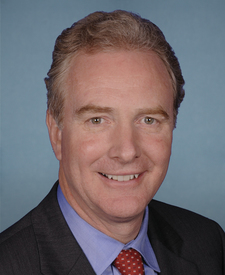
Legislative Progress
IntroducedMr. Casey (for himself and Mr. Van Hollen) introduced the …
Stakeholder Effects
cui bono?How this legislation distributes effects. Mention counts reflect frequency, not effect magnitude.
Law enforcement, justice-system actors, and affected communities
Law enforcement, justice-system actors, and affected communities faces effects in multiple directions
Bill Structure & Actor Mappings
Who is "The Secretary" in each section?
We use a combination of our own taxonomy and classification in addition to large language models to assess meaning and potential beneficiaries. High confidence means strong textual evidence. Always verify with the original bill text.
Learn more about our methodology