FIGHT China Act of 2025
Analysis under review: This bill has generated analysis that may be too generic or incomplete. Clause-level evidence remains available below.
Summary
What This Bill Does
The bill defines the Secretary as Secretary of the Treasury for purposes of the Act unless otherwise provided, authorizes $150 million appropriation to Treasury (transferable to Commerce) for each of first two fiscal years, and authorizes hiring of 15+ positions without competitive examination requirements, and authorizes President to impose IEEPA sanctions (asset blocking) on covered foreign persons in Chinese defense and surveillance sectors, with penalties for violations and annual reporting to Congress on Non-SDN Chinese. It relies on reporting requirements, compliance mandates, definition changes, and trade restrictions. The main policy areas are National Security, Finance, Trade, and Technology.
Who Benefits and How
Department of the Treasury could gain revenue opportunities, U.S. compliance law firms could gain revenue opportunities, and Department of Commerce could gain revenue opportunities.
Who Bears the Burden and How
Treasury OFAC would take on compliance duties, U.S. venture capital firms investing in China would take on compliance duties, and U.S. private equity firms with China investments would take on compliance duties.
Key Provisions
- Defines the Secretary as Secretary of the Treasury for purposes of the Act unless otherwise provided.
- Authorizes $150 million appropriation to Treasury (transferable to Commerce) for each of first two fiscal years, and authorizes hiring of 15+ positions without competitive examination requirements.
- Authorizes President to impose IEEPA sanctions (asset blocking) on covered foreign persons in Chinese defense and surveillance sectors, with penalties for violations and annual reporting to Congress on Non-SDN Chinese...
- Defines key terms for Title I sanctions including covered foreign person (Chinese entities in defense/surveillance), country of concern (PRC including Hong Kong/Macau), and United States person.
- Amends Defense Production Act to authorize Treasury to prohibit U.S. persons from investing in prohibited technologies, with waivers for national interest, civil penalties up to $250,000 or 2x transaction value...
Evidence Chain:
This summary is generated from the full bill text using AI analysis. Expand "Detailed Analysis" below for identified beneficiaries/burden bearers with clause-level evidence links.
At a Glance
What This Bill Does
The bill defines the Secretary as Secretary of the Treasury for purposes of the Act unless otherwise provided, authorizes $150 million appropriation to Treasury (transferable to Commerce) for each of first two fiscal years, and authorizes hiring of 15+ positions without competitive examination requirements, and authorizes President to impose IEEPA sanctions (asset blocking) on covered foreign persons in Chinese defense and surveillance sectors, with penalties for violations and annual reporting to Congress on Non-SDN Chinese.
Key Policy Areas
National Security, Finance, Trade, Technology
Primary Purpose
The bill defines the Secretary as Secretary of the Treasury for purposes of the Act unless otherwise provided, authorizes $150 million appropriation to Treasury (transferable to Commerce) for each of first two fiscal years, and authorizes hiring of 15+ positions without competitive examination requirements, and authorizes President to impose IEEPA sanctions (asset blocking) on covered foreign persons in Chinese defense and surveillance sectors, with penalties for violations and annual reporting to Congress on Non-SDN Chinese.
Policy Domains
Title I - Sanctions
Identified Gains
- Department of the Treasury
- U.S. compliance law firms
- Department of Commerce
- Federal employees hired under expedited authority
- U.S. investors seeking compliance guidance
Identified Costs
- Treasury OFAC
- U.S. venture capital firms investing in China
- U.S. private equity firms with China investments
- Chinese technology companies in prohibited sectors
- Chinese defense and surveillance companies
Sponsors
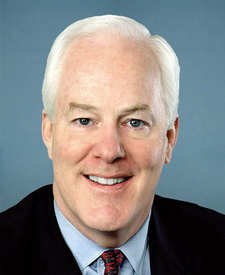
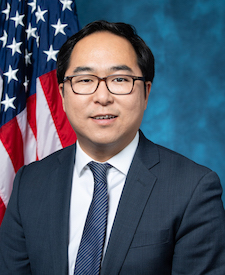
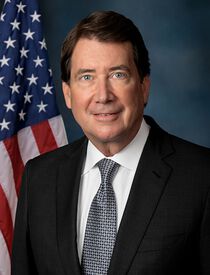

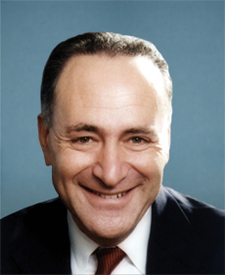
Legislative Progress
In CommitteeMr. Cornyn (for himself, Ms. Cortez Masto, Mr. Scott of …
Read twice and referred to the Committee on Banking, Housing, …
Introduced in Senate
Stakeholder Effects
cui bono?How this legislation distributes effects. Mention counts reflect frequency, not effect magnitude.
Allied governments developing similar mechanisms, Commerce Department, Department of Commerce
Positive-direction: Allied governments developing similar mechanisms, Department of Commerce, Department of the Treasury, Federal employees hired under expedited authority
Negative-direction: Commerce Department, State Department, Treasury Department, Treasury OFAC
Advanced semiconductor companies in China, Chinese companies potentially listed, Chinese companies potentially subject to listing
U.S. investors seeking compliance guidance, U.S. persons making notifiable investments, U.S. private equity firms with China investments
Positive-direction: U.S. investors seeking compliance guidance
Negative-direction: U.S. persons making notifiable investments, U.S. private equity firms with China investments, U.S. venture capital firms investing in China
Financial institutions with compliance obligations, U.S. institutional investors, U.S. investors holding interests in sanctioned entities
Bill Structure & Actor Mappings
Who is "The Secretary" in each section?
- "the_president"
- → President of the United States
- "the_secretary"
- → Secretary of the Treasury
- "the_secretary"
- → Secretary of the Treasury
Key Definitions
Terms defined in this bill
A foreign person incorporated in, with principal place of business in, or organized under laws of China (including Hong Kong/Macau), owned 50%+ by Chinese entities, or subject to Chinese government direction/control, that knowingly engages in defense or surveillance technology sectors
The People's Republic of China, including Hong Kong Special Administrative Region and Macau Special Administrative Region
Less advanced semiconductors, AI systems for military/surveillance use, and other technologies not meeting prohibited thresholds but still posing national security concerns
Advanced semiconductors (sub-16nm logic, 128+ layer NAND, sub-18nm DRAM), AI models trained with 10^25+ FLOPs, quantum computers, hypersonic systems, and EUV lithography equipment
We use a combination of our own taxonomy and classification in addition to large language models to assess meaning and potential beneficiaries. High confidence means strong textual evidence. Always verify with the original bill text.
Learn more about our methodology