Wounded Knee Massacre Memorial and Sacred Site Act
Summary
What This Bill Does
The Wounded Knee Massacre Memorial and Sacred Site Act defines restricted fee status for approximately 40 acres at the December 29, 1890 Wounded Knee Massacre site. The land remains owned by the Oglala Sioux Tribe and Cheyenne River Sioux Tribe, becomes part of the Pine Ridge Indian Reservation, is subject to Oglala Sioux civil and criminal jurisdiction, cannot be transferred without Congress and Tribal consent, and cannot be taxed by state or local government. The bill also says Interior review is not required before the Tribes use the land for purposes allowed by their October 21, 2022 covenant.
Within 365 days, the Interior Secretary must complete documentation, legal-description corrections, and utility or service-right assignments so the land is held in restricted fee status. The land is treated as Indian country, protected against alienation, subject to existing easements and utility agreements, and may not be used for gaming under the Indian Gaming Regulatory Act.
Who Benefits and How
The Oglala Sioux Tribe benefits from protected jurisdiction and ownership over sacred Wounded Knee land. The Cheyenne River Sioux Tribe benefits from the same restricted fee protection and covenant-based use authority. Wounded Knee descendants and memorial advocates benefit from legal protection for a massacre site. Tribal historic preservation offices benefit from reduced Interior preapproval over covenant-consistent uses. Pine Ridge community members benefit from recognition of the land as reservation land.
Who Bears the Burden and How
The Interior Secretary must complete documentation, survey corrections, and utility-right assignments within 365 days. State and local tax authorities lose taxation authority over the land. Future purchasers cannot acquire the land without Congress and Tribal consent. Gaming developers are barred from using the site for Indian Gaming Regulatory Act activity. Utility and easement holders must operate within preserved existing agreements.
Key Provisions
- Defines restricted fee status for the Wounded Knee Tribal land.
- Requires Interior to complete documentation and legal-description work within 365 days.
- Provides Tribal ownership, Pine Ridge reservation status, Oglala Sioux jurisdiction, and tax protection.
- Preserves existing utility, right-of-way, easement, and encumbrance interests.
- Prohibits gaming activity on the Tribal land.
Evidence Chain:
This summary is generated from the full bill text using AI analysis. Expand "Detailed Analysis" below for identified beneficiaries/burden bearers with clause-level evidence links.
At a Glance
What This Bill Does
Places about 40 acres of the Wounded Knee Massacre site on the Pine Ridge Indian Reservation into restricted fee status for the Oglala Sioux Tribe and Cheyenne River Sioux Tribe, protects the land from state and local taxation, bars transfer without Congress and Tribal consent, preserves utility and easement rights, and prohibits gaming on the site.
Key Policy Areas
Tribal Lands, Historic Preservation, Interior, South Dakota
Primary Purpose
Places about 40 acres of the Wounded Knee Massacre site on the Pine Ridge Indian Reservation into restricted fee status for the Oglala Sioux Tribe and Cheyenne River Sioux Tribe, protects the land from state and local taxation, bars transfer without Congress and Tribal consent, preserves utility and easement rights, and prohibits gaming on the site.
Policy Domains
House resolution provisions
Identified Gains
- Oglala Sioux Tribe
- Cheyenne River Sioux Tribe
- Wounded Knee descendants
- Tribal historic preservation offices
- Pine Ridge community members
Identified Costs
- Interior Secretary
- State tax authorities
- Local tax authorities
- Future purchasers
- Gaming developers
- Utility holders
Sponsors
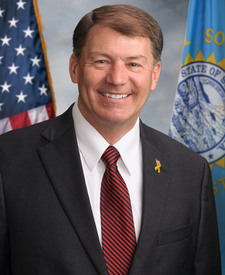
Mike Rounds
R-SD | Primary Sponsor

Legislative Progress
ReportedReported by Ms. Murkowski, without amendment
Placed on Senate Legislative Calendar under General Orders. Calendar No. …
Committee on Indian Affairs. Reported by Senator Murkowski without amendment. …
Committee on Indian Affairs. Ordered to be reported without amendment …
Mr. Rounds (for himself and Mr. Thune) introduced the following …
Read twice and referred to the Committee on Indian Affairs.
Introduced in Senate
Stakeholder Effects
cui bono?How this legislation distributes effects. Mention counts reflect frequency, not effect magnitude.
Bill Structure & Actor Mappings
Who is "The Secretary" in each section?
- "interior"
- → Department of the Interior
We use a combination of our own taxonomy and classification in addition to large language models to assess meaning and potential beneficiaries. High confidence means strong textual evidence. Always verify with the original bill text.
Learn more about our methodology