TRACE Act
Summary
What This Bill Does
The TRACE Act (Tracking and Reporting Absent Community-Members Everywhere Act) requires the Attorney General to add a new data field to the National Missing and Unidentified Persons System (NamUs) indicating whether a missing person's last known location was on Federal land or in U.S. territorial waters. It also mandates annual reporting to Congress on these cases. The engrossed version expanded the original bill's scope to include territorial waters alongside Federal land.
Who Benefits and How
- Families of missing persons on Federal land or territorial waters benefit from improved tracking that ensures these cases are specifically flagged and monitored in the national database, potentially helping locate their loved ones.
- Law enforcement and search-and-rescue agencies benefit from better data identifying missing persons cases linked to Federal land or territorial waters, enabling more targeted resource allocation and cross-jurisdictional coordination.
- Congressional oversight bodies (Senate and House Judiciary Committees) gain annual reports quantifying the scope of missing persons cases on Federal land and territorial waters, supporting evidence-based policy decisions and resource appropriations.
Who Bears the Burden and How
- The Attorney General (via the National Institute of Justice) bears the primary implementation burden: must modify the NamUs database to add a new data field, ensure data collection processes capture Federal land and territorial waters location details, and produce annual reports to Congress beginning the second calendar year after enactment.
- Federal land-managing agencies (USDA, Interior, Defense/Army Corps) are indirectly affected as their jurisdictions define the scope of covered Federal land, though the bill imposes no direct obligations on them.
Key Provisions
- Defines "Attorney General" as acting through the Director of the National Institute of Justice; "Federal land" as land under USDA, Interior (excluding tribal trust land), or DOD/Army Corps jurisdiction; and "territorial waters" as the 12-nautical-mile territorial sea per Presidential Proclamation 5928 (Section 2)
- Requires a new NamUs data field indicating whether a missing person's last known location was confirmed or suspected to be on Federal land or in territorial waters, including specific location details about the unit of Federal land or area of territorial waters (Section 3)
- Mandates annual reports to the Senate and House Judiciary Committees on the number of NamUs cases involving Federal land or territorial waters, starting January 15 of the second calendar year after enactment (Section 4)
- Requires NamUs to add a federal-land and territorial-waters location field.
- Directs annual reports to House and Senate Judiciary Committees.
- Covers missing-person cases involving federal land and U.S. territorial waters.
Evidence Chain:
This summary is generated from the full bill text using AI analysis. Expand "Detailed Analysis" below for identified beneficiaries/burden bearers with clause-level evidence links.
At a Glance
What This Bill Does
Requires the Attorney General to add a data field to the National Missing and Unidentified Persons System (NamUs) indicating whether a missing person's last known location was on Federal land or in U.S. territorial waters, and mandates annual congressional reporting on such cases.
Key Policy Areas
Criminal Justice, Public Safety, Federal Lands
Primary Purpose
Requires the Attorney General to add a data field to the National Missing and Unidentified Persons System (NamUs) indicating whether a missing person's last known location was on Federal land or in U.S. territorial waters, and mandates annual congressional reporting on such cases.
Policy Domains
TRACE Act — Missing Persons Data on Federal Land and Territorial Waters
Identified Gains
- Families of missing persons
- Search-and-rescue agencies
- Congressional Judiciary Committees
- Federal land management agencies
Identified Costs
- Department of Justice
- National Missing and Unidentified Persons System administrators
- Coast Guard
- Maritime law-enforcement agencies
Sponsors

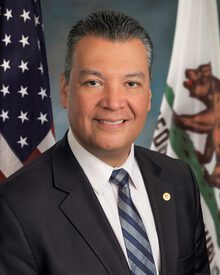
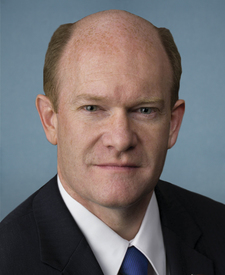

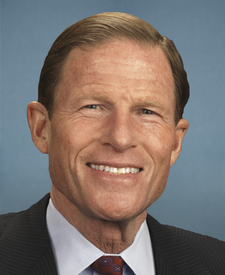
Legislative Progress
Passed SenateHeld at the desk.
Received in the House.
Message on Senate action sent to the House.
Passed Senate with an amendment by Unanimous Consent. (consideration: CR …
Passed/agreed to in Senate: Passed Senate with an amendment by …
Reported by Mr. Grassley, with an amendment
Passed Senate (inferred from es version)
Placed on Senate Legislative Calendar under General Orders. Calendar No. …
Committee on the Judiciary. Reported by Senator Grassley with an …
Committee on the Judiciary. Ordered to be reported with an …
Stakeholder Effects
cui bono?How this legislation distributes effects. Mention counts reflect frequency, not effect magnitude.
Coast Guard and maritime agencies, Coast Guard and maritime law enforcement agencies, Department of Justice / National Institute of Justice
Families and advocates for missing persons on Federal property, Families of missing persons in maritime areas
Congressional Judiciary Committees, Congressional Judiciary Committees (Senate and House)
Federal land management agencies (USDA Forest Service, DOI Bureau of Land Management, Army Corps of Engineers)
Bill Structure & Actor Mappings
Who is "The Secretary" in each section?
- "secretary_of_defense"
- → Secretary of Defense (Army Corps of Engineers land/water projects only)
- "the_attorney_general"
- → Attorney General, acting through the Director of the National Institute of Justice
- "secretary_of_interior"
- → Secretary of the Interior (Federal land jurisdiction, excluding tribal trust land)
- "secretary_of_agriculture"
- → Secretary of Agriculture (Federal land jurisdiction)
Key Definitions
Terms defined in this bill
We use a combination of our own taxonomy and classification in addition to large language models to assess meaning and potential beneficiaries. High confidence means strong textual evidence. Always verify with the original bill text.
Learn more about our methodology