Providing for consideration of the bill (H.R. 3898) to amend the Federal Water Pollution Control Act to make targeted reforms with respect to waters of the United States and other matters, and for other purposes; providing for consideration of the bill (H.R. 3383) to amend the Investment Company Act of 1940 with respect to the authority of closed-end companies to invest in private funds; providing for consideration of the bill (H.R. 3638) to direct the Secretary of Energy to prepare periodic assessments and submit reports on the supply chain for the generation and transmission of electricity, and for other purposes; providing for consideration of the bill (H.R. 3628) to amend the Public Utility Regulatory Policies Act of 1978 to add a standard related to State consideration of reliable generation, and for other purposes; providing for consideration of the bill (H.R. 3668) to promote interagency coordination for reviewing certain authorizations under section 3 of the Natural Gas Act, and for other purposes; providing for consideration of the bill (S. 1071) to require the Secretary of Veterans Affairs to disinter the remains of Fernando V. Cota from Fort Sam Houston National Cemetery, Texas, and for other purposes; and for other purposes.
Legislative Progress
Passed HousePassed House (inferred from eh version)
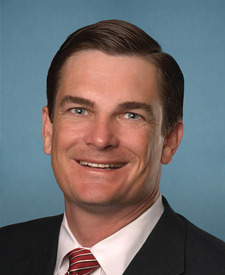
Mr. Austin Scott of Georgia, from the Committee on Rules, …
On Agreeing to the Resolution
Providing for consideration of the bills H.R. 3898, H.R. 3383, H.R. 3638, H.R. 3628, H.R. 3668, and…
On Ordering the Previous Question
Providing for consideration of the bills H.R. 3898, H.R. 3383, H.R. 3638, H.R. 3628, H.R. 3668, and…
Summary
What This Bill Does
This is a House Rules Committee resolution that sets the procedural rules for debating six different bills on the House floor. It determines how much time will be allowed for debate, which amendments can be offered, and the order in which votes will occur. The resolution packages together bills on water pollution, investment companies, electricity supply chains, utility regulation, natural gas permitting, and a veterans affairs matter.
Who Benefits and How
The sponsors and supporters of the six underlying bills benefit because the resolution guarantees their bills will receive floor consideration with limited opportunity for opposition amendments. The House majority leadership benefits by maintaining control of the floor agenda and streamlining the legislative process. Industries potentially affected by the underlying bills (energy companies, investment firms, agricultural interests) may benefit if the underlying bills pass, though this resolution itself does not change substantive law.
Who Bears the Burden and How
House minority members and those seeking to offer amendments not pre-approved by the Rules Committee are restricted from fully participating in the legislative process. Members who oppose any of the underlying bills have limited procedural options to slow or amend them. This "closed rule" approach limits the ability to propose alternative policy approaches on the House floor.
Key Provisions
- Establishes floor debate rules for H.R. 3898 (Federal Water Pollution Control Act amendments regarding "waters of the United States")
- Sets procedure for H.R. 3383 (allowing closed-end investment companies to invest in private funds)
- Provides for consideration of H.R. 3638 (electricity supply chain assessments by DOE)
- Governs debate on H.R. 3628 (Public Utility Regulatory Policies Act "reliable generation" standard)
- Rules for H.R. 3668 (Natural Gas Act permitting coordination)
- Procedure for S. 1071 (VA disinterment of Fernando V. Cota remains)
- Waives points of order against all bills and limits amendments to those pre-approved by the Rules Committee
Evidence Chain:
This summary is derived from the structured analysis below. See "Detailed Analysis" for per-title beneficiaries/burden bearers with clause-level evidence links.
Primary Purpose
A House Rules Committee resolution that establishes procedural rules for floor consideration of six bills covering water pollution, investment companies, electricity supply chains, utility regulation, natural gas permitting, and veterans affairs.
Policy Domains
Legislative Strategy
"Consolidate floor time by packaging multiple energy, environmental, and financial bills under a single procedural rule, while limiting amendments to those pre-approved by the Rules Committee"
Likely Beneficiaries
- House majority leadership (controls floor agenda)
- Bills' sponsors (guaranteed floor consideration)
- Industries affected by underlying bills (water, energy, finance sectors)
Likely Burden Bearers
- House minority members (limited amendment opportunities)
- Members seeking to offer non-approved amendments
Bill Structure & Actor Mappings
Who is "The Secretary" in each section?
- "the_speaker"
- → Speaker of the House
- "the_committee"
- → Committee of the Whole House
- "the_speaker"
- → Speaker of the House
- "the_committee"
- → Committee of the Whole House
- "the_speaker"
- → Speaker of the House
- "the_committee"
- → Committee of the Whole House
- "chair_intelligence"
- → Chair of the Permanent Select Committee on Intelligence
- "chair_armed_services"
- → Chair of the Committee on Armed Services
- "the_speaker"
- → Speaker of the House
We use a combination of our own taxonomy and classification in addition to large language models to assess meaning and potential beneficiaries. High confidence means strong textual evidence. Always verify with the original bill text.
Learn more about our methodology