Impeaching Donald John Trump, President of the United States, of high crimes and misdemeanors.
Analysis under review: This bill has generated analysis that may be too generic or incomplete. Clause-level evidence remains available below.
Summary
What This Bill Does
The bill creates resolves that President Donald John Trump is unfit for office and exhibits Article of Impeachment to the Senate, defines charge: devolving democracy into authoritarianism, and creates cites constitutional authority for impeachment and alleges Trump violated oath of office. It relies on definition changes. The main policy areas are Constitutional Law.
Who Benefits and How
Federal judiciary would be affected.
Who Bears the Burden and How
Trump Administration would be affected, President Donald John Trump would be affected, and Trump Administration officials would be affected.
Key Provisions
- Creates resolves that President Donald John Trump is unfit for office and exhibits Article of Impeachment to the Senate.
- Defines charge: devolving democracy into authoritarianism.
- Creates cites constitutional authority for impeachment and alleges Trump violated oath of office.
- Creates recites allegation that government violated TRO by continuing deportation flights.
- Creates cites court finding of probable cause for criminal contempt.
Evidence Chain:
This summary is generated from the full bill text using AI analysis. Expand "Detailed Analysis" below for identified beneficiaries/burden bearers with clause-level evidence links.
At a Glance
What This Bill Does
The bill creates resolves that President Donald John Trump is unfit for office and exhibits Article of Impeachment to the Senate, defines charge: devolving democracy into authoritarianism, and creates cites constitutional authority for impeachment and alleges Trump violated oath of office.
Key Policy Areas
Constitutional Law
Primary Purpose
The bill creates resolves that President Donald John Trump is unfit for office and exhibits Article of Impeachment to the Senate, defines charge: devolving democracy into authoritarianism, and creates cites constitutional authority for impeachment and alleges Trump violated oath of office.
Policy Domains
Article I - Devolving Democracy into Authoritarianism
Identified Gains
- Federal judiciary
Identified Costs
- Trump Administration
- President Donald John Trump
- Trump Administration officials
- Executive Branch officials
- Federal judges
Sponsors
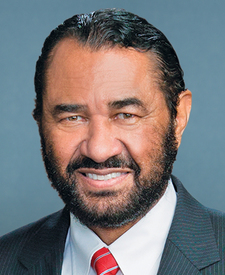
Legislative Progress
In CommitteeMr. Green of Texas submitted the following resolution; which was …
Stakeholder Effects
cui bono?How this legislation distributes effects. Mention counts reflect frequency, not effect magnitude.
Executive Branch officials, President Donald John Trump, Trump Administration
Federal judges, Federal judiciary
Positive-direction: Federal judiciary
Negative-direction: Federal judges
Bill Structure & Actor Mappings
Who is "The Secretary" in each section?
- "the_court"
- → U.S. District Court for the District of Columbia / U.S. District Court for the District of Maryland
- "the_president"
- → President Donald John Trump
- "attorney_general"
- → Attorney General Pamela Bondi
- "the_supreme_court"
- → Supreme Court of the United States
- "secretary_of_state"
- → Secretary of State Marco Rubio
- "chief_judge_boasberg"
- → Chief Judge James E. Boasberg
- "deputy_chief_of_staff"
- → White House Deputy Chief of Staff Stephen Miller
Key Definitions
Terms defined in this bill
Relating to, or favoring a concentration of power in a leader or an elite not constitutionally responsible to the people (per Merriam-Webster)
An Immigration Judge order prohibiting removal of an individual to a specific country due to clear probability of persecution
We use a combination of our own taxonomy and classification in addition to large language models to assess meaning and potential beneficiaries. High confidence means strong textual evidence. Always verify with the original bill text.
Learn more about our methodology