Impeaching John Deacon Bates, a judge of the United States District Court for the District of Columbia, for high crimes and misdemeanors.
Analysis under review: This bill has generated analysis that may be too generic or incomplete. Clause-level evidence remains available below.
Summary
What This Bill Does
The bill requires impeaches Judge John Deacon Bates for issuing a temporary restraining order requiring CDC, HHS, and FDA to restore LGBTQI+ health information on government websites. It relies on compliance mandates. The main policy areas are Judiciary and Healthcare.
Who Benefits and How
CDC, HHS, and FDA (federal health agencies) could face lower compliance burdens and Organizations opposed to gender-affirming care could face fewer barriers.
Who Bears the Burden and How
Judge John Deacon Bates (U.S. District Court for D.C.) could face increased risk, Federal judges who rule against executive branch policies could face increased risk, and LGBTQI+ advocacy organizations (e.g., Doctors for America) could face higher barriers.
Key Provisions
- Requires impeaches Judge John Deacon Bates for issuing a temporary restraining order requiring CDC, HHS, and FDA to restore LGBTQI+ health information on government websites.
Evidence Chain:
This summary is generated from the full bill text using AI analysis. Expand "Detailed Analysis" below for identified beneficiaries/burden bearers with clause-level evidence links.
At a Glance
What This Bill Does
The bill requires impeaches Judge John Deacon Bates for issuing a temporary restraining order requiring CDC, HHS, and FDA to restore LGBTQI+ health information on government websites.
Key Policy Areas
Judiciary, Healthcare
Primary Purpose
The bill requires impeaches Judge John Deacon Bates for issuing a temporary restraining order requiring CDC, HHS, and FDA to restore LGBTQI+ health information on government websites.
Policy Domains
Article I - Pattern of Conduct Incompatible with Judicial Trust
Identified Gains
- CDC, HHS, and FDA (federal health agencies)
- Organizations opposed to gender-affirming care
Identified Costs
- Judge John Deacon Bates (U.S. District Court for D.C.)
- Federal judges who rule against executive branch policies
- LGBTQI+ advocacy organizations (e.g., Doctors for America)
- Healthcare providers relying on federal LGBTQI+ health resources
Sponsors
Legislative Progress
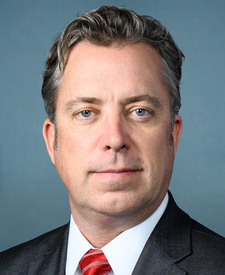
In CommitteeMr. Ogles submitted the following resolution; which was referred to …
Stakeholder Effects
cui bono?How this legislation distributes effects. Mention counts reflect frequency, not effect magnitude.
Federal judges who rule against executive branch policies, Judge John Deacon Bates (U.S. District Court for D.C.)
LGBTQI+ advocacy organizations (e.g., Doctors for America), Organizations opposed to gender-affirming care
Positive-direction: Organizations opposed to gender-affirming care
Negative-direction: LGBTQI+ advocacy organizations (e.g., Doctors for America)
Healthcare providers relying on federal LGBTQI+ health resources
Bill Structure & Actor Mappings
Who is "The Secretary" in each section?
- "cdc"
- → Centers for Disease Control and Prevention
- "fda"
- → Food and Drug Administration
- "hhs"
- → Department of Health and Human Services
- "plaintiff"
- → Doctors for America (far-left organization per resolution)
- "judge_bates"
- → John Deacon Bates, a judge of the United States District Court for the District of Columbia
Key Definitions
Terms defined in this bill
Described in the resolution as "the intentional surgical or chemical castration of children"
Constitutional grounds for impeachment; in this context, allegedly conduct "so utterly lacking in intellectual honesty and basic integrity"
We use a combination of our own taxonomy and classification in addition to large language models to assess meaning and potential beneficiaries. High confidence means strong textual evidence. Always verify with the original bill text.
Learn more about our methodology