HRES1375-119

In Committee

Reaffirming the importance of the United States promoting the safety, health, and well-being of refugees and displaced persons in the United States and around the world.

119th Congress Introduced Jun 18, 2026

Summary

What This Resolution Does

This House resolution would state that the United States should pursue comprehensive, fair, and humane policies for forced migration and refugee challenges. It reaffirms a commitment to the safety, health, well-being, and education of refugees, asylum seekers, refugee children, and other displaced people. It also recognizes individuals, nongovernmental organizations, and international agencies such as the United Nations High Commissioner for Refugees that provide assistance and protection.

The resolution supports fully restoring asylum protections under the Refugee Act of 1980 and rejecting restrictions that limit access to protection and due process at the United States border. It describes the United States Refugee Admissions Program as a tool for national and regional security and international solidarity with countries hosting large refugee populations. It calls on President Trump to lift the program's indefinite suspension and fully restore refugee resettlement in the United States.

The resolution asks the State, Homeland Security, and Health and Human Services Secretaries and the United States Ambassador to the United Nations to strengthen humanitarian and protection leadership. Requested priorities include protecting people exposed to gender-based violence, torture, trafficking, religious persecution, forced conscription, genocide, and exploitation; addressing conflicts and migration causes; increasing support for UNHCR and nongovernmental organizations; and assisting frontline host countries with humanitarian aid, development assistance, education, and livelihoods.

It also calls for meaningful refugee participation in policy design, robust refugee-admission goals, implementation of United States pledges made at the December 2023 Global Refugee Forum, accessible infrastructure and disability-related services, social protection for refugees with disabilities, and renewed support for World Refugee Day.

As a simple House resolution, the measure expresses one chamber's position. It does not change asylum law, lift a suspension, admit a refugee, set a numerical admissions ceiling, appropriate aid, compel an agency to act, or create an enforceable immigration or benefit right. Implementing any requested policy would require executive action, existing authority, appropriations, or separate legislation.

Who Benefits and How

Refugees, asylum seekers, displaced children, people with disabilities, religious minorities, trafficking survivors, and others facing the listed harms could gain political visibility and a House statement supporting protection and resettlement. Frontline host countries, UNHCR, and humanitarian organizations could gain support for additional United States assistance and cooperation. Refugee-led groups could gain a stronger stated role in designing policy. These benefits are agenda-setting only unless the executive branch or Congress takes later binding and funded action.

Who Bears the Burden and How

No agency, government, organization, or person is required to comply with the resolution, and it imposes no penalty or direct cost. State, DHS, HHS, White House, and United Nations mission staff would bear administrative and diplomatic costs only if they voluntarily pursue the requested admissions, protection, aid, and coordination policies. Federal taxpayers would pay additional resettlement or foreign-assistance costs only if funds are later appropriated. Immigration-processing and local-service systems could face added work only if refugee admissions actually increase under separate authority.

Key Provisions

  • Establishes the House's nonbinding support for humane refugee and forced-migration policy.
  • Provides a nonbinding call to restore asylum protection and refugee admissions.
  • Uses House support to promote humanitarian leadership and international conflict prevention.
  • Provides a request for greater UNHCR, NGO, and frontline host-country support.
  • Promotes refugee participation, robust admissions goals, and implementation of 2023 pledges.
  • Provides nonbinding support for disability access, social protection, and World Refugee Day.

Evidence Chain:

This summary is generated from the full bill text using AI analysis. Expand "Detailed Analysis" below for identified beneficiaries/burden bearers with clause-level evidence links.

At a Glance

What This Bill Does

Express the House's support for restored United States refugee admissions and asylum protections, expanded humanitarian leadership, inclusive refugee policy, and stronger international support for displaced people.

Key Policy Areas

Immigration, Foreign Affairs, Human Rights, Humanitarian Assistance, Education

Primary Purpose

Express the House's support for restored United States refugee admissions and asylum protections, expanded humanitarian leadership, inclusive refugee policy, and stronger international support for displaced people.

Policy Domains

Immigration Foreign Affairs Human Rights Humanitarian Assistance Education

Resolution text - nonbinding refugee protection and admissions policy

Identified Gains
  • Refugees seeking resettlement in the United States
  • Asylum seekers requesting border due process
  • Displaced children needing education
  • Refugees with disabilities needing accessible services
  • Frontline refugee host countries
  • Humanitarian organizations protecting displaced people
Model: codex-gpt-5 | Version: bill_summary_v2 | Source: ih
Frontline refugee host countries:
Displaced children needing education:
Asylum seekers requesting border due process:
Refugees seeking resettlement in the United States:
Humanitarian organizations protecting displaced people:
Refugees with disabilities needing accessible services:
Identified Costs
  • Federal refugee-policy staff asked to expand programs
  • Immigration-processing staff under any future admissions increase
  • Federal taxpayers under any future funded expansion
  • Local refugee resettlement service providers
Model: codex-gpt-5 | Version: bill_summary_v2 | Source: ih
Local refugee resettlement service providers:
Federal taxpayers under any future funded expansion:
Federal refugee-policy staff asked to expand programs:
Immigration-processing staff under any future admissions increase:

Legislative Progress

In Committee
Introduced Committee Passed
Jun 18, 2026

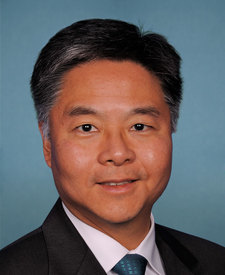
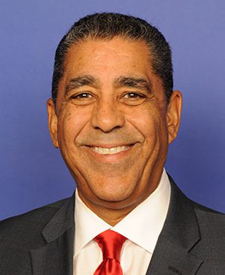
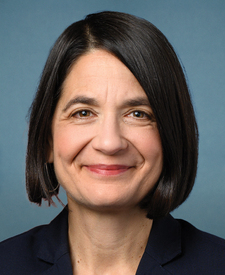
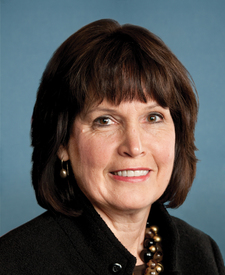
Mr. Lieu (for himself, Mr. Cohen, Ms. Omar, Ms. Moore …

Jun 18, 2026

Referred to the Committee on Foreign Affairs, and in addition …

Jun 18, 2026

Submitted in House

Impact analysis is available but no clear stakeholder effects identified. View clause-level analysis →

Bill Structure & Actor Mappings

Who is "The Secretary" in each section?

Domains
Immigration Foreign Affairs Human Rights Humanitarian Assistance Education
Actor Mappings
"house"
→ House of Representatives
"agencies"
→ State, Homeland Security, and Health and Human Services Departments
"refugees"
→ Refugees, asylum seekers, and displaced people
"president"
→ President of the United States
"un_mission"
→ United States Ambassador to the United Nations

Note: {'scope_ids': ['refugee_protection_resolution'], 'description': 'The resolution asks for restored admissions, asylum access, aid, and agency action but does not itself alter law, lift a suspension, set a funded target, or compel implementation.'}

Key Definitions

Terms defined in this bill

2 terms
"UNHCR" §unhcr

The United Nations High Commissioner for Refugees.

"United States Refugee Admissions Program" §usrap

The Federal program the resolution asks the President to restore fully.

We use a combination of our own taxonomy and classification in addition to large language models to assess meaning and potential beneficiaries. High confidence means strong textual evidence. Always verify with the original bill text.

Learn more about our methodology