HRES1371-119

In Committee

Expressing support for a "World Sickle Cell Awareness Day" in order to increase public awareness across the United States and global community about sickle cell disease and the continued need for empirical research, early detection screenings, novel effective treatments leading to a cure, and preventative care programs with respect to complications from sickle cell anemia and conditions relating to sickle cell disease.

119th Congress Introduced Jun 18, 2026

Summary

What This Resolution Does

This House resolution would endorse the goals and ideals of World Sickle Cell Awareness Day. It states a House commitment to equitable access to new sickle cell disease treatments across economic, racial, and ethnic groups and calls attention to improved health outcomes for people living with the disease. It encourages people in the United States and around the world to hold awareness programs, events, and activities covering sickle cell traits, preventive care, treatments, complications, and patient services.

The resolution calls on the Department of Health and Human Services to develop global policy solutions and work with local governments on domestic resources for newborn screening, therapeutic interventions, and support services. It supports removing barriers to innovative cell, gene, and gene-editing therapies in Medicare and Medicaid, especially for vulnerable patients. It does not identify a particular barrier, change coverage standards, set reimbursement amounts, or make a treatment eligible for payment.

The resolution also encourages the President to form a Sickle Cell Disease Interagency Group involving HHS, the Department of Veterans Affairs, National Institutes of Health, Food and Drug Administration, and Centers for Medicare & Medicaid Services. It urges that group to consider access to possible future curative treatments and bias affecting the population most affected by sickle cell disease in United States and global healthcare systems. The resolution does not itself create the group or direct any agency to join.

As a simple House resolution, the measure expresses the position of one chamber. It does not become statutory law, appropriate funds, create an enforceable right, require an agency rule, mandate screening, or alter Medicare or Medicaid benefits. Any program, coverage, financing, or regulatory change described by the resolution would require voluntary executive action or separate legal authority.

Who Benefits and How

People living with sickle cell disease, their families, and patient-advocacy groups could gain public visibility and a congressional statement supporting equitable access. Newborns at risk of sickle cell disease could benefit if governments later expand screening. Medicare and Medicaid patients could benefit if agencies later remove actual coverage or access barriers for advanced therapies. Researchers and therapy developers could gain attention for curative approaches. These are potential advocacy and agenda-setting benefits; the resolution itself supplies no treatment, screening, or payment.

Who Bears the Burden and How

No person, government, insurer, or healthcare provider is required to comply with this resolution, and it imposes no penalty or direct cost. HHS, VA, NIH, FDA, CMS, White House, and local-government staff would bear administrative planning costs only if they voluntarily develop the requested policies or interagency group. Medicare, Medicaid, healthcare providers, and taxpayers would bear costs only if later binding policy expands screening or therapy access; this resolution neither specifies nor authorizes those costs.

Key Provisions

  • Establishes the House's nonbinding support for World Sickle Cell Awareness Day.
  • Provides a nonbinding call for equitable treatment access across demographic groups.
  • Directs no agency action but asks HHS and local governments to consider screening and support.
  • Provides House support for reducing Medicare and Medicaid barriers to innovative therapies.
  • Uses public encouragement to promote awareness events in the United States and internationally.
  • Provides a nonbinding request for Federal coordination on curative access and healthcare bias.

Evidence Chain:

This summary is generated from the full bill text using AI analysis. Expand "Detailed Analysis" below for identified beneficiaries/burden bearers with clause-level evidence links.

At a Glance

What This Bill Does

Express House support for World Sickle Cell Awareness Day and urge voluntary Federal, local, and public action on awareness, screening, equitable treatment access, interagency coordination, and healthcare bias.

Key Policy Areas

Health, Civil Rights, Social Welfare, Public Awareness

Primary Purpose

Express House support for World Sickle Cell Awareness Day and urge voluntary Federal, local, and public action on awareness, screening, equitable treatment access, interagency coordination, and healthcare bias.

Policy Domains

Health Civil Rights Social Welfare Public Awareness

Resolution text - nonbinding sickle cell awareness and access policy

Identified Gains
  • People living with sickle cell disease
  • Families affected by sickle cell disease
  • Sickle cell patient-advocacy organizations
  • Medicare beneficiaries seeking advanced sickle cell therapies
  • Medicaid beneficiaries seeking advanced sickle cell therapies
Model: codex-gpt-5 | Version: bill_summary_v2 | Source: ih
People living with sickle cell disease:
Families affected by sickle cell disease:
Sickle cell patient-advocacy organizations:
Medicaid beneficiaries seeking advanced sickle cell therapies:
Medicare beneficiaries seeking advanced sickle cell therapies:
Identified Costs
  • Federal health-agency staff invited to coordinate
  • Local government screening-policy staff
  • Healthcare programs implementing any future access policy
Model: codex-gpt-5 | Version: bill_summary_v2 | Source: ih
Local government screening-policy staff:
Federal health-agency staff invited to coordinate:
Healthcare programs implementing any future access policy:

Legislative Progress

In Committee
Introduced Committee Passed
Jun 18, 2026

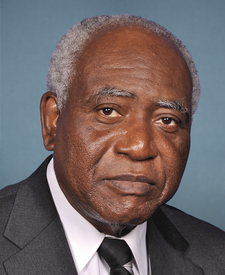
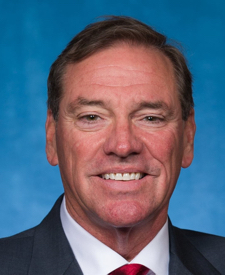
Mr. Davis of Illinois (for himself and Mr. Dunn of …

Jun 18, 2026

Referred to the House Committee on Energy and Commerce.

Jun 18, 2026

Submitted in House

Impact analysis is available but no clear stakeholder effects identified. View clause-level analysis →

Bill Structure & Actor Mappings

Who is "The Secretary" in each section?

Domains
Health Civil Rights Social Welfare Public Awareness
Actor Mappings
"hhs"
→ Department of Health and Human Services
"house"
→ House of Representatives
"public"
→ People in the United States and global community
"patients"
→ People living with sickle cell disease
"interagency_group"
→ Proposed Sickle Cell Disease Interagency Group

Note: {'scope_ids': ['sickle_cell_awareness_resolution'], 'description': 'The resolution endorses policy goals and encourages action but creates no binding agency duty, interagency body, appropriation, screening mandate, or benefit rule.'}

Key Definitions

Terms defined in this bill

1 term
"SCD" §scd

Sickle cell disease.

We use a combination of our own taxonomy and classification in addition to large language models to assess meaning and potential beneficiaries. High confidence means strong textual evidence. Always verify with the original bill text.

Learn more about our methodology