Expressing the sense of the House of Representatives with respect to the use of artificial intelligence in the financial services and housing industries.
Summary
What This Bill Does
This House resolution expresses the chamber's view on artificial intelligence in financial services and housing. It says the House Financial Services Committee should lead public policy for AI adoption in those markets. The resolution calls for a pro-consumer, pro-investor, and pro-innovation approach while making sure regulators enforce existing laws, including anti-discrimination laws, and identify regulatory gaps or ineffective rules.
The resolution also says AI regulation should not disproportionately burden smaller firms. It urges attention to regulator tools, state privacy laws, financial data, cybersecurity standards for AI systems, AI's workforce impact, U.S. global leadership, and taxpayer interests. It is not a binding regulatory rule, but it sets a committee oversight and policy agenda.
Who Benefits and How
House Financial Services Committee members benefit from a stated lead role on AI policy in finance and housing. Small financial firms benefit from the resolution's warning against disproportionate compliance burdens. Financial AI developers benefit from pro-innovation language and regulator cost-effectiveness review. Consumers using AI finance tools benefit from emphasis on anti-discrimination law, privacy, and cybersecurity. Housing finance firms benefit from inclusion in the committee's AI oversight agenda.
Who Bears the Burden and How
Financial regulators face pressure to justify AI-related rules, assess innovation and cost effects, and enforce existing law. Large financial firms using AI may face committee scrutiny over anti-discrimination, cybersecurity, privacy, and workforce impacts. State privacy lawmakers may face federal review of whether financial privacy reforms are needed. Taxpayer-risk managers must account for emerging technology exposure in financial markets.
Key Provisions
- Provides House support for Financial Services Committee leadership on AI policy in finance and housing.
- Directs attention to anti-discrimination enforcement and regulatory gaps as market participants adopt AI.
- Requires consideration of smaller-firm burdens before AI regulatory frameworks are developed.
- Strengthens focus on privacy, cybersecurity, workforce effects, global leadership, and taxpayer interests.
Evidence Chain:
This summary is generated from the full bill text using AI analysis. Expand "Detailed Analysis" below for identified beneficiaries/burden bearers.
At a Glance
What This Bill Does
States that the House Financial Services Committee should lead AI policy for financial services and housing, promote pro-consumer and pro-innovation adoption, ensure regulators enforce existing laws including anti-discrimination laws, avoid disproportionate burdens on smaller firms, evaluate privacy and cybersecurity issues, and protect taxpayer interests.
Key Policy Areas
Artificial Intelligence, Financial Services, Housing, Congressional Oversight
Primary Purpose
States that the House Financial Services Committee should lead AI policy for financial services and housing, promote pro-consumer and pro-innovation adoption, ensure regulators enforce existing laws including anti-discrimination laws, avoid disproportionate burdens on smaller firms, evaluate privacy and cybersecurity issues, and protect taxpayer interests.
Policy Domains
House resolution provisions
Identified Gains
Contextual inference, no direct clause citation- House Financial Services Committee members
- Small financial firms
- Financial AI developers
- Consumers using AI finance tools
- Housing finance firms
Contextual inference, no direct clause citation
Identified Costs
Contextual inference, no direct clause citation- Financial regulators
- Large financial firms using AI
- State privacy lawmakers
- Taxpayer-risk managers
Contextual inference, no direct clause citation
Sponsors



Legislative Progress
ReportedPlaced on the House Calendar, Calendar No. 67.
Reported (Amended) by the Committee on Financial Services. H. Rept. …
Additional sponsors: Mr. Liccardo and Mr. Downing
Placed on the House Calendar, Calendar No. 67.
Ordered to be Reported (Amended) by the Yeas and Nays: …
Committee Consideration and Mark-up Session Held
Submitted in House
Referred to the House Committee on Financial Services.
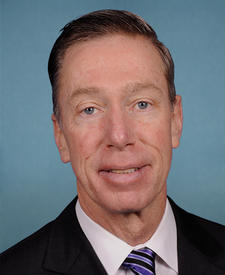
Mr. Steil (for himself and Mr. Lynch) submitted the following …
Stakeholder Effects
cui bono?How this legislation distributes effects. Mention counts reflect frequency, not effect magnitude.
Financial regulators, Small financial firms
Bill Structure & Actor Mappings
Who is "The Secretary" in each section?
- "committee"
- → House Financial Services Committee
We use a combination of our own taxonomy and classification in addition to large language models to assess meaning and potential beneficiaries. High confidence means strong textual evidence. Always verify with the original bill text.
Learn more about our methodology