To require the Secretary of Homeland Security to develop a plan to identify, integrate, and deploy new, innovative, disruptive, or other emerging or advanced technologies to enhance, or address capability gaps in, border security operations, and for other purposes.
Summary
What This Bill Does
The Emerging Innovative Border Technologies Act requires the Secretary of Homeland Security, acting through the CBP Commissioner and the DHS Science and Technology Under Secretary, to submit a border-technology plan to House and Senate homeland-security committees within 180 days. The plan must identify, integrate, and deploy new, disruptive, emerging, or advanced technologies to improve border security or close capability gaps. The technology list includes artificial intelligence, machine learning, automation, fiber-optic sensing, nanotechnology, optical and cognitive radar, modeling and simulation, hyperspectral sensors, LIDAR, imaging, identification and categorization systems, aircraft sensors, unmanned aerial systems, counter-UAS tools, mobile surveillance vehicles, cameras, tower surveillance, unattended sensors, lighter-than-air surveillance equipment, non-X-ray inspection using muon tomography, tunnel detection, radios, LTE broadband, and miniature satellites. The plan must explain CBP Innovation Team use, acquisition coordination, technologies used by other agencies, procurement authorities, programs of record, privacy and security impacts on border communities, legacy technology phaseouts and costs, S&T coordination, private-sector and university collaboration, and performance metrics.
Who Benefits and How
U.S. Customs and Border Protection benefits because the bill requires a detailed plan for bringing emerging technologies into border operations and scaling successful pilots into programs of record. CBP Innovation Teams benefit from statutory recognition and reporting on their composition, authorities, and contributions. Border security technology companies benefit from DHS attention to private-sector technologies and incentives to develop tools for CBP mission needs. Small and disadvantaged businesses, university centers of excellence, and federal laboratories benefit from required attention to collaboration opportunities. Congressional homeland-security committees benefit from a detailed plan that supports oversight of technology choices, costs, privacy impacts, and performance metrics.
Who Bears the Burden and How
The Secretary of Homeland Security, CBP Commissioner, and DHS Science and Technology Under Secretary must produce the plan within 180 days. CBP acquisition offices must analyze procurement authorities, other-agency technologies, scaling plans, legacy technology phaseouts, and cost estimates. DHS privacy and security officials must assess impacts on border communities. Border communities may bear surveillance and privacy risks as emerging technology deployments expand. Private technology vendors may face evaluation against CBP performance metrics and mission requirements.
Key Provisions
- Requires DHS to submit an emerging border-technology plan within 180 days.
- Requires the plan to address AI, machine learning, automation, fiber-optic sensing, radar, LIDAR, imaging, tunnel detection, UAS, and communications technologies.
- Requires assessment of CBP Innovation Team authority, composition, coordination, and contributions.
- Requires analysis of CBP procurement authorities and whether additional authorities are needed.
- Requires plans for scaling emerging-technology programs into programs of record.
- Requires privacy and security impact assessment for border communities.
- Requires evaluation of legacy border technology phaseouts, private-sector collaboration, performance metrics, and planned programs.
Evidence Chain:
This summary is generated from the full bill text using AI analysis. Expand "Detailed Analysis" below for identified beneficiaries/burden bearers with clause-level evidence links.
At a Glance
What This Bill Does
Requires DHS, through CBP and the DHS Science and Technology Directorate, to submit within 180 days a plan for identifying, integrating, and deploying emerging border-security technologies such as AI, machine learning, automation, fiber-optic sensing, radar, LIDAR, imaging, tunnel detection, nonintrusive inspection, unmanned systems, and communications tools, including assessments of CBP Innovation Teams, procurement authorities, privacy impacts, legacy technology replacement, private-sector collaboration, metrics, and planned programs.
Key Policy Areas
Border Security, Homeland Security, Technology
Primary Purpose
Requires DHS, through CBP and the DHS Science and Technology Directorate, to submit within 180 days a plan for identifying, integrating, and deploying emerging border-security technologies such as AI, machine learning, automation, fiber-optic sensing, radar, LIDAR, imaging, tunnel detection, nonintrusive inspection, unmanned systems, and communications tools, including assessments of CBP Innovation Teams, procurement authorities, privacy impacts, legacy technology replacement, private-sector collaboration, metrics, and planned programs.
Policy Domains
House resolution provisions
Identified Gains
- U.S. Customs and Border Protection
- CBP Innovation Teams
- Border security technology companies
- Small disadvantaged businesses
- University centers of excellence
- Federal laboratories
- Congressional homeland-security committees
Identified Costs
- Secretary of Homeland Security
- CBP Commissioner
- DHS Science and Technology Under Secretary
- CBP acquisition offices
- DHS privacy officials
- Border communities
- Private technology vendors
Sponsors
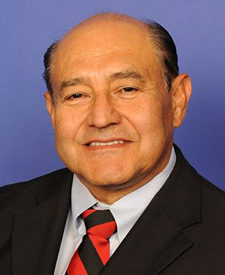
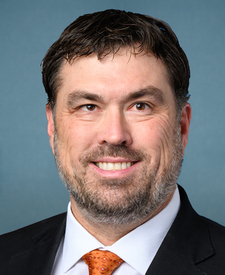
Legislative Progress
Passed HouseReceived; read twice and referred to the Committee on Homeland …
Passed House (inferred from eh version)
Mr. Correa (for himself and Mr. Luttrell) introduced the following …
Stakeholder Effects
cui bono?How this legislation distributes effects. Mention counts reflect frequency, not effect magnitude.
CBP Innovation Teams, Congressional homeland-security committees, Customs and Border Protection
Positive-direction: Congressional homeland-security committees
Negative-direction: CBP Innovation Teams, Customs and Border Protection, DHS Science and Technology Directorate
Bill Structure & Actor Mappings
Who is "The Secretary" in each section?
- "secretary"
- → Secretary of Homeland Security
- "commissioner"
- → Commissioner of U.S. Customs and Border Protection
- "under_secretary"
- → DHS Science and Technology Under Secretary
We use a combination of our own taxonomy and classification in addition to large language models to assess meaning and potential beneficiaries. High confidence means strong textual evidence. Always verify with the original bill text.
Learn more about our methodology