Fair Access to Banking Act
Summary
What This Bill Does
The bill creates congressional findings establishing that financial institutions have been denying services to lawful businesses based on subjective political criteria, mirroring the discriminatory practices of Operation Choke, creates states the purposes of the Act: ensure fair access to financial services, ensure fair treatment by banks and credit unions, prevent financial institutions from impeding lawful commerce to achieve policy goals, and amends the Federal Reserve Act and Federal Deposit Insurance Act to bar member banks with over $50 billion in assets from using Fed discount window lending if they refuse to do business with law-abiding persons. It relies on compliance mandates and definition changes. The main policy areas are Finance and Energy.
Who Benefits and How
Lawful businesses denied payment card access on political grounds could face fewer barriers, Lawful businesses previously denied banking services could face fewer barriers, and Lawful businesses denied credit union services could face fewer barriers.
Who Bears the Burden and How
Payment card networks (Visa, Mastercard, etc.) would take on compliance duties, Member banks with over $50 billion in consolidated assets would take on compliance duties, and Covered banks (banks with $50B+ in total assets) would take on compliance duties.
Key Provisions
- Creates congressional findings establishing that financial institutions have been denying services to lawful businesses based on subjective political criteria, mirroring the discriminatory practices of Operation Choke...
- Creates states the purposes of the Act: ensure fair access to financial services, ensure fair treatment by banks and credit unions, prevent financial institutions from impeding lawful commerce to achieve policy goals...
- Amends the Federal Reserve Act and Federal Deposit Insurance Act to bar member banks with over $50 billion in assets from using Fed discount window lending if they refuse to do business with law-abiding persons.
- Prohibits payment card networks (and their subsidiaries, agents, and processors) from denying access to their services based on political or reputational risk considerations to any person in compliance with the law.
- Amends the Federal Credit Union Act to allow enforcement action against any insured credit union (or its subsidiary) that refuses to do business with any person in compliance with the law, including the fair access...
Evidence Chain:
This summary is generated from the full bill text using AI analysis. Expand "Detailed Analysis" below for identified beneficiaries/burden bearers with clause-level evidence links.
At a Glance
What This Bill Does
The bill creates congressional findings establishing that financial institutions have been denying services to lawful businesses based on subjective political criteria, mirroring the discriminatory practices of Operation Choke, creates states the purposes of the Act: ensure fair access to financial services, ensure fair treatment by banks and credit unions, prevent financial institutions from impeding lawful commerce to achieve policy goals, and amends the Federal Reserve Act and Federal Deposit Insurance Act to bar member banks with over $50 billion in assets from using Fed discount window lending if they refuse to do business with law-abiding persons.
Key Policy Areas
Finance, Energy
Primary Purpose
The bill creates congressional findings establishing that financial institutions have been denying services to lawful businesses based on subjective political criteria, mirroring the discriminatory practices of Operation Choke, creates states the purposes of the Act: ensure fair access to financial services, ensure fair treatment by banks and credit unions, prevent financial institutions from impeding lawful commerce to achieve policy goals, and amends the Federal Reserve Act and Federal Deposit Insurance Act to bar member banks with over $50 billion in assets from using Fed discount window lending if they refuse to do business with law-abiding persons.
Policy Domains
Fair Access to Banking Act - Single Topic Bill
Identified Gains
- Lawful businesses denied payment card access on political grounds
- Lawful businesses previously denied banking services
- Lawful businesses denied credit union services
- Lawful businesses denied ACH access through discriminatory banking
- Litigation attorneys and affected persons (private right of action)
Identified Costs
- Payment card networks (Visa, Mastercard, etc.)
- Member banks with over $50 billion in consolidated assets
- Covered banks (banks with $50B+ in total assets)
- Nonmember banks and trust companies with over $50 billion in assets
- Large banks and credit unions using ACH Network ($50B+ in assets)
Sponsors
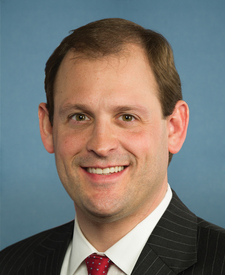
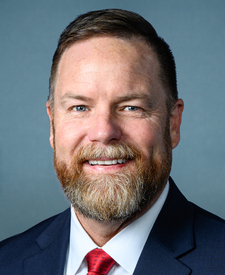


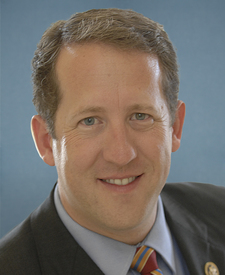
Legislative Progress
In CommitteeMr. Barr (for himself, Mr. Meuser, Mr. Scott Franklin of …
Referred to the House Committee on Financial Services.
Introduced in House
Stakeholder Effects
cui bono?How this legislation distributes effects. Mention counts reflect frequency, not effect magnitude.
Covered banks (banks with $50B+ in total assets), Insured credit unions and their subsidiaries, Insured depository institutions with over $500 billion in assets
Lawful businesses denied ACH access through discriminatory banking, Lawful businesses denied credit union services, Lawful businesses denied payment card access on political grounds
Payment card networks (Visa, Mastercard, etc.)
Payment processors and agents of card networks
Litigation attorneys and affected persons (private right of action)
Bill Structure & Actor Mappings
Who is "The Secretary" in each section?
- "covered_bank"
- → Any bank with B+ in total assets (presumptive threshold)
- "the_comptroller"
- → Comptroller of the Currency (OCC)
- "payment_card_network"
- → As defined in section 921(c) of the Electronic Fund Transfer Act
Key Definitions
Terms defined in this bill
Has the meaning given in section 921(c) of the Electronic Fund Transfer Act (15 U.S.C. 1693o-2(c)).
An entity for which the OCC is the appropriate Federal banking agency, including member banks, non-member banks, covered credit unions, State-chartered non-member banks, and trust companies.
Any insured credit union as defined in the Federal Credit Union Act, or any credit union eligible to become insured.
A bank that can raise the price of financial services or significantly impede a person's business. Banks with B+ in total assets are presumed to be covered banks; those under B are not.
To deny, refuse to enter into, or terminate an existing financial services relationship with a person.
Persons engaged in lawful activities can obtain financial services without impediments caused by prejudice against the person, their business, products, or favoritism for competitors.
A financial product or service including commercial banking, lending, financing, leasing, asset management, credit card services, payment processing, securities trading, and insurance.
We use a combination of our own taxonomy and classification in addition to large language models to assess meaning and potential beneficiaries. High confidence means strong textual evidence. Always verify with the original bill text.
Learn more about our methodology