Fair Access to Banking Act
Analysis under review: This bill has generated analysis that may be too generic or incomplete. Clause-level evidence remains available below.
Summary
What This Bill Does
The Fair Access to Banking Act prevents large banks and financial institutions from refusing services to lawful businesses based on political opinions or reputational concerns. It requires that financial service decisions be made using objective, risk-based criteria rather than subjective judgments about a customer's industry or political stance.
Who Benefits and How
Businesses in politically controversial but lawful industries (such as firearms dealers, fossil fuel companies, and others previously targeted by Operation Choke Point) benefit by gaining legal protections ensuring access to banking services. These businesses gain a private right of action with treble damages if denied services. Small banks under billion in assets are largely exempt and may benefit from reduced compliance scope.
Who Bears the Burden and How
Large banks and financial institutions with over billion in assets face new compliance mandates: they must provide written justification for any denial of services and cannot rely on reputational risk as a sole basis for denial. Payment card networks face civil penalties up to ,000 per violation. Banks that refuse service to lawful businesses lose access to the Fed discount window and ACH network.
Key Provisions
- Banks over B in assets that refuse service to lawful businesses lose access to Federal Reserve discount window lending and the ACH network
- Payment card networks face fines up to ,000 per violation for denying access based on political/reputational reasons
- Covered banks must provide written justification for denying services, and cannot rely solely on reputational risk
- Affected persons can sue in federal court for treble damages plus attorney fees
Evidence Chain:
This summary is generated from the full bill text using AI analysis. Expand "Detailed Analysis" below for identified beneficiaries/burden bearers.
At a Glance
What This Bill Does
Prohibits large financial institutions (banks, credit unions, payment card networks) from denying financial services to lawful businesses based on subjective political, reputational, or ideological criteria, requiring instead that access decisions be based on impartial, quantitative risk-based standards.
Key Policy Areas
Finance, Banking, Civil Rights
Primary Purpose
Prohibits large financial institutions (banks, credit unions, payment card networks) from denying financial services to lawful businesses based on subjective political, reputational, or ideological criteria, requiring instead that access decisions be based on impartial, quantitative risk-based standards.
Policy Domains
Fair Access to Banking Act - Single Topic Bill
Identified Gains
Contextual inference, no direct clause citation- Lawful but politically controversial businesses (firearms, fossil fuels, cannabis where state-legal, etc.)
- Small and mid-size businesses denied banking services
- Industries previously targeted by Operation Choke Point
Contextual inference, no direct clause citation
Identified Costs
Contextual inference, no direct clause citation- Large banks and financial institutions (B+ in assets)
- Payment card networks (Visa, Mastercard, etc.)
- Credit unions
- Office of the Comptroller of the Currency (new enforcement responsibilities)
Contextual inference, no direct clause citation
Sponsors


Legislative Progress
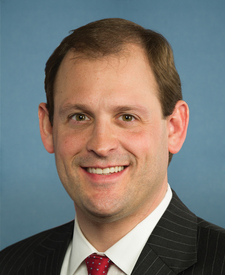
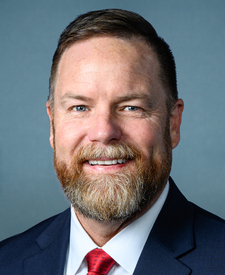
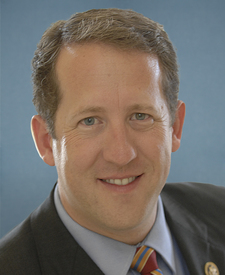
In CommitteeMr. Barr (for himself, Mr. Meuser, Mr. Scott Franklin of …
Referred to the House Committee on Financial Services.
Introduced in House
Stakeholder Effects
cui bono?How this legislation distributes effects. Mention counts reflect frequency, not effect magnitude.
Covered banks (banks with $50B+ in total assets), Insured credit unions and their subsidiaries, Insured depository institutions with over $500 billion in assets
Lawful businesses denied ACH access through discriminatory banking, Lawful businesses denied credit union services, Lawful businesses denied payment card access on political grounds
Payment card networks (Visa, Mastercard, etc.)
Payment processors and agents of card networks
Litigation attorneys and affected persons (private right of action)
Bill Structure & Actor Mappings
Who is "The Secretary" in each section?
- "covered_bank"
- → Any bank with B+ in total assets (presumptive threshold)
- "the_comptroller"
- → Comptroller of the Currency (OCC)
- "payment_card_network"
- → As defined in section 921(c) of the Electronic Fund Transfer Act
Key Definitions
Terms defined in this bill
Has the meaning given in section 921(c) of the Electronic Fund Transfer Act (15 U.S.C. 1693o-2(c)).
An entity for which the OCC is the appropriate Federal banking agency, including member banks, non-member banks, covered credit unions, State-chartered non-member banks, and trust companies.
Any insured credit union as defined in the Federal Credit Union Act, or any credit union eligible to become insured.
A bank that can raise the price of financial services or significantly impede a person's business. Banks with B+ in total assets are presumed to be covered banks; those under B are not.
To deny, refuse to enter into, or terminate an existing financial services relationship with a person.
Persons engaged in lawful activities can obtain financial services without impediments caused by prejudice against the person, their business, products, or favoritism for competitors.
A financial product or service including commercial banking, lending, financing, leasing, asset management, credit card services, payment processing, securities trading, and insurance.
We use a combination of our own taxonomy and classification in addition to large language models to assess meaning and potential beneficiaries. High confidence means strong textual evidence. Always verify with the original bill text.
Learn more about our methodology