To promote the economic security and safety of survivors of domestic violence, dating violence, sexual assault, or stalking, and for other purposes.
Analysis under review: This bill has generated analysis that may be too generic or incomplete. Clause-level evidence remains available below.
Summary
What This Bill Does
This bill creates a comprehensive set of protections for survivors of domestic violence, dating violence, sexual assault, and stalking. It requires employers to provide up to 40 days of 'safe leave' annually (10 days paid) so victims can seek counseling, relocate, attend court proceedings, or take other protective measures. It also prohibits discrimination against victims in employment and insurance.
Who Benefits and How
Survivors of domestic violence and related violence benefit from guaranteed leave rights, job protections, and insurance continuity. Employees receive 40 workdays of protected leave (10 paid) to address violence-related needs. Victims gain protection against insurance denials or cancellations based on their status as abuse survivors, and cannot be denied unemployment benefits if they voluntarily leave work due to violence. Victim services organizations receive expanded grant funding.
Who Bears the Burden and How
Employers must provide up to 40 days of safe leave per employee per year (10 paid), implement reasonable workplace safety accommodations, post notice of employee rights, and face potential liability for violations including liquidated damages and attorney fees. Insurers cannot deny coverage or increase premiums based on abuse-victim status and must maintain coverage for victims who separate from abusers. State unemployment systems must update eligibility rules to cover voluntary separations due to violence.
Key Provisions
- Requires employers to provide 40 workdays of safe leave annually (10 paid) for violence survivors
- Prohibits employment discrimination against victims and requires reasonable safety accommodations
- Bans insurers from denying coverage or raising premiums based on abuse-victim status
- Expands unemployment eligibility for victims who leave jobs due to violence
- Invalidates predispute arbitration agreements for claims under this Act
Evidence Chain:
This summary is generated from the full bill text using AI analysis. Expand "Detailed Analysis" below for identified beneficiaries/burden bearers.
At a Glance
What This Bill Does
Establishes comprehensive workplace protections, leave entitlements, and insurance protections for survivors of domestic violence, dating violence, sexual assault, and stalking.
Key Policy Areas
Labor Rights, Public Safety, Insurance Regulation, Social Services, Unemployment Insurance
Primary Purpose
Establishes comprehensive workplace protections, leave entitlements, and insurance protections for survivors of domestic violence, dating violence, sexual assault, and stalking.
Policy Domains
Title I - Grant Program Reauthorization
Identified Gains
Contextual inference, no direct clause citation- Victim services organizations
- Domestic violence coalitions
- Sexual assault coalitions
- Survivors of violence
Contextual inference, no direct clause citation
Identified Costs
Contextual inference, no direct clause citation- Federal government (grant funding)
Contextual inference, no direct clause citation
Title V - Insurance Protections
Identified Gains
Contextual inference, no direct clause citation- Violence survivors seeking insurance
- Violence survivors maintaining coverage after separation from abuser
Contextual inference, no direct clause citation
Identified Costs
Contextual inference, no direct clause citation- Health insurers
- Life insurers
- Property and casualty insurers
- Disability insurers
Contextual inference, no direct clause citation
Title II - Safe Leave
Identified Gains
Contextual inference, no direct clause citation- Employees who are survivors of violence
- Family members of survivors
Contextual inference, no direct clause citation
Identified Costs
Contextual inference, no direct clause citation- All employers
- State welfare agencies
Contextual inference, no direct clause citation
Title IV - Unemployment Compensation
Identified Gains
Contextual inference, no direct clause citation- Workers who leave jobs due to violence
Contextual inference, no direct clause citation
Identified Costs
Contextual inference, no direct clause citation- State unemployment insurance systems
- Employers (through UI taxes)
Contextual inference, no direct clause citation
Title III - Employment Protections
Identified Gains
Contextual inference, no direct clause citation- Employees who are survivors of violence
- Job applicants who are survivors
Contextual inference, no direct clause citation
Identified Costs
Contextual inference, no direct clause citation- All employers
- Public agencies administering public assistance
Contextual inference, no direct clause citation
Sponsors
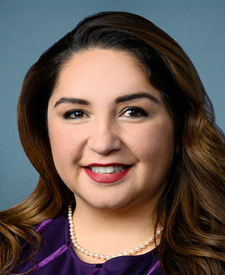
Legislative Progress
IntroducedMrs. Dingell (for herself, Ms. Moore of Wisconsin, Ms. Kuster, …
Stakeholder Effects
cui bono?How this legislation distributes effects. Mention counts reflect frequency, not effect magnitude.
Low-income survivors of violence, Survivors harmed by insurance discrimination, Survivors of violence
Employers in all industries, Employers providing accommodations, Employers required to post notices
Department of Labor, Federal Trade Commission, Health and Human Services
Positive-direction: States with stronger survivor protections
Negative-direction: Department of Labor, Federal Trade Commission, Health and Human Services, Public agencies providing assistance, State social services agencies, State unemployment insurance programs
Arbitration service providers, Employment law attorneys
Positive-direction: Employment law attorneys
Negative-direction: Arbitration service providers
Health insurance companies, Insurance companies, Life and property insurers
Community-based organizations serving survivors, Domestic violence coalitions, Victim services organizations
Bill Structure & Actor Mappings
Who is "The Secretary" in each section?
- "the_director"
- → Director of the Office on Violence Against Women
- "the_attorney_general"
- → Attorney General of the United States
- "the_secretary"
- → Secretary of Labor
- "the_commission"
- → Equal Employment Opportunity Commission
- "the_attorney_general"
- → Attorney General of the United States
- "the_secretary"
- → Secretary of Labor
- "the_secretary"
- → Secretary of Labor
- "the_attorney_general"
- → Attorney General
- "the_secretary_of_hhs"
- → Secretary of Health and Human Services
Note: The Secretary refers to Secretary of Labor throughout Titles II and IV, with no conflicts
Key Definitions
Terms defined in this bill
Domestic violence, dating violence, sexual assault, stalking, or communication of intimate visual depiction without consent
The individual who commits a qualifying act of violence
A party named on a policy, certificate, or health benefit plan with legal rights to benefits
Any person or entity engaged in insurance business, including health insurers, life insurers, and employers providing employee benefits
Includes failing to implement reasonable safety procedures or job modifications in response to violence, as well as harassment or retaliation
Another individual with whom the first individual is in a committed relationship
We use a combination of our own taxonomy and classification in addition to large language models to assess meaning and potential beneficiaries. High confidence means strong textual evidence. Always verify with the original bill text.
Learn more about our methodology