To establish in the Department of Homeland Security a working group relating to countering terrorist, cybersecurity, border and port security, and transportation security threats posed to the United States by the Chinese Communist Party, and for other purposes.
Analysis under review: This bill has generated analysis that may be too generic or incomplete. Clause-level evidence remains available below.
Summary
What This Bill Does
The "SHIELD Against CCP Act" creates a dedicated working group within the Department of Homeland Security to focus on security threats from the Chinese Communist Party. The group will address terrorism, cybersecurity, border security, port security, and transportation security threats linked to China.
Who Benefits and How
- U.S. national security gains a dedicated unit focusing on multi-domain threats from China.
- Critical infrastructure operators benefit from coordinated federal attention to Chinese cyber and physical threats.
- Border and port security agencies receive focused support for China-related threats.
- Privacy advocates are represented with at least one dedicated compliance employee.
Who Bears the Burden and How
- DHS must establish and staff the working group with dedicated employees and a Director.
- Intelligence community and federal agencies may provide detailees with relevant expertise.
- Chinese entities operating in the U.S. face increased scrutiny in security-related matters.
Key Provisions
- Requires DHS to establish the working group within 180 days of enactment
- Working group led by a Director appointed by the Secretary of Homeland Security
- Must have sufficient staff and at least one privacy compliance officer
- Can accept detailees from intelligence community and other federal agencies
- Covers terrorist, cyber, border, port, and transportation security threats from China
Evidence Chain:
This summary is generated from the full bill text using AI analysis. Expand "Detailed Analysis" below for identified beneficiaries/burden bearers.
At a Glance
What This Bill Does
Establishes a working group within the Department of Homeland Security to counter terrorist, cybersecurity, border, port, and transportation security threats posed to the United States by the Chinese Communist Party.
Key Policy Areas
Homeland Security, National Security, Cybersecurity, Foreign Affairs
Primary Purpose
Establishes a working group within the Department of Homeland Security to counter terrorist, cybersecurity, border, port, and transportation security threats posed to the United States by the Chinese Communist Party.
Policy Domains
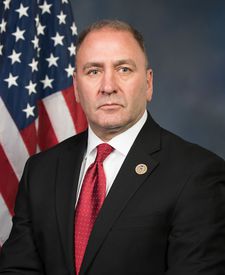
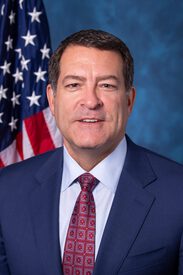
Sponsors



Legislative Progress
ReportedReceived; read twice and referred to the Committee on Homeland …
Additional sponsors: Mr. Higgins of Louisiana, Mr. D'Esposito, Mr. Green …
Reported from the Committee on Homeland Security
Committees on Foreign Affairs, Financial Services, Ways and Means, and …
Mr. Strong (for himself and Mr. Suozzi) introduced the following …
Impact analysis is available but no clear stakeholder effects identified. View clause-level analysis →
Bill Structure & Actor Mappings
Who is "The Secretary" in each section?
- "the_director"
- → Director of the Working Group
- "the_secretary"
- → Secretary of Homeland Security
We use a combination of our own taxonomy and classification in addition to large language models to assess meaning and potential beneficiaries. High confidence means strong textual evidence. Always verify with the original bill text.
Learn more about our methodology