To amend chapter 8 of title 5, United States Code, to provide that major rules of the executive branch shall have no force or effect unless a joint resolution of approval is enacted into law.
Analysis under review: This bill has generated analysis that may be too generic or incomplete. Clause-level evidence remains available below.
Summary
What This Bill Does
The REINS Act fundamentally changes how federal regulations take effect. Currently, agencies can issue regulations that become law unless Congress actively blocks them. This bill flips that process: major regulations (those with economic impact over $100 million annually) cannot take effect unless Congress passes a joint resolution approving them. The bill also requires agencies to eliminate existing regulations when they create new ones (regulatory budgeting) and makes all major rules expire after 10 years unless Congress reauthorizes them.
Who Benefits and How
Businesses and industries facing federal regulation benefit significantly. They gain multiple new opportunities to block regulations: through Congressional votes, regulatory budget constraints, and automatic 10-year sunsets. The bill creates legal defenses against rule violations if the statutory basis was unclear. Companies in heavily regulated industries like energy, finance, healthcare, and manufacturing would face fewer new compliance requirements.
Who Bears the Burden and How
Federal regulatory agencies face substantial new procedural burdens: detailed reporting to Congress, cost-benefit analyses, and regulatory budget constraints. The Office of Management and Budget must establish regulatory budgets and review guidance documents. Environmental, consumer protection, and public health advocates may see fewer protective regulations enacted. Workers and communities that benefit from health, safety, and environmental rules may experience reduced protections.
Key Provisions
- Major rules (over $100M annual economic impact) require Congressional approval via joint resolution within 70 session days
- Agencies must offset new regulatory costs by repealing existing regulations (regulatory budgeting)
- All major rules automatically expire after 10 years unless Congress votes to extend them
- Citizens can sue agencies that fail to properly classify rules as major or comply with procedures
Evidence Chain:
This summary is generated from the full bill text using AI analysis. Expand "Detailed Analysis" below for identified beneficiaries/burden bearers.
At a Glance
What This Bill Does
Requires Congressional approval before major federal agency rules can take effect, establishes regulatory budgets requiring agencies to offset new regulatory costs, and creates sunset provisions for major rules.
Key Policy Areas
Government Administration, Regulatory Policy, Congressional Oversight, Administrative Law
Primary Purpose
Requires Congressional approval before major federal agency rules can take effect, establishes regulatory budgets requiring agencies to offset new regulatory costs, and creates sunset provisions for major rules.
Policy Domains
Section 801 - Congressional Review
Identified Gains
Contextual inference, no direct clause citation- Regulated industries
- Business interests
- Congress
Contextual inference, no direct clause citation
Identified Costs
Contextual inference, no direct clause citation- Federal regulatory agencies
- GAO
- Environmental and consumer protection advocates
Contextual inference, no direct clause citation
Section 802 - Congressional Approval Procedure for Major Rules
Identified Gains
Contextual inference, no direct clause citation- Congress
- Regulated industries
Contextual inference, no direct clause citation
Identified Costs
Contextual inference, no direct clause citation- Federal agencies awaiting rule approval
Contextual inference, no direct clause citation
Section 811 - Regulatory Planning and Budget
Identified Gains
Contextual inference, no direct clause citation- Businesses facing regulation
- Industries seeking deregulation
Contextual inference, no direct clause citation
Identified Costs
Contextual inference, no direct clause citation- OMB
- Federal agencies
- Public interest groups
Contextual inference, no direct clause citation
Section 812 - Publication of Guidance Documents
Identified Gains
Contextual inference, no direct clause citation- Regulated entities
- Public
- Businesses
Contextual inference, no direct clause citation
Identified Costs
Contextual inference, no direct clause citation- Federal agencies
- OMB
Contextual inference, no direct clause citation
Section 813 - Expiration of Rules
Identified Gains
Contextual inference, no direct clause citation- Regulated industries
- Congress
Contextual inference, no direct clause citation
Identified Costs
Contextual inference, no direct clause citation- Federal agencies
- Beneficiaries of existing regulations
Contextual inference, no direct clause citation
Section 814 - Review of Rules in Effect
Identified Gains
Contextual inference, no direct clause citation- Industries subject to existing regulations
- Congress
Contextual inference, no direct clause citation
Identified Costs
Contextual inference, no direct clause citation- Federal agencies
- Groups protected by existing regulations
Contextual inference, no direct clause citation
Sponsors




Legislative Progress
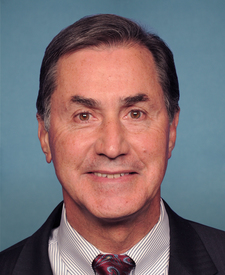
IntroducedMrs. Cammack (for herself, Mr. Palmer, Mr. Hill, Mr. Fleischmann, …
Stakeholder Effects
cui bono?How this legislation distributes effects. Mention counts reflect frequency, not effect magnitude.
Comptroller General, Federal Open Market Committee, Federal Reserve System
Positive-direction: Federal Open Market Committee, Federal Reserve System, Federal regulatory agencies (for deregulation), Federal wildlife and land management agencies
Negative-direction: Comptroller General, Federal regulatory agencies, Government Accountability Office, Office of Information and Regulatory Affairs, Office of Management and Budget
Regulated industries, Regulated industries and business associations, Regulated industries seeking deregulation
Consumer protection advocates, Environmental advocacy groups, Environmental protection advocates
Camping and outdoor recreation industry, Hunting and fishing industry
Bill Structure & Actor Mappings
Who is "The Secretary" in each section?
- "the_director"
- → Director of OMB
- "the_federal_agency"
- → Any federal agency promulgating a rule
- "the_comptroller_general"
- → Comptroller General (GAO)
- "the_speaker"
- → Speaker of the House
- "the_majority_leader"
- → Majority Leader of respective chamber
- "the_administrator"
- → Administrator of OIRA (Office of Information and Regulatory Affairs)
- "the_director"
- → Director of the Office of Management and Budget
- "the_director"
- → Director of the Office of Management and Budget
- "the_president"
- → The President
Note: The Director refers to Director of OMB in sections 811, 812 but context varies elsewhere
Key Definitions
Terms defined in this bill
Any agency as that term is defined in section 551(1) of title 5
A statement of general applicability and future effect, other than a regulatory action, issued by a Federal agency that sets forth a policy on a statutory, regulatory, or technical issue or an interpretation of a statutory or regulatory issue
Any rule that OIRA finds has or is likely to result in: (A) annual economic effect of $100 million or more; (B) major increase in costs or prices for consumers, industries, or governments; or (C) significant adverse effects on competition, employment, investment, productivity, innovation, or ability to compete internationally.
Any rule that is not a major rule
Has the meaning given in section 551, except it excludes rules of particular applicability, agency management/personnel rules, and procedural rules. Includes guidance documents.
A guidance document that may reasonably be anticipated to lead to $100M+ annual effect, create inconsistency with other agencies, materially alter budgetary impacts, or raise novel legal/policy issues
The difference between the estimated cost of issuing a significant regulatory action and the estimated cost saved by issuing any deregulatory action
Any regulatory action likely to have $100M+ annual economic effect, create inconsistency with other agencies, materially alter budgetary impacts, or raise novel issues
We use a combination of our own taxonomy and classification in addition to large language models to assess meaning and potential beneficiaries. High confidence means strong textual evidence. Always verify with the original bill text.
Learn more about our methodology