Health Care Price Certainty for All Americans Act
Summary
What This Bill Does
The Health Care Price Certainty for All Americans Act would replace several current price-transparency rules with detailed statutory requirements covering health care facilities, employer plans, health insurers, pharmacies, Medicare Advantage organizations, and Medicare Part D sponsors. Most facility rules begin in 2027 or 2028, while the new private-plan rules begin with plan years starting in 2029.
Hospitals paid by Medicare would have to publish, free of charge and at least annually, gross charges, payer-specific negotiated charges, deidentified minimum and maximum negotiated charges, discounted cash prices, and consumer-friendly prices for at least 300 shoppable services. Hospital executives would attest annually that the information is complete and accurate. Clinical laboratories, imaging providers, and ambulatory surgical centers would face parallel cash-price disclosure and attestation requirements. CMS would establish uniform machine-readable and consumer-friendly formats, audit compliance, require corrective action, and impose daily civil penalties. Hospital penalties would vary by bed count and could reach $6,277 per day, with additional penalties of up to $10 million for certain persistent, knowing violations. Laboratories, imaging providers, and surgical centers could face penalties of up to $300 per day. Rural, underserved, and hardship waivers would remain available under stated limits.
Beginning in 2029, group health plans and health insurers would have to give participants and enrollees real-time, personalized estimates showing negotiated or allowed rates, expected cost sharing, deductible and out-of-pocket accumulations, utilization limits, prior-authorization requirements, and available financial incentives. They would also publish quarterly machine-readable files for in-network rates, prescription-drug payments and spread-pricing differences, and out-of-network billed and allowed amounts, plus annual spreadsheet-readable summaries of rate levels and trends. Senior officers would attest to compliance and accuracy. Grandfathered and certain church plans would be excluded from portions of the public rate-file requirement.
Plans and insurers could no longer stop or penalize pharmacies for telling patients when a prescription would cost less without insurance, and they would have to ensure that their pharmacy benefit managers follow the same rule. The bill would enact that protection in the Public Health Service Act, ERISA, and the Internal Revenue Code.
For plan year 2028 and every third year afterward, Medicare Advantage organizations with at least 25,000 enrollees would report tax identifiers, incentive payments, and recoupments for affiliated or otherwise closely connected providers. Part D sponsors would report tax and provider identifiers for affiliated pharmacies. MedPAC would use those data to report to Congress on vertical integration, risk scores, incentive payments, pharmacy and PBM payments, manufacturer-derived revenue, and effects on access, prices, quality, and outcomes.
The bill appropriates $65 million jointly to HHS and Treasury and $35 million to Labor for fiscal year 2027, available through 2032, for regulations, guidance, reporting, data work, and enforcement. Those departments would report annually to congressional committees on how the funds were spent.
Who Benefits and How
Patients, plan participants, and self-pay consumers gain standardized information for comparing provider prices, expected out-of-pocket costs, and insured versus cash prescription prices before receiving care. Pharmacies gain the right to communicate lower cash prices without contractual punishment. Consumer advocates, researchers, employers, regulators, and MedPAC gain more detailed data about negotiated rates, PBM spreads, provider ownership, and vertically integrated payment relationships. Providers and plans with comparatively low prices may gain a competitive advantage when the information becomes easier to compare.
Who Bears the Burden and How
Hospitals, clinical laboratories, imaging providers, and ambulatory surgical centers must build and maintain public price files, post cash prices, certify accuracy, respond to audits, and risk daily civil penalties for noncompliance. Group health plans and insurers must operate personalized cost-estimator tools, publish large quarterly rate and payment files, create annual summaries, provide accessible disclosures, and submit executive attestations. Pharmacy benefit managers lose the ability to enforce cash-price gag terms and face added scrutiny of spread pricing. Large Medicare Advantage organizations and Part D sponsors must identify affiliated providers and pharmacies and report payment data. HHS, Treasury, Labor, CMS, GAO, and MedPAC must issue rules, collect data, enforce compliance, and produce studies and reports. Federal taxpayers fund the $100 million appropriation.
Key Provisions
- Requires hospitals to publish negotiated, gross, and cash prices beginning in 2027.
- Extends enforceable cash-price disclosure rules to laboratories, imaging providers, and ambulatory surgical centers beginning in 2028.
- Creates corrective-action procedures and daily civil penalties for noncompliance.
- Requires real-time plan cost estimates and quarterly machine-readable rate files in 2029.
- Requires disclosure of prescription-drug payment and PBM spread-pricing information.
- Prohibits plans and PBMs from restricting pharmacy communications about lower cash prices.
- Requires recurring ownership and payment reports from large Medicare Advantage and Part D organizations.
- Directs MedPAC and federal agencies to study vertical integration and transparency data.
- Appropriates $100 million for implementation and requires annual spending reports.
Evidence Chain:
This summary is generated from the full bill text using AI analysis. Expand "Detailed Analysis" below for identified beneficiaries/burden bearers with clause-level evidence links.
At a Glance
What This Bill Does
Create enforceable health-care price transparency requirements for Medicare-paid facilities and private health plans, protect pharmacy cash-price communications, and expose ownership and payment relationships in vertically integrated Medicare Advantage and Part D organizations.
Key Policy Areas
Health Care Price Transparency, Medicare, Private Health Insurance, Prescription Drugs, Health Care Competition
Primary Purpose
Create enforceable health-care price transparency requirements for Medicare-paid facilities and private health plans, protect pharmacy cash-price communications, and expose ownership and payment relationships in vertically integrated Medicare Advantage and Part D organizations.
Policy Domains
Section 6 - Implementation appropriations and oversight
Identified Gains
- Federal health transparency implementation programs
- Congressional committees overseeing implementation spending
Identified Costs
- Federal taxpayers financing implementation
- Federal agency administrators filing annual spending reports
Section 3 - Private plan cost-sharing and rate transparency
Identified Gains
- Plan participants requesting pre-service cost estimates
- Health insurance enrollees comparing negotiated prices
- Researchers analyzing private health care payment data
Identified Costs
- Group health plans building estimator and publication systems
- Health insurance issuers publishing quarterly payment files
- Pharmacy benefit managers subject to spread-pricing disclosure
- Federal agencies implementing cross-statute transparency rules
Section 2 - Medicare provider price disclosure and enforcement
Identified Gains
- Patients comparing hospital and outpatient prices
- Self-pay consumers seeking discounted cash prices
- Consumer advocates using standardized provider price files
Identified Costs
- Hospitals publishing charge and price files
- Clinical laboratories posting cash prices
- Imaging providers complying with audits
- Ambulatory surgical centers certifying disclosures
- CMS officials administering price-transparency enforcement
Section 4 - Pharmacy cash-price communication protections
Identified Gains
- Prescription-drug customers comparing cash and insured prices
- Pharmacies communicating lower cash-price options
Identified Costs
- Health plans revising pharmacy contract restrictions
- Pharmacy benefit managers abandoning cash-price gag provisions
Section 5 - Medicare vertical-integration disclosures
Identified Gains
- Medicare beneficiaries receiving stronger integration oversight
- MedPAC analysts studying Medicare market integration
- Congressional committees reviewing integrated Medicare firms
Identified Costs
- Large Medicare Advantage organizations reporting provider relationships
- Part D sponsors reporting affiliated pharmacies
- Integrated providers subject to payment scrutiny
- CMS officials collecting recurring ownership data
Sponsors
Legislative Progress
ReportedOrdered to be Reported in the Nature of a Substitute …
Committee Consideration and Mark-up Session Held
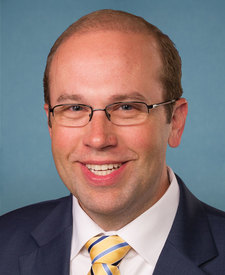
Mr. Smith of Missouri introduced the following bill; which was …
Referred to the Committee on Energy and Commerce, and in …
Introduced in House
Stakeholder Effects
cui bono?How this legislation distributes effects. Mention counts reflect frequency, not effect magnitude.
CMS officials administering provider transparency enforcement, CMS officials collecting recurring ownership data, Congressional committees overseeing implementation spending
Positive-direction: Congressional committees overseeing implementation spending, HHS health transparency implementation programs, Labor Department health transparency implementation programs, MedPAC analysts studying Medicare market integration, Treasury health transparency implementation programs
Negative-direction: CMS officials administering provider transparency enforcement, CMS officials collecting recurring ownership data, Federal agencies implementing plan transparency rules, Federal agency administrators filing annual spending reports
Health insurance enrollees comparing negotiated prices, Hospitals publishing charge and price files, Medicare beneficiaries receiving stronger integration oversight
Positive-direction: Health insurance enrollees comparing negotiated prices, Medicare beneficiaries receiving stronger integration oversight, Patients comparing hospital and outpatient prices, Plan participants requesting pre-service cost estimates, Prescription-drug customers comparing cash and insured prices, Self-pay consumers seeking discounted cash prices
Negative-direction: Hospitals publishing charge and price files, Providers subject to price-transparency civil penalties
Group health plans building estimator and publication systems, Health insurance issuers publishing quarterly payment files, Health plans revising pharmacy contract restrictions
Ambulatory surgical centers certifying price disclosures, Imaging providers publishing shoppable-service prices, Providers whose negotiated rates become public
Pharmacy benefit managers abandoning cash-price gag provisions, Pharmacy benefit managers subject to spread-pricing disclosure
Pharmacies communicating lower cash-price options, Vertically integrated pharmacies
Positive-direction: Pharmacies communicating lower cash-price options
Negative-direction: Vertically integrated pharmacies
Clinical laboratories posting cash prices
Researchers analyzing private health care payment data
Bill Structure & Actor Mappings
Who is "The Secretary" in each section?
- "consumers"
- → Insured and self-pay health care consumers
- "secretary"
- → Secretary of Health and Human Services acting through CMS
- "laboratories"
- → Applicable clinical diagnostic laboratories
- "surgical_centers"
- → Medicare-paid ambulatory surgical centers
- "imaging_providers"
- → Medicare providers and suppliers furnishing imaging services
- "specified_hospitals"
- → Hospitals, critical access hospitals, and rural emergency hospitals
- "pbms"
- → Pharmacy benefit managers serving covered plans
- "plans"
- → Group health plans
- "issuers"
- → Health insurance issuers
- "secretaries"
- → Secretaries of Health and Human Services, Labor, and the Treasury
- "participants"
- → Plan participants, beneficiaries, and enrollees
- "pbms"
- → Pharmacy benefit managers
- "plans"
- → Group health plans
- "issuers"
- → Health insurance issuers
- "patients"
- → Prescription-drug enrollees, participants, and beneficiaries
- "pharmacies"
- → Dispensing pharmacies
- "medpac"
- → Medicare Payment Advisory Commission
- "secretary"
- → Secretary of Health and Human Services acting through CMS
- "pdp_sponsors"
- → Medicare Part D prescription drug plan sponsors
- "ma_organizations"
- → Medicare Advantage organizations with at least 25,000 enrollees
- "integrated_entities"
- → Affiliated providers, pharmacies, and pharmacy benefit managers
- "hhs"
- → Secretary of Health and Human Services
- "labor"
- → Secretary of Labor
- "congress"
- → Named House and Senate oversight and appropriations committees
- "treasury"
- → Secretary of the Treasury
- "taxpayers"
- → Federal taxpayers
Note: {'scope_ids': ['provider_price_transparency', 'coverage_price_transparency'], 'description': "Provider disclosures state facility charges and negotiated prices, while plan disclosures estimate a particular member's liability and publish plan payment rates; the two regimes are complementary but not interchangeable."}
Key Definitions
Terms defined in this bill
The amount paid by an enrollee, participant, or beneficiary, including deductibles, copayments, coinsurance, and other expenditures specified by HHS.
A service schedulable in advance, including ancillary items and services customarily furnished with it.
A hospital, critical access hospital, or rural emergency hospital.
A covered drug for which the PBM-contracted pharmacy payment is lower than the amount the plan or issuer reimburses the PBM.
A provider linked to a Medicare Advantage organization through ownership, control, exclusive contracting, partnership, common corporate grouping, or shared substantial financial risk.
A pharmacy linked to a Part D sponsor through ownership, control, exclusive contracting, partnership, common corporate grouping, or shared financial risk.
We use a combination of our own taxonomy and classification in addition to large language models to assess meaning and potential beneficiaries. High confidence means strong textual evidence. Always verify with the original bill text.
Learn more about our methodology