To establish minimum Federal standards for sports betting, and for other purposes.
Analysis under review: This bill has generated analysis that may be too generic or incomplete. Clause-level evidence remains available below.
Summary
What This Bill Does
The Regulating Sports Betting Act establishes the first federal framework for legal sports betting in the United States. States must apply to the Attorney General for approval of their sports wagering programs, which must meet minimum standards including prohibitions on bets by minors and on amateur/college sports. The bill also requires federal surveillance of gambling addiction and annual surveys on problem gambling.
Who Benefits and How
Licensed sports wagering operators gain a clear federal legal framework for operating across approved states. States that opt in can regulate sports betting and collect associated tax revenue. Indian Tribes can participate through Tribal-State compacts and are assured that online wagers placed through tribal servers on their lands are considered occurring on Indian lands. Public health researchers benefit from new gambling addiction surveillance infrastructure.
Who Bears the Burden and How
Unlicensed gambling operators face civil penalties of up to $10,000 or 3 times the wager amount per violation. States must meet extensive regulatory standards and reapply every 3 years. Sports wagering operators must comply with consumer protections, location verification, and responsible gambling requirements. College and amateur sports are completely excluded from proposition betting.
Key Provisions
- General federal prohibition on sports wagering except in approved state programs
- States must get Attorney General approval every 3 years with detailed standards
- Bans betting on amateur athletics and college sports proposition bets
- Requires annual CDC surveillance of gambling addiction
- Surgeon General must report on public health challenges within 1 year
- Interstate compacts and Tribal-State compacts authorized
Evidence Chain:
This summary is generated from the full bill text using AI analysis. Expand "Detailed Analysis" below for identified beneficiaries/burden bearers.
At a Glance
What This Bill Does
Establishes minimum federal standards for sports betting, creates a state approval framework administered by the Attorney General, protects minors and amateur sports, requires problem gambling surveillance and research
Key Policy Areas
Gaming, Public Health, Consumer Protection, State-Federal Relations, Tribal Affairs
Primary Purpose
Establishes minimum federal standards for sports betting, creates a state approval framework administered by the Attorney General, protects minors and amateur sports, requires problem gambling surveillance and research
Policy Domains
Title I - Sports Wagering
Identified Gains
Contextual inference, no direct clause citation- Licensed sports wagering operators
- States with sports betting programs
- Professional sports leagues
Contextual inference, no direct clause citation
Identified Costs
Contextual inference, no direct clause citation- Unlicensed gambling operators
- States seeking approval
- College athletics
Contextual inference, no direct clause citation
Title II - Public Health
Identified Gains
Contextual inference, no direct clause citation- Public health researchers
- Problem gambling treatment providers
- Individuals with gambling disorders
Contextual inference, no direct clause citation
Identified Costs
Contextual inference, no direct clause citation- HHS/CDC
- Federal taxpayers
Contextual inference, no direct clause citation
Title III - State and Tribal Authority
Identified Gains
Contextual inference, no direct clause citation- Indian Tribes with gaming operations
- States with sports betting
- Interactive sports wagering platforms on tribal lands
Contextual inference, no direct clause citation
Sponsors
Legislative Progress
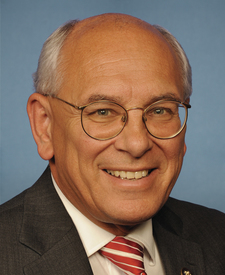
IntroducedMr. Tonko introduced the following bill; which was referred to …
Stakeholder Effects
cui bono?How this legislation distributes effects. Mention counts reflect frequency, not effect magnitude.
CDC, Centers for Disease Control and Prevention, Department of Health and Human Services
Interactive sports wagering platforms on tribal lands, Licensed sports wagering operators, Licensed sports wagering operators in opt-in states
Positive-direction: Interactive sports wagering platforms on tribal lands, Licensed sports wagering operators in opt-in states
Negative-direction: Licensed sports wagering operators, Sports wagering operators seeking state licenses, Unlicensed sports gambling operators
Gambling addiction researchers, Public health researchers
State regulatory entities, States seeking sports betting authorization, States with sports betting programs
Positive-direction: States with sports betting programs
Negative-direction: State regulatory entities, States seeking sports betting authorization
Bill Structure & Actor Mappings
Who is "The Secretary" in each section?
- "the_attorney_general"
- → Attorney General of the United States
- "the_state_regulatory_entity"
- → State-designated public entity for regulating sports wagering
- "the_secretary"
- → Secretary of Health and Human Services
- "the_surgeon_general"
- → Surgeon General
Note: 'The Secretary' in Title II refers to Secretary of Health and Human Services, not the Attorney General who administers Title I
Key Definitions
Terms defined in this bill
Gambling disorder as defined by the APA DSM-5, including pathological gambling, gambling addiction, and compulsive gambling
A person or entity that offers licensed sports wagering over the internet, including through websites and mobile devices, on behalf of a licensed gaming facility
A compact to offer sports wagering between 2 or more States with approved programs, or between States and Indian Tribes
A person or entity that accepts sports wagers and is licensed by a State or Indian Tribe
We use a combination of our own taxonomy and classification in addition to large language models to assess meaning and potential beneficiaries. High confidence means strong textual evidence. Always verify with the original bill text.
Learn more about our methodology