Making continuing appropriations for fiscal year 2025, and for other purposes.
Analysis under review: This bill has generated analysis that may be too generic or incomplete. Clause-level evidence remains available below.
Summary
What This Bill Does
This legislation is a continuing resolution (CR) that keeps the federal government funded at fiscal year 2024 levels through March 28, 2025, preventing a government shutdown. It also contains the SAVE Act, which requires applicants for voter registration in federal elections to provide documentary proof of United States citizenship.
Who Benefits and How
Defense contractors benefit from continued funding including $1.95 billion specifically for the Virginia Class Submarine program. State election officials gain new tools and federal guidance to verify citizenship status of voter registration applicants. Disaster relief recipients benefit from $10 billion in additional FEMA funding for declared disasters. Native American health facilities receive $26.3 million for staffing newly opened or expanded facilities.
Who Bears the Burden and How
Voter registration applicants must now provide documentary proof of citizenship such as a REAL ID, passport, or birth certificate, creating additional documentation requirements. Election Assistance Commission must issue implementation guidance within 10 days. Non-citizens (including legal permanent residents) who may have been previously registered will be subject to removal from voter rolls.
Key Provisions
- Continues FY2024 appropriations for all federal agencies through March 28, 2025
- Appropriates $10 billion for FEMA Disaster Relief Fund
- Adds $1.95 billion for Virginia Class Submarine construction
- Requires documentary proof of citizenship for voter registration (SAVE Act)
- Eliminates $55 million for Election Security Grants
- Requires DHS to notify election officials when individuals become naturalized citizens
Evidence Chain:
This summary is generated from the full bill text using AI analysis. Expand "Detailed Analysis" below for identified beneficiaries/burden bearers.
At a Glance
What This Bill Does
Provides continuing appropriations for federal agencies at FY2024 levels through March 28, 2025, while also establishing new documentary proof of citizenship requirements for voter registration in federal elections (SAVE Act).
Key Policy Areas
Government Operations, Federal Budget, Defense, Homeland Security, Elections, Immigration, Veterans Affairs, Disaster Relief, Housing, Agriculture
Primary Purpose
Provides continuing appropriations for federal agencies at FY2024 levels through March 28, 2025, while also establishing new documentary proof of citizenship requirements for voter registration in federal elections (SAVE Act).
Policy Domains
Division A - Continuing Appropriations Act, 2025
Identified Gains
Contextual inference, no direct clause citation- Defense contractors (submarine builders)
- FEMA disaster recipients
- Indian Health Service facilities
- Veterans Administration
- Presidential transition teams
Contextual inference, no direct clause citation
Identified Costs
Contextual inference, no direct clause citation- Election security programs (funding eliminated)
- Federal agencies (constrained to FY2024 levels)
Contextual inference, no direct clause citation
Division B - SAVE Act (Safeguard American Voter Eligibility Act)
Identified Gains
Contextual inference, no direct clause citation- State election administrators
- Proponents of stricter voter eligibility verification
Contextual inference, no direct clause citation
Identified Costs
Contextual inference, no direct clause citation- Voter registration applicants
- Non-citizens on voter rolls
- Election Assistance Commission
- Department of Homeland Security
Contextual inference, no direct clause citation
Sponsors
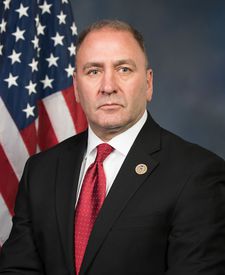
Clay Higgins
R-LA | Primary Sponsor
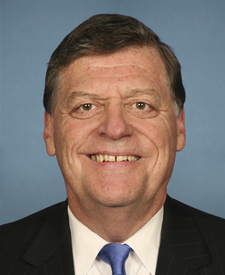
Legislative Progress
IntroducedMr. Higgins of Louisiana (for himself and Mr. Cole) introduced …
Stakeholder Effects
cui bono?How this legislation distributes effects. Mention counts reflect frequency, not effect magnitude.
All federal agencies covered by FY2024 appropriations acts, Department of Defense, Department of Energy nuclear security programs
Positive-direction: All federal agencies covered by FY2024 appropriations acts, Department of Energy nuclear security programs, Disaster relief programs, Executive Office of the President, FEMA and disaster relief programs, FEMA disaster programs, Farm Service Agency, Federal agencies managing CR funds, Federal civilian employees, Federal government agencies, General Services Administration, Indian Health Service, National Park Service, Presidential transition teams, Presidential transition teams (incoming and outgoing), Rural Housing Service, State Department and intelligence agencies, USDA Forest Service, United States Secret Service, Veterans Health Administration
Negative-direction: Department of Defense, Department of Homeland Security, Election Assistance Commission, Federal agencies, Federal agencies seeking new programs
Commodity Supplemental Food Program recipients (low-income seniors), Disaster-affected communities and individuals, Entitlement program beneficiaries
Positive-direction: Commodity Supplemental Food Program recipients (low-income seniors), Disaster-affected communities and individuals, Entitlement program beneficiaries, Families of deceased members of Congress, Low-income families receiving Section 8 rental assistance, Newly naturalized citizens, Rural communities with EAS flights, Veterans receiving VA healthcare
Negative-direction: Non-citizens previously registered to vote, Voter registration applicants
District of Columbia government, Public housing authorities, State and local election administrators
Positive-direction: District of Columbia government, Public housing authorities, State election officials
Negative-direction: State and local election administrators, State election administrators, State governments receiving federal grants
Defense contractors seeking new programs, Navy shipbuilding workforce, Nuclear security contractors
Positive-direction: Navy shipbuilding workforce, Nuclear security contractors, Virginia Class Submarine contractors (General Dynamics, Huntington Ingalls)
Negative-direction: Defense contractors seeking new programs
Election security vendors and contractors, Federal agency administrative contractors, Inauguration security contractors
Positive-direction: Inauguration security contractors, Security and event management contractors
Negative-direction: Election security vendors and contractors, Federal agency administrative contractors
Healthcare workers at IHS facilities, Native American communities and health facilities, VA healthcare contractors and providers
Cattle and livestock producers, Farmers seeking ownership loans
Livestock packers and processors subject to reporting, WIC-authorized food vendors and retailers
Positive-direction: WIC-authorized food vendors and retailers
Negative-direction: Livestock packers and processors subject to reporting
Bill Structure & Actor Mappings
Who is "The Secretary" in each section?
- "the_director"
- → Director of the Office of Management and Budget
- "the_administrator"
- → Administrator of FEMA
- "the_secretary_hud"
- → Secretary of Housing and Urban Development
- "the_secretary_energy"
- → Secretary of Energy
- "the_secretary_defense"
- → Secretary of Defense
- "the_secretary"
- → Secretary of Homeland Security
- "the_commission"
- → Election Assistance Commission
- "chief_election_official"
- → Chief State Election Official
Note: 'The Secretary' in Division A refers to various cabinet secretaries depending on context (Defense, Energy, Interior, etc.), while in Division B it specifically means the Secretary of Homeland Security
Key Definitions
Terms defined in this bill
REAL ID-compliant identification indicating citizenship; valid US passport; military ID with service record showing US birth; government photo ID showing US birth; or government photo ID combined with certified birth certificate, extract from hospital birth record, consular report of birth abroad, or naturalization certificate
We use a combination of our own taxonomy and classification in addition to large language models to assess meaning and potential beneficiaries. High confidence means strong textual evidence. Always verify with the original bill text.
Learn more about our methodology