To amend the Internal Revenue Code of 1986 to allow a credit against tax for charitable donations to nonprofit organizations providing workforce training.
Analysis under review: This bill has generated analysis that may be too generic or incomplete. Clause-level evidence remains available below.
Summary
What This Bill Does
This bill creates a new federal tax credit to incentivize wealthy individuals to donate to workforce training nonprofits. Donors receive a dollar-for-dollar tax credit (not just a deduction) for contributions up to $150,000 per year, with a total national cap of $5 billion annually from 2025-2028.
Who Benefits and How
High-income individual taxpayers benefit most, as the credit is capped at 25% of tax liability, favoring those with substantial tax bills. Workforce development nonprofits (501c3 organizations certified under the Workforce Innovation and Opportunity Act) gain increased funding streams as donations become more attractive. Workers seeking job training may benefit from expanded program capacity.
Who Bears the Burden and How
Federal government/taxpayers bear the cost through reduced tax revenue (up to $5 billion annually). The Treasury Department must build a real-time tracking system and administer the first-come-first-served allocation process.
Key Provisions
- Creates new IRC Section 25F tax credit equal to 100% of qualified contributions
- Individual cap: lesser of 25% of tax liability or $150,000
- National volume cap: $5 billion/year (2025-2028), allocated first-come-first-served
- Volume cap increases 5% if utilization exceeds 90%
- Unused credits can be carried forward up to 5 years
Evidence Chain:
This summary is generated from the full bill text using AI analysis. Expand "Detailed Analysis" below for identified beneficiaries/burden bearers with clause-level evidence links.
At a Glance
What This Bill Does
Creates a new federal tax credit for individual taxpayers who make charitable contributions to nonprofit organizations providing workforce development and apprenticeship training programs.
Key Policy Areas
Taxation, Workforce Development, Education
Primary Purpose
Creates a new federal tax credit for individual taxpayers who make charitable contributions to nonprofit organizations providing workforce development and apprenticeship training programs.
Policy Domains
Main Bill - Tax Credit for Workforce Training Contributions
Identified Gains
- High-income individual taxpayers
- Workforce development nonprofits
- Workers seeking job training
Identified Costs
- Federal government (reduced tax revenue)
- Treasury Department (administrative burden)
Sponsors
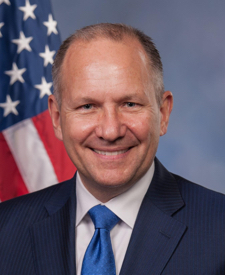
Legislative Progress
ReportedReported with an amendment, committed to the Committee of the …
Mr. Smucker introduced the following bill; which was referred to …
Stakeholder Effects
cui bono?How this legislation distributes effects. Mention counts reflect frequency, not effect magnitude.
Department of the Treasury (administrative systems), Federal government (Treasury)
High-income individual taxpayers making charitable donations
Nonprofit workforce development and apprenticeship training organizations
Bill Structure & Actor Mappings
Who is "The Secretary" in each section?
- "the_secretary"
- → Secretary of the Treasury
Key Definitions
Terms defined in this bill
A charitable contribution to a workforce development or apprenticeship training organization in the form of cash or marketable securities, designated by the organization for workforce development or apprenticeship training programs.
A 501(c)(3) organization (not a private foundation) that is included on the eligible provider list under Section 122 of the Workforce Innovation and Opportunity Act.
A program providing training services within the meaning of Section 134(c)(3) of the Workforce Innovation and Opportunity Act.
Any calendar year for which 90 percent or more of the volume cap is allocated to taxpayers.
We use a combination of our own taxonomy and classification in addition to large language models to assess meaning and potential beneficiaries. High confidence means strong textual evidence. Always verify with the original bill text.
Learn more about our methodology