FAIR Exams Act
Summary
What This Bill Does
The FAIR Exams Act amends the Federal Financial Institutions Examination Council framework to make bank and credit-union examinations more time-limited and appealable. In the reported version, federal financial institution regulatory agencies must complete examinations within 270 days unless they give written reasons for more time. Agencies must conduct exit interviews within 30 days after completing an exam and provide final examination reports within 90 days after the later of the exit interview or the institution's additional material information. At the institution's request, the final report must include an appendix listing examination or factual information used to support a material supervisory determination.
The bill also creates a written-determination process for institutions seeking agency non-objection, legal or regulatory interpretation, or accounting guidance. Agencies must acknowledge requests within 30 days, identify missing information, decide within 60 days after the request or cure period, and publish anonymized determination summaries within 120 days. It establishes an Office of Independent Examination Review inside FFIEC, headed by a three-member presidentially appointed, Senate-confirmed Board with financial regulatory, consumer-compliance, and private-sector banking experience. The Office can receive complaints, meet with institutions, review exam procedures, run quality assurance, decide supervisory appeals, protect confidential supervisory information, and report annually.
Financial institutions get a statutory right to independent review of material supervisory determinations. They may file within 60 days, request relied-upon examination information within 7 days, receive that information within 14 days, elect a hearing, obtain testimony and evidence under Board procedures, and receive de novo review without deference to examiners. Board decisions bind the agency and institution and are reviewable in federal court. Agencies may not retaliate or delay beneficial actions because of an appeal, though they may still enforce determinations when needed for safety and soundness. The bill also revises the Riegle appeals process, adds anti-retaliation safeguards, includes matters requiring attention and expedited-processing status removals as reviewable issues, and includes CFPB for sections 1012 through 1015.
Who Benefits and How
Community banks benefit from deadlines for exams, reports, exit interviews, and guidance decisions. Credit unions benefit from independent review rights and anti-retaliation protections when challenging material supervisory determinations. Bank senior managers benefit from access to the factual basis for exam findings. Financial institution counsel benefit from clearer appeal procedures, hearing rights, and court-review paths. Trade associations benefit because the Office must meet with institutions across the country and review examination practices. Institutions seeking new activities benefit from a timed written-determination process.
Who Bears the Burden and How
Federal banking agencies must meet exam deadlines, provide written extensions, publish redacted guidance summaries, supply relied-upon exam facts, and participate in de novo appeals. FFIEC must host and fund the Office of Independent Examination Review. OCC, Federal Reserve, FDIC, NCUA, and CFPB staff must pay cost shares and adapt examination practices. The new Board must handle complaints, hearings, quality assurance, confidentiality, and annual reports. Examiners face review of material supervisory determinations and retaliation safeguards. Agency legal teams must defend Board decisions and preserve enforcement authority for safety and soundness.
Key Provisions
- Requires federal financial institution regulatory agencies to complete exams within 270 days unless written reasons justify more time.
- Requires exit interviews within 30 days and final examination reports within 90 days.
- Creates a written-determination process with 30-day acknowledgment, 60-day decisions, and 120-day public summaries.
- Establishes an FFIEC Office and Board of Independent Examination Review.
- Provides de novo independent review of material supervisory determinations with hearing rights and court review.
- Prohibits agency retaliation for appeals and expands reviewable issues to matters requiring attention and expedited-processing removals.
- Includes CFPB in the examination timeliness and appeal framework.
Evidence Chain:
This summary is generated from the full bill text using AI analysis. Expand "Detailed Analysis" below for identified beneficiaries/burden bearers with clause-level evidence links.
At a Glance
What This Bill Does
Creates enforceable timeliness and independent-review rights for federal financial institution examinations, including 270-day examination completion, 90-day final reports, 30-day exit interviews, 60-day agency guidance determinations, a new FFIEC Office and Board of Independent Examination Review, de novo appeals of material supervisory determinations, anti-retaliation protections, and expanded CFPB coverage.
Key Policy Areas
Banking Supervision, Financial Regulation, FFIEC, Community Banks
Primary Purpose
Creates enforceable timeliness and independent-review rights for federal financial institution examinations, including 270-day examination completion, 90-day final reports, 30-day exit interviews, 60-day agency guidance determinations, a new FFIEC Office and Board of Independent Examination Review, de novo appeals of material supervisory determinations, anti-retaliation protections, and expanded CFPB coverage.
Policy Domains
House resolution provisions
Identified Gains
- Community banks
- Credit unions
- Bank senior managers
- Financial institution counsel
- Trade associations
- Institutions seeking new activities
Identified Costs
- Federal banking agencies
- FFIEC
- OCC examination staff
- Federal Reserve examiners
- FDIC examiners
- NCUA examiners
- CFPB supervision staff
- Board of Independent Examination Review
- Agency legal teams
Sponsors

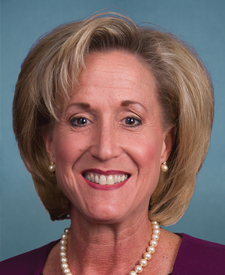


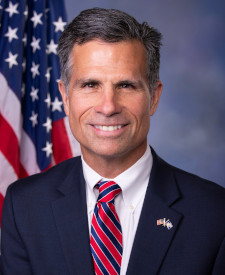
Legislative Progress
ReportedAdditional sponsors: Mr. Haridopolos, Mr. Sessions, Mr. David Scott of …
Reported with an amendment, committed to the Committee of the …
Placed on the Union Calendar, Calendar No. 176.
Reported (Amended) by the Committee on Financial Services. H. Rept. …
Ordered to be Reported (Amended) by the Yeas and Nays: …
Committee Consideration and Mark-up Session Held
Mr. Hill of Arkansas (for himself, Mr. Meuser, Mrs. Wagner, …
Referred to the House Committee on Financial Services.
Introduced in House
Stakeholder Effects
cui bono?How this legislation distributes effects. Mention counts reflect frequency, not effect magnitude.
Bank examiners, Bank senior managers, Community banks
Positive-direction: Bank senior managers, Community banks, Credit unions, Financial institutions appealing exams, Institutions seeking new activities, Public guidance users, Trade associations
Negative-direction: Bank examiners, Federal banking agencies
Board of Independent Examination Review, CFPB supervision staff, FFIEC
Federal courts, Financial institution counsel
Positive-direction: Financial institution counsel
Negative-direction: Federal courts
Bill Structure & Actor Mappings
Who is "The Secretary" in each section?
- "cfpb"
- → Consumer Financial Protection Bureau
- "ffiec"
- → Federal Financial Institutions Examination Council
We use a combination of our own taxonomy and classification in addition to large language models to assess meaning and potential beneficiaries. High confidence means strong textual evidence. Always verify with the original bill text.
Learn more about our methodology