Stop Lawmakers From Predicting Act
Summary
What This Bill Does
The Stop Lawmakers From Predicting Act would prohibit Members of Congress, their spouses, and their dependent children from entering or offering to enter prediction-market contracts tied to a government policy, government action, political outcome, or another event learned directly or indirectly through a Member's congressional service. The applicable congressional ethics office would issue interpretive guidance and enforce the ban beginning 180 days after enactment.
Who Benefits and How
Federal taxpayers and the public could benefit from reduced financial conflicts between congressional duties and private wagers on government or political outcomes. Congressional ethics offices would receive express authority to issue guidance, calculate fees, consider mitigating or aggravating circumstances, and refer certain unpaid former-Member cases to the Department of Justice. The Treasury general fund would receive collected violation fees and disgorged gains.
Who Bears the Burden and How
Members of Congress, their spouses, and dependent children are barred from the covered prediction-market transactions. A violation requires the responsible Member to pay the greater of $2,000 or 10 percent of transaction value plus any net gain, and the fee cannot be paid from official House or Senate allowances, campaign contributions, or other officeholder-support donations. Supervising ethics offices must interpret the new rules, investigate conduct, calculate fees, collect payments, and administer referrals, creating an enforcement and administrative burden. Prediction-market operators could lose transaction volume from covered congressional customers.
Key Provisions
- Prohibits covered congressional individuals from trading contracts tied to government policy, government action, political outcomes, or service-derived event information.
- Defines covered individuals as Members of Congress, their spouses, and their dependent children.
- Requires a violation fee equal to the greater of $2,000 or 10 percent of the transaction value, plus the violator's net gain.
- Bars payment of the fee from congressional office allowances, campaign contributions, and officeholder-support donations.
- Authorizes ethics-office guidance and Department of Justice referrals and directs collected amounts to the Treasury general fund.
Evidence Chain:
This summary is generated from the full bill text using AI analysis. Expand "Detailed Analysis" below for identified beneficiaries/burden bearers with clause-level evidence links.
At a Glance
What This Bill Does
Prohibit Members of Congress, their spouses, and dependent children from trading prediction-market contracts tied to government, politics, or nonpublic events learned through congressional service, and enforce the ban through monetary fees, gain disgorgement, ethics guidance, and referrals.
Key Policy Areas
Government Ethics, Congressional Operations, Financial Markets
Primary Purpose
Prohibit Members of Congress, their spouses, and dependent children from trading prediction-market contracts tied to government, politics, or nonpublic events learned through congressional service, and enforce the ban through monetary fees, gain disgorgement, ethics guidance, and referrals.
Policy Domains
Section 2 and 5 U.S.C. sections 13151-13153
Identified Gains
- Federal taxpayers
- Members of the public concerned about congressional financial conflicts
- United States Department of Justice enforcement attorneys
- United States Treasury general fund
- House Committee on Ethics
- Senate Select Committee on Ethics
Identified Costs
- Members of Congress entering covered prediction-market contracts
- Spouses of Members of Congress entering covered prediction-market contracts
- Dependent children of Members entering covered prediction-market contracts
- Supervising congressional ethics offices
- Prediction-market operators serving congressional customers
Sponsors
Legislative Progress
ReportedOrdered to be Reported (Amended) by the Yeas and Nays: …
Committee Consideration and Mark-up Session Held
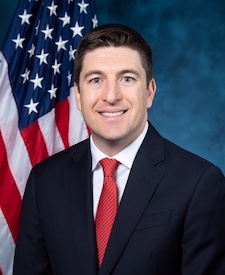
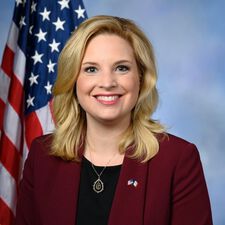
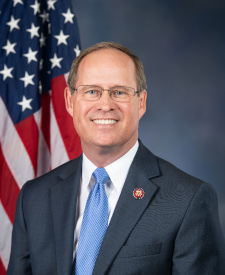
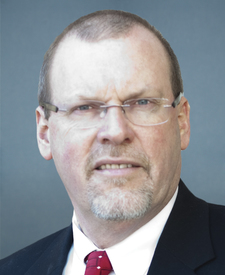
Mr. Steil (for himself, Mrs. Miller of Illinois, Mr. Murphy, …
Referred to the House Committee on House Administration.
Introduced in House
Stakeholder Effects
cui bono?How this legislation distributes effects. Mention counts reflect frequency, not effect magnitude.
Dependent children covered by prediction-market restrictions, Dependent children of Members entering covered prediction-market contracts, Spouses of Members covered by prediction-market restrictions
Members of Congress covered by prediction-market restrictions, Members of Congress entering covered prediction-market contracts, Members of Congress responsible for covered prediction-market violations
Supervising congressional ethics offices
Former Members of Congress with unpaid prediction-market fees
United States Department of Justice referral program
Prediction-market operators serving congressional customers
Bill Structure & Actor Mappings
Who is "The Secretary" in each section?
- "covered_individual"
- → Member of Congress, spouse of a Member, or dependent child of a Member
- "department_of_justice"
- → United States Department of Justice
- "supervising_ethics_office"
- → Applicable supervising congressional ethics office under 5 U.S.C. 13101
Note: {'scope_ids': ['prediction_market_restrictions'], 'description': "The bill incorporates 'supervising ethics office' from 5 U.S.C. 13101; the responsible House or Senate office depends on the Member involved."}
Key Definitions
Terms defined in this bill
A Member of Congress or the Member's spouse or dependent child.
An agreement, contract, or transaction whose purchase, sale, payment, or delivery depends on a government policy, government action, political outcome, or service-derived event information.
The supervising ethics office incorporated by reference from 5 U.S.C. 13101 for the relevant Member of Congress.
We use a combination of our own taxonomy and classification in addition to large language models to assess meaning and potential beneficiaries. High confidence means strong textual evidence. Always verify with the original bill text.
Learn more about our methodology