AI-Ready Federal Data Guidelines Act
Summary
What This Bill Does
The AI-Ready Federal Data Guidelines Act would require the National Institute of Standards and Technology to develop voluntary guidelines that help Federal agencies prepare datasets, including open Government data, for training AI models. NIST must consult the Office of Science and Technology Policy, the Department of Energy, the Office of Management and Budget, and other relevant agencies. The guidelines would address machine-interpretable formatting, data labeling and annotation, quality evaluation, metadata and documentation, ongoing maintenance, automated access to public data, flexible sector implementation, consistency with OMB Circular A-119, and conformity assessment.
NIST could run optional pilots to develop conformity-assessment procedures for specific scientific or industrial domains. Each pilot could last no more than one year, no more than two could run concurrently, and priority would go to areas with national-security and industrial-competitiveness implications, such as biotechnology and biomanufacturing, where Federal agencies hold relevant datasets. Pilots could use federally funded research programs, National Laboratories, universities, or private-sector partnerships. They would test data usability and interoperability, identify implementation costs and obstacles, and prepare for possible transfer of supplemental guidelines to a suitable non-Federal organization.
NIST must brief the House Science and Senate Commerce committees within one year after publishing the guidelines and annually for five years. It may not transfer or reprogram funds from another NIST program, office, project, or activity to carry out the new section. The bill also defines the covered agencies, AI models and systems, biomanufacturing, conformity assessment, universities, National Laboratories, and open Government data, and repeals a separate subsection of the NIST Act.
Who Benefits and How
Federal agency data managers could use a common voluntary framework to decide whether datasets are structured, documented, maintained, and accessible enough for AI use. AI developers, researchers, and public users could receive more usable and interoperable Government training data. National Laboratories, universities, federally funded research programs, and private technology partners could participate in pilots. Biotechnology and biomanufacturing researchers could receive early sector-specific guidance. Non-Federal standards organizations may eventually maintain supplemental pilot guidance. Other NIST programs benefit from the express prohibition on transferring their funds.
Who Bears the Burden and How
NIST staff must coordinate across agencies, write and maintain the guidelines, design any pilots, evaluate usability and resource needs, prepare transition materials, and brief Congress every year for five years. OSTP, Energy Department, OMB, and participating agency staff must provide technical and policy input. Pilot participants may incur data-formatting, annotation, quality, metadata, maintenance, and conformity-assessment costs. Agencies remain free not to adopt the guidelines, and NIST cannot pay for the work by reprogramming funds from other Institute activities, which may constrain implementation unless separate resources are available.
Key Provisions
- Requires NIST to develop voluntary, cross-agency guidelines for AI-ready Federal datasets and open Government data assets.
- Covers formatting, labeling, quality, metadata, maintenance, access, flexible use, OMB standards policy, and conformity-assessment procedures.
- Authorizes up to two concurrent one-year pilots through research programs, National Laboratories, universities, or private-sector partnerships.
- Prioritizes pilot topics with national-security and industrial-competitiveness importance, including biotechnology and biomanufacturing.
- Requires annual congressional briefings for five years after guideline publication and bars transfers from other NIST programs to fund the work.
Evidence Chain:
This summary is generated from the full bill text using AI analysis. Expand "Detailed Analysis" below for identified beneficiaries/burden bearers with clause-level evidence links.
At a Glance
What This Bill Does
Require NIST to develop voluntary guidelines for preparing Federal datasets for artificial-intelligence training, with optional sector pilots, recurring congressional briefings, and protections for other NIST program funds.
Key Policy Areas
Artificial Intelligence, Science and Technology, Federal Government, Data Policy, Education
Primary Purpose
Require NIST to develop voluntary guidelines for preparing Federal datasets for artificial-intelligence training, with optional sector pilots, recurring congressional briefings, and protections for other NIST program funds.
Policy Domains
Section 2 and NIST Act section 21A - AI-ready Federal data guidelines
Identified Gains
- Federal agency data-management staff
- Artificial intelligence developers using open Government datasets
- National Laboratory research programs participating in pilots
- Universities participating in AI-ready data pilots
- Biotechnology and biomanufacturing researchers
- Other NIST programs protected from fund transfers
Identified Costs
- National Institute of Standards and Technology guideline staff
- Office of Science and Technology Policy consultation staff
- Department of Energy data and standards staff
- Office of Management and Budget standards-policy staff
- Federal agencies participating in optional pilots
- Private-sector contractors participating in data pilots
Sponsors
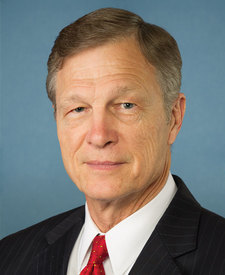
Brian Babin
R-TX | Primary Sponsor
Legislative Progress
ReportedOrdered to be Reported (Amended) by the Yeas and Nays: …
Committee Consideration and Mark-up Session Held
Mr. Babin (for himself and Ms. Lofgren) introduced the following …
Referred to the House Committee on Science, Space, and Technology.
Introduced in House
Stakeholder Effects
cui bono?How this legislation distributes effects. Mention counts reflect frequency, not effect magnitude.
Federal agency data-management staff using voluntary AI-ready guidelines, House Science Space and Technology Committee, National Institute of Standards and Technology AI-data guideline staff
Positive-direction: Federal agency data-management staff using voluntary AI-ready guidelines, House Science Space and Technology Committee, Other NIST programs protected from fund transfers, Senate Commerce Science and Transportation Committee
Negative-direction: National Institute of Standards and Technology AI-data guideline staff
Artificial intelligence developers using open Government datasets, Private-sector contractors participating in AI-ready data pilots
National Laboratory research programs participating in pilots
Universities participating in AI-ready data pilots
Biotechnology and biomanufacturing researchers
Bill Structure & Actor Mappings
Who is "The Secretary" in each section?
- "omb_director"
- → Director of the Office of Management and Budget
- "nist_director"
- → Director of the National Institute of Standards and Technology
- "ostp_director"
- → Director of the Office of Science and Technology Policy
- "energy_secretary"
- → Secretary of Energy
Note: {'scope_ids': ['ai_ready_federal_data'], 'description': "Agency use of the guidelines is voluntary, but NIST's development and congressional-briefing duties are mandatory."}
Key Definitions
Terms defined in this bill
The term as defined in 44 U.S.C. 3502.
The term as defined in section 451 of the Trade Agreements Act of 1979.
A component of an AI system derived using mathematical, computational, statistical, or machine-learning techniques and used to produce outputs from inputs.
A data system, software, hardware, application, tool, service, or utility that operates in whole or in part using artificial intelligence.
We use a combination of our own taxonomy and classification in addition to large language models to assess meaning and potential beneficiaries. High confidence means strong textual evidence. Always verify with the original bill text.
Learn more about our methodology