Pipeline Safety Authorization Act of 2026
Summary
What This Bill Does
The Pipeline Safety Authorization Act of 2026 would revise Federal pipeline law and continue the Pipeline and Hazardous Materials Safety Administration program through fiscal year 2031. It narrows an exclusion for short industrial gas piping, makes domestic safety and economic effects explicit in minimum-standard analysis, expands criminal pipeline-damage coverage, and raises the separate statutory civil-penalty amounts from $200,000 to $341,200 per violation and from $2,000,000 to $3,412,000 for a related series. It also requires formal hearings in qualifying enforcement matters, limits unrelated conditions on special permits, requires Federal Register notice and an 18-month review deadline, and mandates implementation reports by DOT and GAO.
The bill authorizes $180.786 million annually for gas and hazardous-liquid pipeline safety in fiscal years 2027 through 2031, including $77 million for grants; another $30 million annually from the Oil Spill Liability Trust Fund, including $13 million for grants; and $7 million annually from underground-storage fees. Collected user fees would remain in the Pipeline Safety Fund until spent. A new voluntary information-sharing system, or VIS, would use a 15-member government-industry-public board, a third-party data manager, and expert teams to analyze confidential pipeline data. VIS records generally could not be used for enforcement, litigation, discovery, or FOIA disclosure, but criminal evidence, independently obtained data, and information already required to be reported would remain available.
States would have to incorporate 14 leading practices into one-call programs, covering ticket scope and duration, limited exemptions, tolerance zones, emergencies, excavator duties, white lining, positive response, locatable facilities, line marking, training, and locating technology. DOT would report on adoption and damage rates, and State grant evaluations would consider consistent enforcement, incident and near-miss reporting, and performance measures. A savings clause preserves existing State grant eligibility and certification or agreement requirements.
Who Benefits and How
Pipeline operators facing a proposed compliance action or penalty of at least $125,000 would gain access to a formal hearing, and special-permit applicants would receive public notice, a defined review deadline, and protection from waiver terms unrelated to known risks. Operators, employees, labor unions, contractors, State pipeline agencies, researchers, and safety advocates could share or analyze deidentified safety lessons through the VIS while protected from most enforcement and discovery uses of submitted nonpublic records. State pipeline agencies and grant programs would benefit from five years of Federal authorization. Pipeline workers, nearby residents, utility customers, and the public could benefit from stronger sabotage coverage, better one-call practice, more consistent damage reporting, and analysis of accidents and near misses.
Who Bears the Burden and How
The Department of Transportation and PHMSA must publish hearing protocols, complete special-permit reviews, produce reports, appoint and support the VIS board, oversee a data contractor, and administer expanded safety programs. State agencies must amend one-call programs, monitor 14 leading practices, collect damage information, and demonstrate effective enforcement for grant evaluation. Excavators, locators, utilities, municipalities, public-works organizations, and State transportation departments may have to change ticket, marking, training, notification, and reporting practices. Pipeline operators and other fee payers continue financing the program, while the Oil Spill Liability Trust Fund may spend the newly authorized amounts. Operators that violate safety rules face higher civil penalties; people who impair an operating pipeline or damage one under construction face broader criminal exposure. Private litigants and government attorneys generally cannot obtain VIS-only nonpublic records, which can increase discovery costs or limit available proof.
Key Provisions
- Requires qualifying pipeline-enforcement respondents to receive a formal hearing and directs DOT to publish public-hearing protocols within one year.
- Limits special-permit conditions to known relevant risks, requires Federal Register notice and review within 18 months, and mandates DOT and GAO reports.
- Expands criminal coverage to impairing pipeline operation and damaging a pipeline facility under construction, while separately increasing civil fines.
- Authorizes fee- and trust-fund-supported pipeline-safety spending and grants for fiscal years 2027 through 2031.
- Establishes a voluntary confidential safety-data system with balanced governance, annual reporting, disclosure controls, and defined exceptions.
- Requires States to adopt detailed one-call leading practices and makes enforcement, reporting, and performance measures part of grant evaluation.
- Allows Pipeline Safety Fund user fees to remain available until expended.
Evidence Chain:
This summary is generated from the full bill text using AI analysis. Expand "Detailed Analysis" below for identified beneficiaries/burden bearers with clause-level evidence links.
At a Glance
What This Bill Does
Reauthorize and revise the Federal pipeline-safety program through fiscal year 2031, including operator hearing and permit procedures, stronger safety and damage-prevention rules, confidential voluntary data sharing, and continued fee-supported funding.
Key Policy Areas
Transportation, Energy, Public Safety, Federal Budget, Civil Justice
Primary Purpose
Reauthorize and revise the Federal pipeline-safety program through fiscal year 2031, including operator hearing and permit procedures, stronger safety and damage-prevention rules, confidential voluntary data sharing, and continued fee-supported funding.
Policy Domains
Sections 7, 10, and 11 - authorizations, penalties, and user fees
Identified Gains
- Pipeline and Hazardous Materials Safety Administration programs
- State pipeline-safety grant programs
- Pipeline Safety Fund administrators
- Pipeline workers and residents served by safety programs
Identified Costs
- Pipeline operators paying Federal pipeline-safety user fees
- Oil Spill Liability Trust Fund
- Federal budget administrators tracking authorized funds
- Pipeline operators subject to increased civil penalties
Section 9 - State one-call and excavation-damage programs
Identified Gains
- Pipeline operators exposed to excavation damage
- Utility customers exposed to service interruptions
- Pipeline workers and residents near underground facilities
- State one-call notification centers receiving standardized reports
Identified Costs
- State agencies administering one-call notification programs
- Excavation contractors using State one-call programs
- Utility facility locators and locate professionals
- Municipal public-works organizations
- Homeowners affected by narrower excavation exemptions
Sections 2 through 6 - operator scope, standards, procedure, and offenses
Identified Gains
- Pipeline enforcement respondents qualifying for formal hearings
- Pipeline operators applying for special permits
- Pipeline workers protected from sabotage and operational impairment
- Department of Transportation oversight committees
Identified Costs
- Pipeline and Hazardous Materials Safety Administration enforcement staff
- Department of Transportation special-permit staff
- Comptroller General audit staff
- People who damage or impair pipeline facilities
Section 8 and 49 U.S.C. 60144 - voluntary information-sharing system
Identified Gains
- Pipeline operators voluntarily submitting nonpublic safety data
- Pipeline employees and contractors covered by VIS use restrictions
- State pipeline-safety agencies participating in VIS
- Pipeline safety researchers and advocacy organizations
- Third-party VIS data-management contractors
Identified Costs
- Pipeline and Hazardous Materials Safety Administration VIS staff
- VIS governing-board members and issue-analysis teams
- Third-party VIS data-management contractors
- Government attorneys seeking VIS-only nonpublic evidence
- Private litigants seeking discovery of VIS-only records
Legislative Progress
ReportedOrdered to be Reported in the Nature of a Substitute …
Committee Consideration and Mark-up Session Held
Forwarded by Subcommittee to Full Committee by Voice Vote.
Subcommittee Consideration and Mark-up Session Held
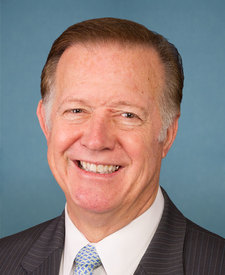
Mr. Weber of Texas introduced the following bill; which was …
Referred to the Subcommittee on Energy.
Referred to the Committee on Transportation and Infrastructure, and in …
Introduced in House
Stakeholder Effects
cui bono?How this legislation distributes effects. Mention counts reflect frequency, not effect magnitude.
Comptroller General special-permit audit staff, Department of Transportation special-permit review staff, Federal prosecutors enforcing pipeline-damage offenses
Positive-direction: Pipeline Safety Fund administrators, Pipeline Safety Fund programs, Pipeline and Hazardous Materials Safety Administration programs
Negative-direction: Comptroller General special-permit audit staff, Department of Transportation special-permit review staff, Government attorneys seeking VIS-only nonpublic evidence, Oil Spill Liability Trust Fund, Pipeline and Hazardous Materials Safety Administration VIS staff, Pipeline and Hazardous Materials Safety Administration hearing staff, Pipeline and Hazardous Materials Safety Administration rulemaking staff
Pipeline employees and contractors covered by VIS use restrictions, Pipeline enforcement respondents facing at least $125,000 in proposed costs, Pipeline operators applying for Federal special permits
Members of the public attending pipeline enforcement hearings, People who damage or impair operating pipeline facilities, Pipeline safety advocates monitoring special-permit applications
Positive-direction: Members of the public attending pipeline enforcement hearings, Pipeline safety advocates monitoring special-permit applications, Pipeline safety researchers and advocacy organizations, Pipeline workers and residents exposed to damaged facilities, United States pipeline workers and residents considered in safety standards
Negative-direction: People who damage or impair operating pipeline facilities
Municipal public-works organizations, State agencies administering one-call notification programs, State pipeline-safety grant programs
Positive-direction: State pipeline-safety grant programs
Negative-direction: Municipal public-works organizations, State agencies administering one-call notification programs
Private litigants seeking discovery of VIS-only records
Utility customers exposed to excavation-related service interruptions, Utility facility locators and locate professionals
Positive-direction: Utility customers exposed to excavation-related service interruptions
Negative-direction: Utility facility locators and locate professionals
Excavation contractors using State one-call programs
Bill Structure & Actor Mappings
Who is "The Secretary" in each section?
- "secretary"
- → Secretary of Transportation
- "administrator"
- → Administrator of the Pipeline and Hazardous Materials Safety Administration
- "comptroller_general"
- → Comptroller General of the United States
- "secretary"
- → Secretary of Transportation
- "oil_spill_fund"
- → Oil Spill Liability Trust Fund
- "pipeline_safety_fund"
- → Pipeline Safety Fund
- "data_manager"
- → Third-party VIS data manager
- "administrator"
- → Administrator of the Pipeline and Hazardous Materials Safety Administration
- "governing_board"
- → VIS governing board
- "states"
- → States and State pipeline-safety authorities
- "secretary"
- → Secretary of Transportation
- "one_call_centers"
- → State one-call notification centers
Note: {'scope_ids': ['voluntary_information_sharing'], 'description': 'VIS confidentiality and use restrictions do not protect criminal evidence, independently sourced information, or information otherwise required to be reported, and do not create a general discovery defense.'}
Key Definitions
Terms defined in this bill
The voluntary information-sharing system established by 49 U.S.C. 60144.
An entity the Secretary deems appropriate to submit or access VIS material, including operators, workers, contractors, PHMSA, State and Tribal agencies, advocates, manufacturers, and research institutions.
Data or information in any form that a company does not make public and that is not otherwise in the public domain.
Excludes rural unregulated gathering gas and certain piping used directly by an onshore production, refining, or manufacturing facility when it is entirely in-plant or extends less than one mile outside it.
We use a combination of our own taxonomy and classification in addition to large language models to assess meaning and potential beneficiaries. High confidence means strong textual evidence. Always verify with the original bill text.
Learn more about our methodology