Dismantle DEI Act of 2025
Sponsors



Legislative Progress
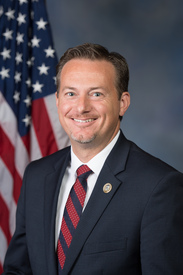
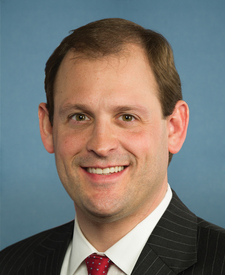
In CommitteeMr. Cloud (for himself, Ms. Tenney, Ms. Hageman, Mr. Moolenaar, …
Summary
What This Bill Does
The Dismantle DEI Act of 2025 prohibits all diversity, equity, and inclusion (DEI) practices throughout the federal government, federal contractors, grant recipients, and federally-regulated financial institutions. It defines certain DEI training and practices as a form of discrimination under the Civil Rights Act, rescinds multiple Biden-era executive orders on equity and inclusion, and requires the closure of all federal DEI offices within 90 days.
Who Benefits and How
Federal employees who object to mandatory DEI training gain explicit legal protections against adverse personnel actions for refusing to participate. Federal contractors and financial institutions that do not have DEI programs benefit from reduced compliance requirements and may gain competitive advantages. Religious colleges and universities benefit from provisions preventing accreditors from requiring DEI standards or discriminating based on religious mission. Plaintiffs attorneys gain new business opportunities through a private right of action with potential damages of 1000 dollars per violation per day.
Who Bears the Burden and How
Federal DEI office employees face job losses as the bill mandates closure of all DEI-related offices, explicitly prohibits reassignment, and requires reductions in force. Chief Diversity Officers across all federal agencies lose their positions. DEI training providers and consultants lose a significant revenue stream as the federal government, contractors, and grant recipients can no longer use federal funds for such services. Higher education institutions and nonprofits receiving federal grants must certify they do not use federal funds for DEI programs, requiring administrative restructuring. Accrediting agencies must revise their standards to remove any DEI-related requirements.
Key Provisions
- Defines prohibited DEI practice in new Title XII of the Civil Rights Act as discrimination based on race, color, ethnicity, religion, biological sex, or national origin, including mandatory training asserting group superiority or inferiority
- Rescinds six executive orders and two national security memoranda related to equity, gender identity, and federal workforce diversity
- Prohibits use of any federal funds for DEI offices, Chief Diversity Officers, equity teams, affinity groups, or DEI training across all federal agencies
- Requires grant and cooperative agreement terms prohibiting use of federal funds for DEI activities (exempts HBCUs, EEO offices, and ADA compliance)
- Repeals Dodd-Frank Section 342 requiring diversity offices at financial regulators and prohibits SEC, CFPB, and other regulators from requiring DEI practices
- Creates private right of action allowing any person to sue for violations with minimum damages of 1000 dollars per day per violation plus attorney fees
Evidence Chain:
This summary is derived from the structured analysis below. See "Detailed Analysis" for per-title beneficiaries/burden bearers with clause-level evidence links.
Primary Purpose
Prohibits diversity, equity, and inclusion (DEI) practices across the federal government, federal contractors, grant recipients, and regulated financial institutions by defining such practices as discrimination, rescinding related executive orders, closing DEI offices, and establishing civil enforcement mechanisms.
Policy Domains
Legislative Strategy
"Amend multiple existing statutes (Civil Rights Act, Title 5 USC, Title 10 USC, Title 31 USC, Title 40 USC, Title 41 USC) to create comprehensive prohibition on DEI practices, with rescission of executive orders and private enforcement mechanisms"
Likely Beneficiaries
- Federal employees who object to DEI training
- Federal contractors who can avoid DEI compliance costs
- Religious institutions of higher education
- Opponents of diversity-focused hiring practices
Likely Burden Bearers
- Federal DEI office employees (face layoffs)
- DEI training providers and consultants
- Chief Diversity Officers across federal agencies
- Organizations that receive federal grants with DEI programs
- Accreditation agencies with diversity standards
Bill Structure & Actor Mappings
Who is "The Secretary" in each section?
- "agency_head"
- → Head of each Federal agency
- "the_director_omb"
- → Director of the Office of Management and Budget
- "the_director_opm"
- → Director of the Office of Personnel Management
- "the_office"
- → Office of Personnel Management
- "federal_contractor"
- → Federal contractor or subcontractor
- "agency_head"
- → Head of an executive agency
- "grant_recipient"
- → Grant recipient or party to cooperative agreement
- "agency_head"
- → Head of each agency
- "inspector_general"
- → Inspector General for each agency
- "the_administrator"
- → Administrator of General Services Administration
- "secretary"
- → Secretary of Education
- "federal_functional_regulator"
- → Federal functional regulators (SEC, CFPB, etc.)
- "national_securities_association"
- → National securities associations (e.g., FINRA)
- "any_person"
- → Any person (private right of action)
Note: 'The Secretary' in Title VI refers to Secretary of Education, while 'Federal functional regulator' in Title VII encompasses multiple agency heads including SEC, CFPB, OCC, FDIC, NCUA, and FHFA
Key Definitions
Terms defined in this bill
Means (1) discriminating for or against any person on the basis of race, color, ethnicity, religion, biological sex, or national origin; (2) requiring training or coursework that asserts a particular race, color, ethnicity, religion, biological sex, or national origin is inherently or systemically superior or inferior, oppressive or oppressed, or privileged or unprivileged; or (3) requiring signing of or assent to statements or codes of conduct asserting such claims.
We use a combination of our own taxonomy and classification in addition to large language models to assess meaning and potential beneficiaries. High confidence means strong textual evidence. Always verify with the original bill text.
Learn more about our methodology