To make housing more affordable, and for other purposes.
Analysis under review: This bill has generated analysis that may be too generic or incomplete. Clause-level evidence remains available below.
Summary
What This Bill Does
This bill, To make housing more affordable, and for other purposes., changes federal law or congressional policy affecting financial institutions, investors, and borrowers. The main policy domain is Finance, Civil Rights, Housing.
Who Benefits and How
financial institutions, investors, and borrowers may benefit from new authority, funding, eligibility, regulatory clarity, or reduced risk created by the bill.
Who Bears the Burden and How
federal implementing agencies, financial institutions, investors, and borrowers may take on implementation duties, reporting obligations, compliance costs, or oversight responsibilities.
Key Provisions
- Section H81A6555AA211476B964B10A8705D0EF8: 1. Short title; table of contents This Act may be cited as the American Housing and Economic Mobility Act of 2024. The table of contents for this Act is as...
- Section HE35FC6F7505840D2B7BD7D3F4762744F: 101. Local housing innovation grants In this section: The terms elementary school and secondary school have the meanings given those terms in section 8101 of...
- Section H45AD8DBF957E46C3B9AF31B44CC54F2E: 102. Investing in affordable housing infrastructure Section 1338(a) of the Federal Housing Enterprises Financial Safety and Soundness Act of 1992 (12 U.S.C....
- Section H24D3648C76E748BC95C4C0B363088B12: 103. Conditions for the sale of real estate-owned properties and non-performing loans Congress finds that— the Federal Housing Administration, the Federal...
- Section HB5A5D84ABC1E4A01AD8187A422A302EC: 259. Sale of real estate-owned properties In this section— the term Claim Without Conveyance of Title program means the program of the Federal Housing...
Evidence Chain:
This summary is generated from the full bill text using AI analysis. Expand "Detailed Analysis" below for identified beneficiaries/burden bearers with clause-level evidence links.
At a Glance
What This Bill Does
This bill, To make housing more affordable, and for other purposes., changes federal law or congressional policy affecting financial institutions, investors, and borrowers.
Key Policy Areas
Finance, Civil Rights, Housing
Primary Purpose
This bill, To make housing more affordable, and for other purposes., changes federal law or congressional policy affecting financial institutions, investors, and borrowers.
Policy Domains
Whole bill
Identified Gains
- financial institutions, investors, and borrowers
Identified Costs
- federal implementing agencies
- financial institutions, investors, and borrowers
Sponsors
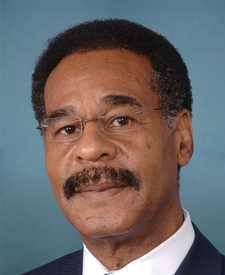

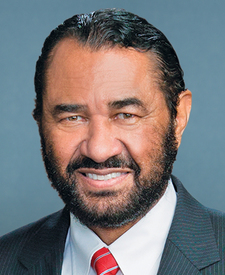

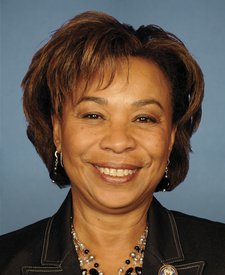
Legislative Progress
IntroducedMr. Cleaver (for himself, Ms. Schakowsky, Ms. Norton, Mr. Khanna, …
Impact analysis is available but no clear stakeholder effects identified. View clause-level analysis →
Bill Structure & Actor Mappings
Who is "The Secretary" in each section?
- "secretary_of_labor"
- → Secretary of Labor
- "secretary_of_housing_and_urban_development"
- → Secretary of Housing and Urban Development
Key Definitions
Terms defined in this bill
the program established under section 204 of the Departments of Veterans Affairs and Housing and Urban Development, and Independent Agencies Appropriations Act, 1996 (Public Law 104–134
a lender that is not an insured depository institution.(ii)Small business
the program of the Federal Housing Administration carried out under section 203.368 of title 24, Code of Federal Regulations, or any successor regulation
financing for new fossil fuel infrastructure projects, including financing of exploration activities, that would— increase greenhouse gas emissions
a unit for which monthly rent is 30 percent or less than the monthly area median income
residential property for which title— passed by operation of law through intestacy
the Secretary of Housing and Urban Development
the program of the Federal Housing Administration carried out under section 203.368 of title 24, Code of Federal Regulations, or any successor regulation
We use a combination of our own taxonomy and classification in addition to large language models to assess meaning and potential beneficiaries. High confidence means strong textual evidence. Always verify with the original bill text.
Learn more about our methodology