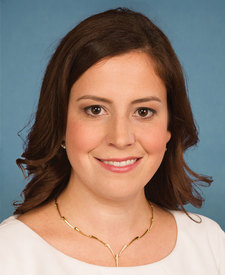
HR9203-119

Reported

Student Protection and University Accountability Act

119th Congress Introduced Jun 8, 2026

Summary

What This Bill Does

The Student Protection and University Accountability Act would amend the Higher Education Act's program-participation agreement for institutions receiving Federal student-aid funds. Each participating institution would have to attest annually that it follows a new set of requirements for complaints alleging race, color, or national-origin discrimination under Title VI of the Civil Rights Act. The institution must maintain an investigative process, publish and broadly distribute that process, name at least one Title VI coordinator, and explain how it decides whether to investigate and how it determines an outcome.

For each complaint, the institution would have to notify the complainant within 30 days that it received the complaint and whether it opened an investigation. A decision not to investigate must include the reason and a summary of the information used. If an investigation is opened, the institution must notify the complainant and later, within 30 days after reaching an outcome, provide the result, the reasoning, and any remedial action. Institutions must retain complaint, decision, communication, investigation, outcome, and remedy records; publish institutional and Federal filing instructions; and display Education Department Title VI awareness materials on campus and online for the required period.

An institution that fails to comply for two consecutive award years would become ineligible for Higher Education Act programs for at least the first two following award years. To regain eligibility, it must demonstrate compliance before that ineligibility period ends. These institutional requirements would take effect on the first day of the first award year beginning after enactment.

The bill also directs the Education Department's Office for Civil Rights to begin briefing the House and Senate education committees every two months within 30 days of enactment, continuing for two years. The briefings must cover the prior month's Title VI complaints, protect personally identifiable information, separate the data by the basis of alleged discrimination including shared ancestry, and describe complaint counts, agency responses, investigations, and investigation length. A written report containing the briefing information is due at least 48 hours before each briefing.

The Office for Civil Rights generally could not close or dismiss a higher-education Title VI complaint merely because the complainant or another person filed the same allegations with another agency, a court, or the institution. The stated exception for another person's filing applies when a court has certified a class action and both that person and the complainant are class members. The office also could not delay its investigation because the same allegations were filed with another agency or the institution.

Who Benefits and How

People filing Title VI complaints against colleges would receive prompt status notices, reasons for non-investigation decisions, outcome explanations, and clearer access to institutional and Federal complaint channels. Students and families could compare a college's published process and identify the responsible coordinator before a dispute. Complainants whose allegations are also pending elsewhere could face less risk that the Federal office will dismiss or postpone their cases solely because of a parallel filing. Congressional education committees would receive regular, disaggregated information on the civil-rights office's complaint inventory and investigation times.

Who Bears the Burden and How

Colleges participating in Federal student-aid programs would bear the direct cost of creating and publishing procedures, designating staff, meeting notice deadlines, retaining detailed records, posting campaign materials, and submitting annual attestations. Repeated noncompliance could suspend access to Federal student-aid programs for at least two award years. Education Department student-aid staff would have to review attestations and enforce the eligibility sanction. Office for Civil Rights staff would have recurring briefing and reporting work and less discretion to close or delay cases with parallel filings. Colleges responding to those Federal complaints could face longer or concurrent investigations.

Key Provisions

  • Requires participating colleges to publish, distribute, and annually attest to a Title VI complaint process.
  • Sets 30-day notice deadlines for complaint receipt, investigation decisions, and completed-investigation outcomes.
  • Requires designated coordinators, detailed records, filing instructions, and display of Federal awareness materials.
  • Suspends Higher Education Act program eligibility after two consecutive award years of noncompliance.
  • Requires bimonthly civil-rights briefings and advance written reports for two years.
  • Restricts dismissal or delay of Title VI complaints based solely on parallel filings.

Evidence Chain:

This summary is generated from the full bill text using AI analysis. Expand "Detailed Analysis" below for identified beneficiaries/burden bearers with clause-level evidence links.

At a Glance

What This Bill Does

Condition colleges' participation in Federal student-aid programs on transparent Title VI complaint procedures and require enhanced congressional reporting and case handling by the Education Department's civil-rights office.

Key Policy Areas

Education, Civil Rights, Federal Regulation, Government Oversight

Primary Purpose

Condition colleges' participation in Federal student-aid programs on transparent Title VI complaint procedures and require enhanced congressional reporting and case handling by the Education Department's civil-rights office.

Policy Domains

Education Civil Rights Federal Regulation Government Oversight

Section 3 - Office for Civil Rights reporting and case handling

Identified Gains
  • Title VI complainants involving higher education recipients
  • Congressional education oversight staff
Model: codex-gpt-5 | Version: bill_summary_v2 | Source: ih
Congressional education oversight staff:
Title VI complainants involving higher education recipients:
Identified Costs
  • Education Department civil-rights complaint staff
  • Higher education institutions subject to Federal Title VI complaints
Model: codex-gpt-5 | Version: bill_summary_v2 | Source: ih
Education Department civil-rights complaint staff:
Higher education institutions subject to Federal Title VI complaints:

Section 2 - institutional Title VI complaint procedures and enforcement

Identified Gains
  • People filing Title VI complaints with colleges
  • Students seeking college complaint-process information
  • Families comparing institutional civil-rights procedures
Model: codex-gpt-5 | Version: bill_summary_v2 | Source: ih
People filing Title VI complaints with colleges:
Students seeking college complaint-process information:
Families comparing institutional civil-rights procedures:
Identified Costs
  • Title IV-participating higher education institutions
  • Campus Title VI compliance staff
  • Department of Education student-aid enforcement staff
Model: codex-gpt-5 | Version: bill_summary_v2 | Source: ih
Campus Title VI compliance staff:
Title IV-participating higher education institutions:
Department of Education student-aid enforcement staff:

Legislative Progress

Reported
Introduced Committee Passed
Jun 25, 2026

Ordered to be Reported (Amended) by the Yeas and Nays: …

Jun 25, 2026

Committee Consideration and Mark-up Session Held

Jun 8, 2026

Referred to the House Committee on Education and Workforce.

Jun 8, 2026

Introduced in House

Jun 8, 2026

Ms. Stefanik (for herself and Ms. Gillen) introduced the following …

Stakeholder Effects

cui bono?

How this legislation distributes effects. Mention counts reflect frequency, not effect magnitude.

Education
3 mentions across 2 clauses
+1 positive -2 negative

Higher education institutions subject to Federal Title VI complaints, Students seeking college complaint-process information, Title IV-participating higher education institutions

Positive-direction: Students seeking college complaint-process information

Negative-direction: Higher education institutions subject to Federal Title VI complaints, Title IV-participating higher education institutions

Government
3 mentions across 2 clauses
+1 positive -2 negative

Congressional education oversight staff, Department of Education student-aid enforcement staff, Education Department civil-rights complaint staff

Positive-direction: Congressional education oversight staff

Negative-direction: Department of Education student-aid enforcement staff, Education Department civil-rights complaint staff

Advocacy Groups
2 mentions across 2 clauses
+2 positive

People filing Title VI complaints with colleges, Title VI complainants involving higher education recipients

2/3
sections analyzed
Full impact breakdown

Bill Structure & Actor Mappings

Who is "The Secretary" in each section?

Domains
Education Civil Rights Federal Regulation
Actor Mappings
"secretary"
→ Secretary of Education
"complainants"
→ People filing Title VI complaints with an institution
"institutions"
→ Institutions participating in Higher Education Act programs
Domains
Education Civil Rights Government Oversight
Actor Mappings
"office"
→ Department of Education Office for Civil Rights
"committees"
→ House and Senate education committees
"recipients"
→ Higher education institutions receiving applicable-program funds
"complainants"
→ People filing Title VI complaints involving higher education

Note: {'scope_ids': ['institutional_title_vi_compliance'], 'description': 'The eligibility sanction applies only after two consecutive award years of noncompliance and lasts at least the first two subsequent award years.'}

Key Definitions

Terms defined in this bill

3 terms
"Office" §office

The Department of Education's Office for Civil Rights.

"recipient" §recipient

An institution of higher education under section 102 of the Higher Education Act that receives funds under an applicable program.

"authorizing committees" §authorizing_committees

The House Committee on Education and Workforce and the Senate Committee on Health, Education, Labor, and Pensions.

We use a combination of our own taxonomy and classification in addition to large language models to assess meaning and potential beneficiaries. High confidence means strong textual evidence. Always verify with the original bill text.

Learn more about our methodology