Making appropriations for the Legislative Branch for the fiscal year ending September 30, 2027, and for other purposes.
Summary
What This Bill Does
This Legislative Branch appropriations bill funds and controls House, Senate, Library of Congress, Government Accountability Office, Architect of the Capitol, Capitol tour, and legislative-branch administrative activities for fiscal year 2027. The stored clauses are mostly restrictions and guardrails rather than dollar-by-dollar appropriations tables. They time-limit Members' Representational Allowance funds, cap vehicle-lease payments from those allowances at $1,000 per month, require federal cybersecurity help to the House to protect privileged House and Member information, block House purchases of certain China-linked information technology equipment, require in-person workplace-rights training for Members with public House Ethics Committee matters, bar AOC contractor incentive payments when work is late or over budget, cap Library of Congress reimbursable and revolving fund authority at $342.285 million, restrict GAO impoundment lawsuits without a concurrent resolution, preserve Member-led Capitol tours, ban certain Chinese or foreign-adversary telecom and surveillance equipment, require government networks to block pornography, freeze Member COLAs for fiscal year 2027, and change appointment/removal rules for the Librarian of Congress and Government Publishing Office Director.
Who Benefits and How
Federal taxpayers and deficit-reduction accounts benefit from the Members' Representational Allowance rule because unused MRA balances after December 31, 2028 must go to deficit reduction, or debt reduction if there is no deficit.
House cybersecurity and privileged legislative information benefit because federal entities helping the House with cybersecurity must preserve the constitutional separation of powers and use minimization procedures to limit spread or sharing of privileged House and Member information.
House members, committees, officers, and employees benefit from reduced cybersecurity and supply-chain risk because fiscal 2027 funds cannot buy covered computers, printers, or office videoconferencing equipment from entities on specified Defense, Treasury, Commerce, and DHS lists tied to Chinese military, export-control, military end-user, or forced-labor risks.
Architect of the Capitol projects and taxpayers benefit when AOC cannot pay incentive or award fees to contractors that are behind schedule or over budget unless the Architect or an agency-employed designee determines the deviation is unforeseeable, government-driven, or not significant.
Congressional offices and visitors benefit from the Capitol tour provision because AOC funds cannot be used to eliminate or restrict guided tours led by Member-office employees and interns except through authorized rules or temporary security restrictions approved through the Capitol Police Board framework.
Legislative branch cybersecurity also benefits from the ban on acquiring Huawei, ZTE, Hytera, Hikvision, Dahua, subsidiaries or affiliates, and other Defense-identified foreign-adversary equipment, and from the requirement that federally funded computer networks block pornography while preserving law-enforcement and official-government exceptions.
Who Bears the Burden and How
Members of Congress and House offices bear spending restrictions. MRA funds expire after December 31, 2028; vehicle leases from MRAs are capped at $1,000 per month except for mobile district offices; and Members with publicly disclosed House Ethics Committee matters cannot use funds to satisfy workplace-rights training unless they complete it in person.
The Chief Administrative Officer, Committee on House Administration, House procurement officials, and other legislative branch administrators bear compliance burdens to enforce vehicle caps, MRA availability, China-linked equipment bans, cybersecurity minimization, and private-vehicle funding limits.
Chinese technology companies and foreign-adversary-linked telecom or surveillance vendors bear procurement burdens because legislative branch funds cannot be used to acquire covered office IT equipment or telecom/video surveillance equipment from listed or identified entities.
The Government Accountability Office and Comptroller General bear a litigation constraint because GAO funds cannot be used for a civil action under section 1016 of the Congressional Budget and Impoundment Control Act unless Congress adopts a concurrent resolution authorizing it.
Library of Congress reimbursable and revolving-fund activities bear a fiscal cap because their fiscal 2027 obligational authority may not exceed $342.285 million. Legislative Branch Financial Managers Council participants also face a shared-cost cap of $2,000 across participating entities.
Key Provisions
- Limits House Members' Representational Allowances to availability through December 31, 2028 and sends remaining balances to deficit or debt reduction.
- Caps MRA-funded vehicle leases at $1,000 per month, excluding mobile district offices.
- Requires federal cybersecurity assistance to the House to protect separation of powers and minimize sharing of privileged House and Member information.
- Bars fiscal 2027 House funds from buying covered office IT equipment from entities on specified Chinese military, Treasury, Commerce, or Uyghur Forced Labor Prevention Act lists.
- Requires in-person Workplace Rights and Responsibilities training for Members with public House Ethics Committee matters before funds can satisfy that requirement.
- Bars Architect of the Capitol incentive or award payments to contractors behind schedule or over budget unless a limited exception applies.
- Caps Library of Congress reimbursable and revolving fund obligational authority at $342.285 million for fiscal year 2027.
- Requires congressional authorization by concurrent resolution before GAO may use funds for certain impoundment-control civil actions.
- Preserves Member-office-led Capitol tours unless restricted under authorized tour regulations or temporary security-related decisions.
- Bans acquisition of Huawei, ZTE, Hytera, Hikvision, Dahua, subsidiaries, affiliates, or other foreign-adversary telecom and video surveillance equipment.
- Requires federally funded computer networks to block pornography while preserving law-enforcement, prosecution, adjudication, and official-government exceptions.
- Freezes Member cost-of-living adjustments for fiscal year 2027 and changes appointment/removal rules for the Librarian of Congress and Director of the Government Publishing Office.
Evidence Chain:
This summary is generated from the full bill text using AI analysis. Expand "Detailed Analysis" below for identified beneficiaries/burden bearers with clause-level evidence links.
At a Glance
What This Bill Does
Funds legislative branch operations for fiscal year 2027 while imposing House, Library of Congress, GAO, AOC, cybersecurity, procurement, Capitol tour, network-use, and Member-pay restrictions.
Key Policy Areas
Appropriations, Government Operations, Cybersecurity, Procurement, Legislative Branch
Primary Purpose
Funds legislative branch operations for fiscal year 2027 while imposing House, Library of Congress, GAO, AOC, cybersecurity, procurement, Capitol tour, network-use, and Member-pay restrictions.
Policy Domains
Sections 110 through 116 - House, AOC, Library, and GAO controls
Identified Gains
- Federal taxpayers receiving unused MRA balances
- Privileged House and Member information
- House information systems
- Capitol project taxpayers
- Congressional authorization authority over GAO civil actions
Identified Costs
- Members leasing vehicles with MRA funds
- House procurement officials
- Listed Chinese technology equipment vendors
- Members with public House Ethics Committee matters
- Architect of the Capitol contractors behind schedule
- Library of Congress reimbursable activities
- Government Accountability Office impoundment litigators
Sections 201 through 212 - General legislative branch limitations
Identified Gains
- Member-office-led Capitol tours
- Legislative branch cybersecurity programs
- Law enforcement criminal-investigation network access
- Legislative branch fiscal control
Identified Costs
- Private vehicle maintenance reimbursements
- Legislative Branch Financial Managers Council participants
- Huawei Technologies Company
- ZTE Corporation
- Legislative branch network administrators
Legislative Progress
ReportedPlaced on the Union Calendar, Calendar No. 580.
The House Committee on Appropriations reported an original measure, H. …
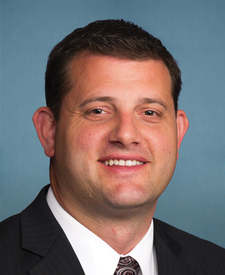
Mr. Valadao, from the Committee on Appropriations, reported the following …
Stakeholder Effects
cui bono?How this legislation distributes effects. Mention counts reflect frequency, not effect magnitude.
Architect of the Capitol procurement officials, Architect of the Capitol tour restrictions, Capitol Police Board security restrictions
Positive-direction: Congressional authorization authority over GAO civil actions, House information systems, House office cybersecurity, House parking facility emergency assistance, Law enforcement criminal-investigation network access, Legislative Branch Financial Managers Council, Legislative branch appropriations control, Legislative branch cybersecurity programs, Legislative branch fiscal control, Legislative branch operating accounts, Member-office-led Capitol tours, Mobile district office vehicle leases, Privileged House and Member information
Negative-direction: Architect of the Capitol procurement officials, Architect of the Capitol tour restrictions, Chief Administrative Officer vehicle lease payments, Committee on House Administration MRA regulations, Comptroller General impoundment civil actions, Federal cybersecurity assistance entities serving the House, Government Accountability Office impoundment litigators, Government users viewing pornography on funded networks, House Members Representational Allowances, House covered information technology procurement, Legislative Branch Financial Managers Council participants, Legislative branch funds transfer recipients, Legislative branch network administrators, Legislative branch unobligated fiscal year 2027 funds, Library of Congress reimbursable activities, Library of Congress revolving fund activities, Members leasing vehicles with MRA funds, Members with public House Ethics Committee matters, Private vehicle maintenance reimbursements, Senate parking facility cleaning rules, Treasury funds for legislative branch appropriations, Workplace Rights and Responsibilities training program
Huawei Technologies Company, Hytera Communications Corporation, ZTE Corporation
Capitol project taxpayers, Federal taxpayers receiving unused MRA balances
Dahua Technology Company, Hangzhou Hikvision Digital Technology Company
Architect of the Capitol contractors behind schedule
Bill Structure & Actor Mappings
Who is "The Secretary" in each section?
- "Member"
- → Representative, Delegate, or Resident Commissioner to Congress
- "Architect"
- → Architect of the Capitol
- "Committee"
- → Committee on House Administration of the House of Representatives
- "Comptroller General"
- → Comptroller General of the United States
- "Chief Administrative Officer"
- → Chief Administrative Officer of the House of Representatives
- "Capitol Police Board"
- → Capitol Police Board
- "Secretary of Defense"
- → Secretary of Defense
- "Director of National Intelligence"
- → Director of National Intelligence
- "Director of the Federal Bureau of Investigation"
- → Director of the Federal Bureau of Investigation
Key Definitions
Terms defined in this bill
A Representative, Delegate, or Resident Commissioner to Congress for purposes of the MRA availability section.
A computer, printer, or interoperable videoconferencing equipment for direct office use by a House Member, committee, officer, or employee, excluding cloud and other services that use such equipment.
Has the meaning of covered nation in 10 U.S.C. 4872(f), used for telecom and video surveillance equipment restrictions.
We use a combination of our own taxonomy and classification in addition to large language models to assess meaning and potential beneficiaries. High confidence means strong textual evidence. Always verify with the original bill text.
Learn more about our methodology