Locating Our Unclaimed Veterans Act
Summary
What This Bill Does
The Locating Our Unclaimed Veterans Act would require the Department of Veterans Affairs, acting through the Under Secretary for Benefits, to create a centralized information system for unclaimed veterans' remains. The system would hold information sent to VA by coroners, State governments, and funeral homes about unidentified human remains suspected to be those of a veteran. For unclaimed remains already in VA custody, the system would include the veteran's name, fingerprints, estimated age at death, and other identifiers when available or considered necessary. VA would use the information to make reasonable efforts to confirm veteran status and identify suitable next of kin to the extent practicable.
While building the system, VA would have to request relevant identifying information from the Social Security Administration, Federal Bureau of Investigation, and Department of Defense under data-sharing memoranda already in effect. The VA Secretary could enter new memoranda or modify existing ones when necessary to identify whether remains in VA custody are those of a veteran. When requesting FBI information, VA must consider information maintained in the National Missing and Unidentified Persons System.
The section would expire on the last day of the third fiscal year beginning after enactment. VA must give the House and Senate Veterans' Affairs Committees an initial report within one year and then report annually for three years. Each report must summarize implementation, describe outreach, and state how many veterans' remains the system successfully identified during the reporting period. The bill does not specify an appropriation, require a particular software vendor, or directly compel coroners, State governments, or funeral homes to transmit records.
Who Benefits and How
Families of missing or unidentified veterans could be located and notified when VA matches remains to a veteran. Deceased veterans whose remains are unclaimed could be identified and become eligible for appropriate recognition and disposition through existing processes. Coroners, funeral homes, and State officials could gain a central Federal destination for information when they suspect unidentified remains belong to a veteran. Congressional veterans' committees would receive annual data on implementation, outreach, and successful identifications.
Who Bears the Burden and How
VA Benefits staff must design, operate, secure, and conduct outreach for the centralized system, review identifying records, coordinate data-sharing agreements, search for next of kin, and prepare four required reports. SSA, FBI, Defense Department, and VA data staff could incur administrative costs when responding under existing or revised memoranda. Coroners, State agencies, and funeral homes that choose to participate would bear the cost of locating and transmitting useful records, but the bill itself does not require their participation. Federal taxpayers bear any implementation costs because the bill creates duties without specifying a dedicated funding amount.
Key Provisions
- Requires a centralized VA system for information on unclaimed veterans' remains.
- Stores available names, fingerprints, age estimates, and other identifying data.
- Directs VA to seek relevant SSA, FBI, and Defense Department information through memoranda.
- Requires consideration of the national missing-and-unidentified-persons database for FBI requests.
- Requires an initial report within one year and annual reports for three years.
- Expires the section after the third fiscal year beginning after enactment.
Evidence Chain:
This summary is generated from the full bill text using AI analysis. Expand "Detailed Analysis" below for identified beneficiaries/burden bearers with clause-level evidence links.
At a Glance
What This Bill Does
Create a temporary centralized Department of Veterans Affairs system for identifying unclaimed veterans' remains, locating next of kin, coordinating Federal data, and reporting results to Congress.
Key Policy Areas
Veterans, Government Operations, Data Management, Intergovernmental Affairs
Primary Purpose
Create a temporary centralized Department of Veterans Affairs system for identifying unclaimed veterans' remains, locating next of kin, coordinating Federal data, and reporting results to Congress.
Policy Domains
Section 2 - temporary VA unclaimed-remains information system
Identified Gains
- Veterans' next of kin located through the system
- Unclaimed deceased veterans awaiting identification
- Coroners identifying possible veterans' remains
- Congressional veterans' affairs oversight staff
Identified Costs
- VA Benefits unclaimed-remains system staff
- Federal identification-data agency staff
- State agencies voluntarily transmitting remains data
- Funeral homes voluntarily transmitting remains data
- Federal taxpayers funding system implementation
Sponsors

Legislative Progress
In CommitteeForwarded by Subcommittee to Full Committee by Voice Vote.
Subcommittee Consideration and Mark-up Session Held
Subcommittee Hearings Held
Referred to the Subcommittee on Disability Assistance and Memorial Affairs.
Referred to the House Committee on Veterans' Affairs.
Introduced in House
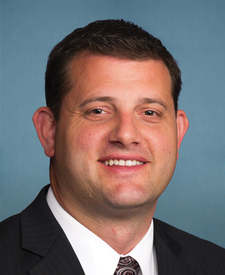
Mr. Valadao introduced the following bill; which was referred to …
Stakeholder Effects
cui bono?How this legislation distributes effects. Mention counts reflect frequency, not effect magnitude.
Unclaimed deceased veterans awaiting identification, Veterans' next of kin located through the system
Federal identification-data agency staff, VA Benefits unclaimed-remains system staff
Coroners identifying possible veterans' remains
Congressional veterans' affairs oversight staff
Bill Structure & Actor Mappings
Who is "The Secretary" in each section?
- "secretary"
- → Secretary of Veterans Affairs
- "va_office"
- → Under Secretary of Veterans Affairs for Benefits
- "committees"
- → House and Senate Veterans' Affairs Committees
- "contributors"
- → Coroners, State governments, and funeral homes
- "data_agencies"
- → SSA, FBI, and Department of Defense
Note: {'scope_ids': ['unclaimed_veterans_identification_system'], 'description': 'The section expires after the third fiscal year beginning after enactment; it requires VA to receive and seek information but does not expressly compel coroners, States, or funeral homes to submit records.'}
Key Definitions
Terms defined in this bill
Unclaimed human remains confirmed or suspected to be those of a veteran and covered by information collected in the VA system.
We use a combination of our own taxonomy and classification in addition to large language models to assess meaning and potential beneficiaries. High confidence means strong textual evidence. Always verify with the original bill text.
Learn more about our methodology