Protecting Seniors and Stopping Fraudsters Act
Summary
What This Bill Does
The Protecting Seniors and Stopping Fraudsters Act targets Medicare hospice and home health fraud controls. It requires the Secretary to revalidate existing hospice providers in states where new hospices are under enhanced oversight. It requires newly enrolled, ownership-changed, or reactivated hospice programs and home health agencies to be surveyed at least every 12 months for 36 months. Hospices or home health agencies that miss quality data or show aberrant live-discharge, admission, or fraud-risk patterns must be surveyed within 18 months. Beginning in fiscal year 2029, the Medicare payment reduction for failure to report required hospice or home health quality data rises to 15 percentage points, with a 30-day good-faith extension process.
The bill permits enhanced enrollment screening for hospice programs and home health agencies in areas with extreme fraud risk, including fingerprinting administrators or medical directors and requiring evidence of comprehensive liability insurance. It tightens CMS approval of accreditation organizations by requiring survey procedures at least as strong as state and local agency standards, CMS basic training for surveyors, performance assessment, and remedies such as corrective action, monitoring, or termination. It also requires Medicare hospice election notices to beneficiaries within 15 days of election, including 1-800-MEDICARE, hospice contact information, plain-language waiver information, and revocation or change instructions. CMS receives $6 million per year from the Hospital Insurance Trust Fund for notices, and $100 million in fiscal year 2026 for survey implementation. HHS must report annually for five years on hospice and home health program-integrity work.
Who Benefits and How
Medicare beneficiaries benefit from closer oversight of hospices and home health agencies, clearer hospice election notices, and stronger fraud controls. CMS survey staff benefit from $100 million for implementation and clearer authority to repeatedly survey new or risky providers. Legitimate hospice programs benefit if fraudulent operators face revalidation, enhanced screening, or revocation. Legitimate home health agencies benefit from the same enforcement focus. HHS program-integrity offices benefit from annual reporting on audits, reviews, revocations, and fraud trends. Medicare trust funds benefit if fraudulent billing is prevented or stopped earlier.
Who Bears the Burden and How
Hospice programs in enhanced-oversight states must undergo revalidation and repeated surveys if new, reactivated, ownership-changed, missing quality data, or aberrant. Home health agencies face parallel survey and quality-reporting penalties. Fraudulent hospice operators and fraudulent home health operators face screening, fingerprinting, insurance, survey, and revocation pressure. Accreditation organizations must meet stronger CMS approval and performance requirements. CMS must fund notices, survey implementation, reporting, oversight, and enforcement from trust-fund transfers.
Key Provisions
- Requires revalidation of existing hospices in states where new hospices are subject to enhanced oversight.
- Requires repeated surveys for newly enrolled, ownership-changed, reactivated, missing-quality-data, or fraud-risk hospice and home health providers.
- Raises Medicare hospice and home health quality-data payment reductions to 15 percentage points beginning in fiscal year 2029.
- Authorizes enhanced enrollment screening, including fingerprints and liability-insurance evidence, in extreme fraud-risk areas.
- Strengthens CMS oversight of accrediting bodies and their surveyors.
- Requires hospice election notices to beneficiaries and transfers $6 million per year for notices.
- Directs annual HHS program-integrity reports and transfers $100 million for CMS survey implementation.
Evidence Chain:
This summary is generated from the full bill text using AI analysis. Expand "Detailed Analysis" below for identified beneficiaries/burden bearers with clause-level evidence links.
At a Glance
What This Bill Does
Strengthens Medicare hospice and home health program-integrity oversight with revalidation, repeated surveys for new or risky providers, larger quality-data payment reductions, enhanced enrollment screening, accreditation oversight, hospice election notices, HHS reporting, and $100 million for CMS survey implementation.
Key Policy Areas
Medicare, Hospice, Home Health, Program Integrity
Primary Purpose
Strengthens Medicare hospice and home health program-integrity oversight with revalidation, repeated surveys for new or risky providers, larger quality-data payment reductions, enhanced enrollment screening, accreditation oversight, hospice election notices, HHS reporting, and $100 million for CMS survey implementation.
Policy Domains
House resolution provisions
Identified Gains
- Medicare beneficiaries
- CMS survey staff
- Legitimate hospice programs
- Legitimate home health agencies
- HHS program integrity offices
- Medicare trust funds
Identified Costs
- Hospice programs
- Home health agencies
- Fraudulent hospice operators
- Fraudulent home health operators
- Accreditation organizations
- CMS program staff
Legislative Progress
ReportedOrdered to be Reported in the Nature of a Substitute …
Committee Consideration and Mark-up Session Held
Referred to the Committee on Ways and Means, and in …
Introduced in House
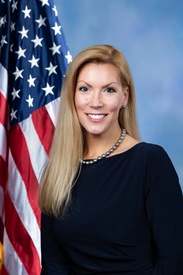
Ms. Van Duyne introduced the following bill; which was referred …
Stakeholder Effects
cui bono?How this legislation distributes effects. Mention counts reflect frequency, not effect magnitude.
CMS accreditation staff, CMS beneficiary notice staff, CMS budget staff
CMS survey staff faces effects in multiple directions
Positive-direction: Medicare beneficiaries, Medicare hospice patients, Medicare trust funds
Negative-direction: CMS accreditation staff, CMS beneficiary notice staff, CMS budget staff, CMS enrollment screening staff, CMS enrollment staff, HHS program integrity offices, Hospital Insurance Trust Fund
Accreditation organizations, Fraudulent home health operators, Fraudulent hospice operators
Bill Structure & Actor Mappings
Who is "The Secretary" in each section?
- "cms"
- → Centers for Medicare and Medicaid Services
- "hhs"
- → Department of Health and Human Services
We use a combination of our own taxonomy and classification in addition to large language models to assess meaning and potential beneficiaries. High confidence means strong textual evidence. Always verify with the original bill text.
Learn more about our methodology