To require each agency to evaluate the permitting system of the agency, to consider whether a permit by rule could replace that system, and for other purposes.
Analysis under review: This bill has generated analysis that may be too generic or incomplete. Clause-level evidence remains available below.
Summary
What This Bill Does
The FREE Act (Full Responsibility and Expedited Enforcement Act) overhauls federal permitting by requiring agencies to adopt 'permitting by rule' - a system where permit applicants self-certify they meet requirements, and permits are automatically approved after 180 days if the agency doesn't act. The bill aims to reduce government delays and costs in the permitting process.
Who Benefits and How
Businesses and permit applicants benefit significantly through faster permit approvals (automatic approval after 180 days of inaction), reduced compliance costs, and shifted burden of proof to agencies in disputes. Companies in regulated industries (construction, energy, environmental, etc.) gain predictability and can recover attorney fees if agencies unreasonably delay or wrongly deny permits.
Who Bears the Burden and How
Federal regulatory agencies must complete extensive reports within 240 days cataloging all permits, justify any permits that cannot use the new system, and establish new permitting-by-rule processes within 12 months. Agencies also bear legal and financial risk - they must pay attorney fees from their budgets if they unreasonably delay or wrongly deny permits.
Key Provisions
- Requires all agencies to report on every permit type within 240 days, identifying which can transition to permitting by rule
- Establishes automatic permit approval after 180 days if agency doesn't act on a complete application
- Shifts burden of proof to agencies in permit disputes and requires agencies to pay attorney fees if applicants prevail
- Allows GAO oversight with reports on agency compliance and recommendations for improving the transition
Evidence Chain:
This summary is generated from the full bill text using AI analysis. Expand "Detailed Analysis" below for identified beneficiaries/burden bearers.
At a Glance
What This Bill Does
Mandates all federal agencies to report on their permitting processes and transition to 'permitting by rule' - a streamlined system where applicants self-certify compliance with written standards and permits are automatically granted after 180 days unless denied.
Key Policy Areas
Government Administration, Regulatory Reform, Business
Primary Purpose
Mandates all federal agencies to report on their permitting processes and transition to 'permitting by rule' - a streamlined system where applicants self-certify compliance with written standards and permits are automatically granted after 180 days unless denied.
Policy Domains
Whole Bill - Permitting Reform
Identified Gains
Contextual inference, no direct clause citation- Businesses seeking federal permits
- Regulated industries (construction, energy, environmental)
- Small businesses with limited resources for permitting
Contextual inference, no direct clause citation
Identified Costs
Contextual inference, no direct clause citation- Federal regulatory agencies
- Environmental protection interests
- Public safety oversight functions
Contextual inference, no direct clause citation
Sponsors
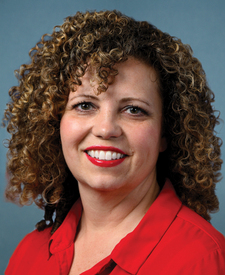
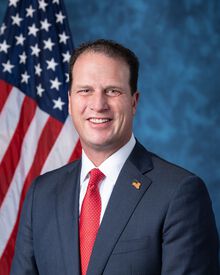



Legislative Progress
ReportedAdditional sponsors: Mr. Bucshon, Mr. Lamborn, Mrs. Radewagen, Mr. Collins, …
Reported with amendments, committed to the Committee of the Whole …
Ms. Maloy (for herself, Mrs. Chavez-DeRemer, Mr. Newhouse, Mrs. Peltola, …
Stakeholder Effects
cui bono?How this legislation distributes effects. Mention counts reflect frequency, not effect magnitude.
Federal regulatory agencies, Government Accountability Office
Businesses seeking federal permits
Bill Structure & Actor Mappings
Who is "The Secretary" in each section?
- "congress"
- → United States Congress
- "the_comptroller_general"
- → Comptroller General (GAO)
- "the_head_of_each_agency"
- → Head of each federal agency
Key Definitions
Terms defined in this bill
Has the meaning given in section 551 of title 5, United States Code (i.e., each authority of the Government of the United States)
An application submitted under subsection (b) that contains certifications that the applicant meets each requirement and substantive standard specified
The application process that an agency establishes by rule for granting a certain type of permit
All qualities, statuses, actions, benchmarks, measurements, or other written descriptions that would qualify a party to perform the permitted action
We use a combination of our own taxonomy and classification in addition to large language models to assess meaning and potential beneficiaries. High confidence means strong textual evidence. Always verify with the original bill text.
Learn more about our methodology