Bank Fraud Technology Advancement Act of 2026
Summary
What This Bill Does
The Bank Fraud Technology Advancement Act of 2026 defines advanced fraud detection technology to include artificial intelligence, machine learning, predictive analytics, behavioral biometrics, network analytics, data fusion, distributed ledger monitoring, blockchain tracing, and other emerging tools. Federal banking agencies, consulting Treasury, FinCEN, the Federal Trade Commission, the Consumer Financial Protection Bureau, and law enforcement, must study how insured depository institutions and credit unions use those tools. The study must assess adoption by asset size, fraud reduction, loss mitigation, consumer protection, costs, interoperability, data limits, liability, regulatory uncertainty, AI governance, public-private information sharing, payments-system risk, supervisory expectations, staff training, and options such as shared utilities or consortium platforms. Within 18 months, agencies must report findings and recommendations publicly, excluding classified or supervisory material. One year after that report, banking agencies may create a voluntary pilot to help community financial institutions access advanced fraud tools through pooled procurement, shared services, model validation support, vendor-risk templates, regulatory clarity, and anonymized fraud typology feeds.
Who Benefits and How
Community banks benefit from analysis and a possible pilot that could lower access barriers to advanced fraud tools. Credit unions benefit from the same study and pilot support. Fraud technology vendors benefit from potential demand for shared services, analytics platforms, validation support, and typology feeds. Bank customers benefit if better tools reduce synthetic identity fraud, real-time payment fraud, check fraud, and account losses. Federal banking agencies benefit from a clearer record on supervisory expectations and staff training needs.
Who Bears the Burden and How
Federal banking agencies must conduct a multi-agency study, issue a public report, and potentially design a pilot. Treasury, FinCEN, FTC, CFPB, and law enforcement must consult on technical and consumer protection issues. Community financial institutions participating in a pilot must manage model governance, vendor risk, privacy, cybersecurity, and implementation work. Large financial institutions may face comparison on whether scale creates advantages. Consumer privacy offices must assess expanded data sharing and AI use.
Key Provisions
- Defines advanced fraud detection technology to include AI, machine learning, behavioral biometrics, network analytics, data fusion, and blockchain tracing.
- Requires federal banking agencies to study fraud technology use by insured depository institutions and credit unions.
- Requires the study to address community institution access, AI governance, public-private information sharing, payment risk, supervision, and staff training.
- Requires an 18-month public report with legislative, regulatory, or supervisory recommendations.
- Authorizes a voluntary community financial institution fraud technology pilot after the study.
Evidence Chain:
This summary is generated from the full bill text using AI analysis. Expand "Detailed Analysis" below for identified beneficiaries/burden bearers with clause-level evidence links.
At a Glance
What This Bill Does
Requires federal banking agencies to study use of artificial intelligence, machine learning, behavioral biometrics, blockchain tracing, and other advanced fraud detection technologies by banks and credit unions, then authorizes a voluntary pilot to help community financial institutions access shared services, validation help, vendor-risk templates, regulatory clarity, and fraud typology data.
Key Policy Areas
Banking, Fraud Prevention, Artificial Intelligence, Consumer Protection
Primary Purpose
Requires federal banking agencies to study use of artificial intelligence, machine learning, behavioral biometrics, blockchain tracing, and other advanced fraud detection technologies by banks and credit unions, then authorizes a voluntary pilot to help community financial institutions access shared services, validation help, vendor-risk templates, regulatory clarity, and fraud typology data.
Policy Domains
House resolution provisions
Identified Gains
- Community banks
- Credit unions
- Fraud technology vendors
- Bank customers
- Federal banking agencies
Identified Costs
- Federal banking agencies
- Treasury fraud policy staff
- FinCEN staff
- FTC consumer protection staff
- CFPB staff
- Community financial institutions
- Consumer privacy offices
Sponsors
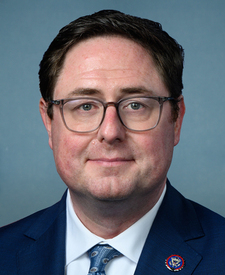
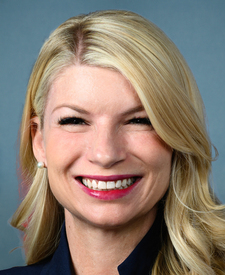
Legislative Progress
ReportedAdditional sponsor: Ms. Pettersen
Reported with an amendment, committed to the Committee of the …
Placed on the Union Calendar, Calendar No. 612.
Reported (Amended) by the Committee on Financial Services. H. Rept. …
Ordered to be Reported (Amended) by the Yeas and Nays: …
Committee Consideration and Mark-up Session Held
Referred to the House Committee on Financial Services.
Introduced in House
Mr. Flood introduced the following bill; which was referred to …
Stakeholder Effects
cui bono?How this legislation distributes effects. Mention counts reflect frequency, not effect magnitude.
Bill Structure & Actor Mappings
Who is "The Secretary" in each section?
- "ftc"
- → Federal Trade Commission
- "cfpb"
- → Consumer Financial Protection Bureau
- "fincen"
- → Financial Crimes Enforcement Network
- "treasury"
- → Secretary of the Treasury
- "banking_agencies"
- → Federal banking agencies
We use a combination of our own taxonomy and classification in addition to large language models to assess meaning and potential beneficiaries. High confidence means strong textual evidence. Always verify with the original bill text.
Learn more about our methodology