State Department Recurring Reports Repeal and Sunset Act of 2026
Summary
What This Bill Does
The State Department Recurring Reports Repeal and Sunset Act of 2026 removes many recurring foreign affairs reporting duties. It repeals or modifies report provisions in recent State Department authorization laws, the Countering America's Adversaries Through Sanctions Act, multiple National Defense Authorization Acts, trade promotion law, the Burmese JADE Act, the Magnitsky Act, the Clean Diamond Trade Act, Afghanistan Freedom Support Act provisions, Mutual Educational and Cultural Exchange Act provisions, New START ratification reporting, defense trade cooperation treaty reporting for Australia and the United Kingdom, embassy construction and counterterrorism reporting, Energy Independence and Security Act reporting, and United States-India nuclear cooperation reporting. The practical effect is to reduce scheduled reports that the State Department or President must provide to Congress.
Who Benefits and How
State Department policy bureaus benefit from fewer recurring reports and less legacy compliance work. Presidential national security staff benefit where treaty or statutory reports are no longer required. Embassy security and exchange program administrators benefit from reduced report preparation. Congressional committees benefit only if reporting resources shift toward higher-value oversight. Foreign policy program staff benefit from less staff time spent updating obsolete recurring reports.
Who Bears the Burden and How
Congressional oversight committees lose some recurring information on sanctions, arms control, embassy construction, trade, exchange, Afghanistan, Burma, diamonds, and other foreign affairs topics. Civil society groups that used those reports lose a regular transparency source. State Department legal staff must identify repealed provisions and update internal compliance calendars. Program offices must determine which related reporting duties remain. Researchers tracking foreign policy programs may need alternate data sources.
Key Provisions
- Repeals or modifies recurring reports across State Department authorization statutes.
- Removes selected sanctions, Burma, diamonds, Afghanistan, exchange, trade, and energy reporting provisions.
- Ends specified New START and defense trade cooperation treaty reports to Congress.
- Narrows embassy security and counterterrorism construction reporting.
- Requires State Department compliance calendars to drop repealed reports while preserving reports not repealed.
Evidence Chain:
This summary is generated from the full bill text using AI analysis. Expand "Detailed Analysis" below for identified beneficiaries/burden bearers with clause-level evidence links.
At a Glance
What This Bill Does
Repeals, narrows, or sunsets a large set of recurring foreign affairs, sanctions, arms control, trade, embassy security, exchange, energy, and State Department authorization reports so the President and State Department no longer have to submit specified legacy reports to Congress.
Key Policy Areas
Foreign Affairs, State Department, Congressional Oversight, Reporting Reform
Primary Purpose
Repeals, narrows, or sunsets a large set of recurring foreign affairs, sanctions, arms control, trade, embassy security, exchange, energy, and State Department authorization reports so the President and State Department no longer have to submit specified legacy reports to Congress.
Policy Domains
House resolution provisions
Identified Gains
- State Department policy bureaus
- Presidential national security staff
- Embassy security administrators
- Exchange program administrators
- Foreign policy program staff
Identified Costs
- Congressional oversight committees
- Foreign policy transparency groups
- State Department legal staff
- Program offices with reporting duties
- Foreign affairs researchers
Sponsors
Legislative Progress
ReportedOrdered to be Reported (Amended) by Voice Vote.
Committee Consideration and Mark-up Session Held
Referred to the House Committee on Foreign Affairs.
Introduced in House
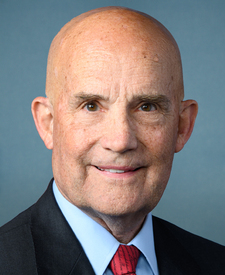
Mr. Self introduced the following bill; which was referred to …
Stakeholder Effects
cui bono?How this legislation distributes effects. Mention counts reflect frequency, not effect magnitude.
Congressional oversight committees, Presidential national security staff, State Department policy bureaus
Positive-direction: Presidential national security staff, State Department policy bureaus
Negative-direction: Congressional oversight committees
Bill Structure & Actor Mappings
Who is "The Secretary" in each section?
- "state"
- → Department of State
- "president"
- → President of the United States
We use a combination of our own taxonomy and classification in addition to large language models to assess meaning and potential beneficiaries. High confidence means strong textual evidence. Always verify with the original bill text.
Learn more about our methodology