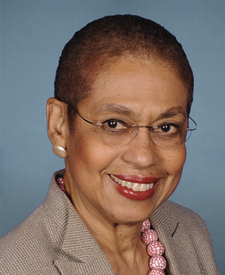
HR8663-119

In Committee

Fair Pay Act of 2026

119th Congress Introduced May 4, 2026

Summary

What This Bill Does

The Fair Pay Act of 2026 amends the Fair Labor Standards Act to create a new section 6(h) covering pay discrimination in equivalent jobs. Covered employers could not pay workers in jobs dominated by employees of a particular sex, race, or national origin less than workers in equivalent jobs dominated by employees of the opposite sex or a different race or national origin. The bill also bars discrimination in other terms, conditions, privileges, or benefits of employment on those bases.

The bill defines equivalent jobs as jobs that may be dissimilar but whose requirements are equivalent when skills, effort, responsibility, and working conditions are viewed as a composite. Employers could still use seniority systems, merit systems, production-based pay systems, or bona fide factors other than sex, race, or national origin, such as education, training, or experience. To use the bona fide factor defense, an employer would have to show that the factor is job-related or serves a legitimate business purpose, that it was actually applied and used reasonably, and that no less discriminatory alternative employment practice was available and refused. The Equal Employment Opportunity Commission must issue guidelines for determining whether a job is dominated by employees of a particular sex, race, or national origin, but the guidelines may not list particular jobs.

The bill prohibits employers from lowering any employee's wage rate to comply with the new equal-pay rule. It also prohibits labor organizations from causing or attempting to cause covered employers to violate the rule. Retaliation protections would cover individuals who oppose unlawful section 6(h) practices or participate in investigations, proceedings, or hearings. Additional protections would cover employees and other people who ask about, disclose, compare, or discuss wages or who help others exercise rights under section 6(h).

The bill strengthens remedies for equal-pay violations. Amounts withheld in violation of section 6(h) would be treated as unpaid minimum wages or unpaid overtime compensation. Employers violating section 6(d) or 6(h) could owe compensatory or punitive damages, though the United States would not be liable for punitive damages. Prevailing plaintiffs in section 6(h) actions could recover expert fees, and section 6(h) actions could proceed as class actions under the Federal Rules of Civil Procedure.

The bill creates new employer recordkeeping and reporting duties. Employers subject to section 6(h) must preserve records supporting wage-rate methods, systems, calculations, and other bases. Employers with 25 or more employees during the first two years, and employers with 15 or more employees in later years, must file EEOC reports disclosing wage rates by classification, position, job title, or other wage group, including information on sex, race, and national origin at each wage rate. EEOC rules must protect employee confidentiality, including by excluding individual employee names. The EEOC may publish, research, allow inspection of, and provide copies of report data, and may create simplified reports for smaller employers when detailed reporting would be unduly burdensome.

The EEOC must conduct research, education, and technical assistance on ways to comply with section 6(h), publish compliance materials, support State and community education programs, help employers and labor organizations maintain compliance, and include a separate section 6(h) implementation evaluation in the Secretary's biennial report to Congress. The bill also applies the new section 6(h) protections and expert-fee remedy to covered Congressional Accountability Act and Presidential and Executive Office Accountability Act workplaces.

Who Benefits and How

Women in female-dominated jobs, workers of color in race-dominated jobs, and employees in national-origin-dominated jobs benefit from a new pay-equity rule that reaches equivalent jobs rather than only identical jobs. Employees who discuss or compare wages benefit from explicit anti-retaliation protection. Equal-pay plaintiffs benefit from access to compensatory damages, punitive damages against non-federal employers, expert fees, class actions, and treatment of withheld wages as unpaid minimum wage or overtime. Congressional employees and Executive Office employees benefit because the new section 6(h) rule is added to existing workplace accountability statutes. The EEOC and the public benefit from wage-reporting data that can support research, education, and enforcement.

Who Bears the Burden and How

FLSA-covered employers bear the central compliance burden because they must justify pay differences across equivalent jobs, may face expanded damages and class-action exposure, and may not reduce wages to cure a violation. Employers with 25 or more employees in the first two years and 15 or more employees after that bear new annual wage-reporting obligations. Labor organizations bear a duty not to cause employer violations. The EEOC bears rulemaking, guideline, research, education, technical-assistance, data-publication, inspection, copy-service, and reporting duties. Congressional employing offices and Executive Office employing offices bear expanded workplace-law obligations.

Key Provisions

  • Prohibits lower pay and discriminatory employment terms for equivalent jobs dominated by sex, race, or national origin groups.
  • Defines equivalent jobs using skills, effort, responsibility, and working conditions, and limits employer defenses for bona fide factors other than sex, race, or national origin.
  • Requires the EEOC to issue job-dominance guidelines without creating a list of covered jobs.
  • Prohibits wage reductions as a compliance method and bars labor organizations from causing employer violations.
  • Protects wage discussions and participation in section 6(h) enforcement activity from retaliation.
  • Expands remedies to include compensatory damages, punitive damages against non-federal employers, expert fees, and class actions.
  • Requires covered employers to keep wage-basis records and submit EEOC wage-rate reports by job group, sex, race, and national origin.
  • Directs the EEOC to publish guidance, conduct research, support education programs, provide technical assistance, and report on section 6(h) implementation.
  • Applies the new protections to covered Congressional and Executive Office workplaces.

Evidence Chain:

This summary is generated from the full bill text using AI analysis. Expand "Detailed Analysis" below for identified beneficiaries/burden bearers with clause-level evidence links.

At a Glance

What This Bill Does

The bill amends the Fair Labor Standards Act to prohibit covered employers from paying lower wages for equivalent jobs on the basis of sex, race, or national origin, strengthens retaliation and wage-discussion protections, expands damages and class-action remedies, requires wage-rate records and reports to the Equal Employment Opportunity Commission, and extends the new equal-pay rule to Congressional and Executive Office workplaces.

Key Policy Areas

Labor, Civil Rights, Employment, Government Operations

Primary Purpose

The bill amends the Fair Labor Standards Act to prohibit covered employers from paying lower wages for equivalent jobs on the basis of sex, race, or national origin, strengthens retaliation and wage-discussion protections, expands damages and class-action remedies, requires wage-rate records and reports to the Equal Employment Opportunity Commission, and extends the new equal-pay rule to Congressional and Executive Office workplaces.

Policy Domains

Labor Civil Rights Employment Government Operations

Equivalent-job equal-pay prohibition and defenses

Identified Gains
  • Women in female-dominated jobs
  • Workers of color in race-dominated jobs
  • Employees in national-origin-dominated jobs
  • Employees discussing wages
Model: codex-gpt-5 | Version: bill_summary_v2 | Source: ih
Employees discussing wages:
Women in female-dominated jobs: ,
Workers of color in race-dominated jobs: ,
Employees in national-origin-dominated jobs:
Identified Costs
  • FLSA-covered employers
  • Labor organizations representing covered employees
  • Equal Employment Opportunity Commission
Model: codex-gpt-5 | Version: bill_summary_v2 | Source: ih
FLSA-covered employers: ,
Equal Employment Opportunity Commission:
Labor organizations representing covered employees: ,

Congressional and Executive Office workplace coverage

Identified Gains
  • Congressional employees
  • Executive Office employees
Model: codex-gpt-5 | Version: bill_summary_v2 | Source: ih
Congressional employees:
Executive Office employees:
Identified Costs
  • Congressional employing offices
  • Executive Office employing offices
Model: codex-gpt-5 | Version: bill_summary_v2 | Source: ih
Congressional employing offices:
Executive Office employing offices:

Remedies, records, reports, research, education, and technical assistance

Identified Gains
  • Equal-pay plaintiffs
  • Employees covered by wage reports
  • Civil rights researchers
  • Employers seeking EEOC compliance assistance
Model: codex-gpt-5 | Version: bill_summary_v2 | Source: ih
Equal-pay plaintiffs:
Civil rights researchers:
Employees covered by wage reports:
Employers seeking EEOC compliance assistance:
Identified Costs
  • FLSA-covered employers
  • Employers with 25 or more employees
  • Employers with 15 or more employees after year two
  • Equal Employment Opportunity Commission
Model: codex-gpt-5 | Version: bill_summary_v2 | Source: ih
FLSA-covered employers: ,
Employers with 25 or more employees:
Equal Employment Opportunity Commission: ,
Employers with 15 or more employees after year two:

Legislative Progress

In Committee
Introduced Committee Passed
May 4, 2026

Referred to the House Committee on Education and Workforce.

May 4, 2026

Introduced in House

May 4, 2026

Sponsor introductory remarks on measure. (CR E412)

May 4, 2026

Ms. Norton introduced the following bill; which was referred to …

Stakeholder Effects

cui bono?

How this legislation distributes effects. Mention counts reflect frequency, not effect magnitude.

Labor
16 mentions across 8 clauses
+11 positive -1 negative ?4 uncertain

Class action plaintiffs in equal-pay cases, Congressional employees, Employees covered by wage reports

Positive-direction: Class action plaintiffs in equal-pay cases, Congressional employees, Employees covered by wage reports, Employees discussing wages, Employees in national-origin-dominated jobs, Equal pay complainants, Equal-pay plaintiffs, Executive Office employees, Labor organizations seeking EEOC compliance assistance, Women in female-dominated jobs, Workers of color in race-dominated jobs

Negative-direction: Labor organizations representing covered employees

Employment Services
7 mentions across 5 clauses
+1 positive -6 negative

Employers seeking EEOC compliance assistance, Employers violating equal pay rules, Employers with 15 or more employees after year two

Positive-direction: Employers seeking EEOC compliance assistance

Negative-direction: Employers violating equal pay rules, Employers with 15 or more employees after year two, Employers with 25 or more employees, FLSA-covered employers, Workplace retaliation defendants

Federal Administration
7 mentions across 5 clauses
+2 positive -5 negative

Congressional employing offices, Congressional labor oversight committees, Equal Employment Opportunity Commission

Positive-direction: Congressional labor oversight committees, United States government

Negative-direction: Congressional employing offices, Equal Employment Opportunity Commission, Executive Office employing offices

Professional Services
1 mention across 1 clause
+1 positive

Plaintiff expert witnesses

Research & Science
1 mention across 1 clause
+1 positive

Civil rights researchers

General Public
1 mention across 1 clause
+1 positive

Public users of wage report data

Professional Associations
1 mention across 1 clause
+1 positive

Professional associations receiving EEOC materials

State & Local Government
1 mention across 1 clause
+1 positive

State equal-pay education programs

8/9
sections analyzed
Full impact breakdown

Bill Structure & Actor Mappings

Who is "The Secretary" in each section?

Domains
Labor Civil Rights Employment
Actor Mappings
"eeoc"
→ Equal Employment Opportunity Commission
"employees"
→ Employees in equivalent jobs
"employers"
→ FLSA-covered employers
"labor_orgs"
→ Labor organizations
Domains
Labor Civil Rights Government Operations
Actor Mappings
"eeoc"
→ Equal Employment Opportunity Commission
"public"
→ Workers and members of the public
"employers"
→ FLSA-covered employers
"plaintiffs"
→ Equal-pay plaintiffs
Domains
Government Operations Labor Civil Rights
Actor Mappings
"employing_offices"
→ Congressional and Executive Office employing offices
"congressional_employees"
→ Congressional employees
"executive_office_employees"
→ Executive Office employees

Key Definitions

Terms defined in this bill

3 terms
"equivalent jobs" §equivalent_jobs

Jobs that may be dissimilar but have equivalent requirements when skills, effort, responsibility, and working conditions are viewed as a composite.

"bona fide factor other than sex, race, or national origin" §bona_fide_factor

A pay factor such as education, training, or experience that the employer must show is job-related or serves a legitimate business purpose and was actually and reasonably applied.

"labor organization" §labor_organization

An organization, agency, employee representation committee, or plan in which employees participate and that deals with employers on grievances, labor disputes, wages, pay rates, hours, or working conditions.

We use a combination of our own taxonomy and classification in addition to large language models to assess meaning and potential beneficiaries. High confidence means strong textual evidence. Always verify with the original bill text.

Learn more about our methodology