Living Wage For All Act
Analysis under review: This bill has generated analysis that may be too generic or incomplete. Clause-level evidence remains available below.
Summary
What This Bill Does
This bill, Living Wage For All Act, changes federal law or congressional policy affecting law enforcement, courts, victims, and regulated public-safety actors. The main policy domain is Criminal Justice, Labor, Government Operations.
Who Benefits and How
law enforcement, courts, victims, and regulated public-safety actors may benefit from new authority, funding, eligibility, regulatory clarity, or reduced risk created by the bill.
Who Bears the Burden and How
federal implementing agencies, law enforcement, courts, victims, and regulated public-safety actors may take on implementation duties, reporting obligations, compliance costs, or oversight responsibilities.
Key Provisions
- Section H51DC512BE03D495996966B8F22E72F88: 1. Short title This Act may be cited as the Living Wage For All Act.
- Section HDE050CDBDE68412B897DFDCBC0B35BF7: 2. Findings and purpose Congress finds the following: It is a national priority that work pays a living wage to all workers, and that the Federal minimum wage...
- Section H4B2F9B86C9B4487982C53AF33BD8F040: 3. Definitions In this Act: The term large employer means any employer that— has annual gross revenues of $1,000,000,000 or more; or employs 500 or more...
- Section H40843896BFEF43B0B7F2E326CE6C38D5: 4. Minimum wage increases Section 6(a)(1) of the Fair Labor Standards Act of 1938 (29 U.S.C. 206(a)(1)) is amended to read as follows: (1)Minimum wageExcept as...
- Section H1364057D58724E57B2E94477550D7301: 5. Median wage standard and indexing Section 6 of the Fair Labor Standards Act of 1938 (29 U.S.C. 206) is amended by adding at the end the following:...
Evidence Chain:
This summary is generated from the full bill text using AI analysis. Expand "Detailed Analysis" below for identified beneficiaries/burden bearers with clause-level evidence links.
At a Glance
What This Bill Does
This bill, Living Wage For All Act, changes federal law or congressional policy affecting law enforcement, courts, victims, and regulated public-safety actors.
Key Policy Areas
Criminal Justice, Labor, Government Operations
Primary Purpose
This bill, Living Wage For All Act, changes federal law or congressional policy affecting law enforcement, courts, victims, and regulated public-safety actors.
Policy Domains
Whole bill
Identified Gains
- law enforcement, courts, victims, and regulated public-safety actors
Identified Costs
- federal implementing agencies
- law enforcement, courts, victims, and regulated public-safety actors
Sponsors
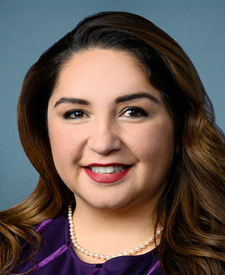

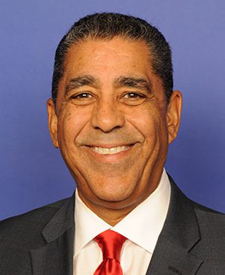
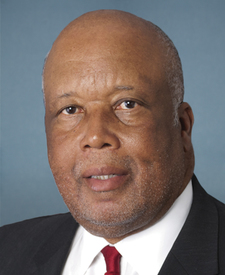

Legislative Progress
In CommitteeReferred to the House Committee on Education and Workforce.
Introduced in House
Mrs. Ramirez (for herself, Mr. García of Illinois, Ms. Mejia, …
Impact analysis is available but no clear stakeholder effects identified. View clause-level analysis →
Bill Structure & Actor Mappings
Who is "The Secretary" in each section?
- "secretary_of_labor"
- → Secretary of Labor
Key Definitions
Terms defined in this bill
any employer that— has annual gross revenues of $1,000,000,000 or more
We use a combination of our own taxonomy and classification in addition to large language models to assess meaning and potential beneficiaries. High confidence means strong textual evidence. Always verify with the original bill text.
Learn more about our methodology