American Leadership in AI Act
Summary
What This Bill Does
The American Leadership in AI Act is a broad federal artificial-intelligence package. It builds a NIST-led Center for AI Standards and Innovation, creates a National Artificial Intelligence Research Resource for researchers and students, expands NSF, NIH, USDA, DOE, Labor, SBA, and education programs around AI, and adds governance rules for how federal agencies buy and use AI systems. It also creates legal remedies and penalties for AI-enabled harms: nonconsensual intimate digital forgeries, AI-assisted mail, wire, bank, and money-laundering fraud, AI impersonation of federal officials, and retaliation against AI whistleblowers.
Who Benefits and How
AI researchers, students, universities, nonprofit research institutions, federally funded research and development centers, and qualified small businesses benefit from the National Artificial Intelligence Research Resource. The bill gives them access to computing resources, public cloud services, open datasets, an AI open data commons, AI testbeds, training materials, user support, and a portal run through an NSF Program Management Office and an outside Operating Entity.
NIST, federal laboratories, standards development organizations, and U.S.-based AI standards participants benefit from new federal infrastructure for voluntary AI standards. The NIST Center for AI Standards and Innovation would benchmark AI systems, research red-teaming and risk-measurement methods, support international standards engagement, convene a stakeholder consortium, and receive a $10 million authorization for fiscal year 2027. Separate NIST provisions create a web portal for international standards activity and a $5 million, five-year pilot grant program that can cover up to half the cost of hosting AI and critical-technology standards meetings in the United States.
NSF, NIH, USDA, DOE, and their research partners gain new grant and coordination authorities. NSF would run AI Grand Challenges prize competitions, including at least one cancer-related AI challenge with at least $10 million in cash prizes for each winner. NIH would fund generative-AI health-care research focused on documentation, insurance claims, customer service, clinician burnout, workforce development, and medically underserved populations. USDA and NSF would coordinate agricultural AI and precision-agriculture research, including centers for agricultural research, education, and workforce development.
The Department of Energy, national laboratories, energy-sector AI researchers, and data-center technology developers benefit from an expanded DOE AI research program. DOE would fund AI research for simulations, datasets, energy-efficient computing hardware, trustworthy AI, national security, and energy applications; make high-performance computing infrastructure available; create at least one data-center testbed for energy-efficient and energy-flexible AI training and inference; and report on data-center growth, energy security, backup power technologies, offshoring risks, and efficiency improvements.
Federal agencies and the public receive stronger AI governance. NIST would write federal AI standards for agency and contractor systems, including synthetic-content provenance and labeling. OMB would establish a Chief Artificial Intelligence Officers Council, agencies would designate Chief AI Officers, major agencies would create AI Coordination Boards and AI strategies, and GAO would report on implementation, bias, costs and benefits, federal AI inventories, and jobs at risk of AI-driven displacement.
Victims of nonconsensual intimate image disclosures and AI-generated intimate digital forgeries benefit from a broader federal civil action. The bill lets identifiable individuals sue people who knowingly produce, possess with intent to disclose, disclose, solicit, or receive covered intimate digital forgeries, and it clarifies that a forgery can be covered even if it is labeled as fake.
AI whistleblowers benefit from explicit anti-retaliation rights. Employees and independent contractors who report AI security vulnerabilities or AI violations to regulators, law enforcement, Congress, supervisors, or internal compliance channels can seek Labor Department relief or sue in federal court. Remedies include reinstatement, double back pay, interest, compensatory damages, litigation costs, expert fees, and attorney fees, and the bill bars forced waiver or pre-dispute arbitration of those rights.
Workers, small businesses, K-12 schools, community colleges, minority-serving institutions, rural-serving institutions, Tribal Colleges and Universities, and AI education researchers benefit from workforce and education programs. The bill creates a Labor Department AI Workforce Research Hub, NIST/SBA resources for small-business AI adoption, a 50 percent employer tax credit capped at $5,000 per employee for cybersecurity education, a 5 percent federal-procurement scoring preference for qualified cybersecurity-training employers on contracts over $5 million, NSF AI-literacy awards, AI research-capacity awards for under-resourced institutions, scholarships and fellowships, up to eight Community College and Area Career and Technical Education Centers of AI Excellence, and research awards for AI teaching tools serving low-income, rural, and Tribal K-12 students.
Who Bears the Burden and How
Federal agencies bear new compliance and governance burdens. Agencies using or buying AI would have to follow NIST standards, train procurement staff, inventory and monitor AI use cases, designate Chief AI Officers, create coordination boards and AI strategies, report appointments and authorities to Congress, and implement OMB guidance on AI leadership structures.
The NSF, NIST, DOE, NIH, USDA, Labor Department, OMB, GAO, SBA, and GSA take on administrative workloads. They must create offices, portals, grant programs, prize competitions, reports, guidance, standards, review processes, advisory committees, data repositories, testbeds, evaluation criteria, and public reporting systems.
AI vendors, contractors, and entities providing AI systems to agencies face more scrutiny. Federal AI standards would cover agency-operated and contractor-operated AI systems, synthetic-content labeling, testing, evaluation, verification, validation, conformity assessment, risk management, and procurement guidance. Contractors that do not invest in qualifying cybersecurity education could lose a scoring advantage in large competitive federal procurements.
People who use AI to commit fraud, impersonate federal officials, launder money, or create and distribute nonconsensual intimate digital forgeries face higher legal exposure. The bill raises several fraud fines, adds AI-assisted penalty enhancements, creates up to $2 million fines and up to 30 years for AI-assisted bank fraud, adds AI-assisted money-laundering penalties, adds up to $1 million and up to three years for AI-assisted federal-official impersonation, and broadens civil liability for intimate digital forgeries.
Employers in AI-related work bear anti-retaliation obligations. They cannot fire, demote, suspend, blacklist, harass, threaten, or otherwise discriminate against employees or independent contractors who report AI security vulnerabilities or AI legal violations through protected channels.
Key Provisions
- Establishes the NIST Center for AI Standards and Innovation to develop AI measurement science, red-teaming methods, benchmarks, voluntary standards, federal support, international standards engagement, and a stakeholder consortium, with a $10 million fiscal year 2027 authorization and a six-year sunset.
- Requires NIST to brief Congress on AI and emerging-technology standards participation, create a federal-agency standards participation reporting mechanism with OMB, and maintain a web portal to help U.S. industry and federal agencies participate in international standards efforts.
- Creates a five-year NIST pilot grant program, authorized at $5 million for fiscal years 2027 through 2031, to help eligible standards organizations or meeting hosts hold AI and critical-technology standards meetings in the United States, with grants capped at half of anticipated meeting costs.
- Establishes the National Artificial Intelligence Research Resource, including an OSTP-chaired steering subcommittee, NSF Program Management Office, competitively selected Operating Entity, advisory committees, computational resources, cloud services, open datasets, AI testbeds, educational tools, privacy and ethics review, eligibility limits, scientific-integrity reporting, and donation authority.
- Creates NSF AI Grand Challenges prize competitions across national security, cybersecurity, health, energy, agriculture, education, manufacturing, quantum computing, supply chains, disaster preparedness, and AI safety topics, including a required cancer AI challenge with at least $10 million in cash prizes for each winner.
- Directs NIH to fund generative-AI health-care research, with priority for projects that deploy AI across the health sector, develop clinicians and administrators, reduce workforce burnout, or improve care for medically underserved populations.
- Expands DOE AI research for simulations, datasets, energy-efficient computing hardware, trustworthy AI, national security, and data-center energy, and requires DOE to assess data-center growth, energy-security risks, backup power options, offshoring risks, and efficiency policy.
- Requires NIST to develop federal AI standards for agency and contractor systems, risk management, synthetic-content provenance and labeling, procurement testing, evaluation, verification, validation, training, profiles for small businesses, and conformity assessment.
- Creates the Chief Artificial Intelligence Officers Council, requires agency Chief AI Officers, directs major agencies to establish AI Coordination Boards and AI strategies, and requires GAO reports on implementation, bias, costs and benefits, federal AI inventories, and job-dislocation risks.
- Directs NIST and CISA to support voluntary AI vulnerability and substantial AI security and safety incident tracking, including common definitions, reporting norms, standardized documentation, and a report to Congress, without giving NIST new enforcement authority.
- Establishes a Labor Department AI Workforce Research Hub to measure AI's impact on workers and labor markets, conduct scenario planning, and inform workforce and education policy.
- Requires NIST, with SBA distribution support, to create voluntary small-business AI adoption resources, including technical standards, best practices, benchmarks, use-case guidance, case studies, cybersecurity references, biennial updates, and a report to Congress.
- Expands federal civil remedies for nonconsensual intimate image disclosure to include AI-generated intimate digital forgeries, including forgeries labeled as inauthentic, and preserves severability and intellectual-property limits.
- Raises penalties for AI-assisted mail fraud, wire fraud, bank fraud, money laundering, and impersonation of federal officials, including up to $2 million fines and up to 30 years for AI-assisted bank fraud.
- Creates anti-retaliation protections for AI whistleblowers, including Labor Department complaints, federal civil actions, jury trials, reinstatement, double back pay, compensatory damages, legal fees, and limits on waiver or forced arbitration.
- Creates a 50 percent employer tax credit, capped at $5,000 per employee, for qualified employee cybersecurity education tied to the NICE Cybersecurity Workforce Framework and gives qualified offerors a 5 percent scoring increase on federal contract proposals over $5 million.
- Funds and authorizes NSF AI literacy, capacity, scholarship, fellowship, community-college, career-technical, and K-12 education research programs, including awards for under-resourced institutions, HBCUs, minority-serving institutions, Tribal Colleges and Universities, rural-serving institutions, and low-income, rural, and Tribal K-12 students.
Evidence Chain:
This summary is generated from the full bill text using AI analysis. Expand "Detailed Analysis" below for identified beneficiaries/burden bearers with clause-level evidence links.
At a Glance
What This Bill Does
Creates federal AI standards, research infrastructure, agency governance, workforce and education programs, and legal remedies for AI-enabled harms.
Key Policy Areas
Technology, Science and Research, Government Operations, Education, Health, Energy, Agriculture, Labor, Tax, Criminal Justice, Civil Rights, Small Business
Primary Purpose
Creates federal AI standards, research infrastructure, agency governance, workforce and education programs, and legal remedies for AI-enabled harms.
Policy Domains
Title I - AI standards and NIST best practices
Identified Gains
- NIST Center for AI Standards and Innovation
- U.S. AI standards participants
- AI standards meeting host organizations
- AI developers using voluntary risk-management guidance
Identified Costs
- NIST AI standards program staff
- Federal agencies reporting standards participation
Title II - NAIRR, AI research, health, agriculture, and DOE programs
Identified Gains
- National Artificial Intelligence Research Resource users
- AI Grand Challenges prize competitors
- Generative AI health-care research grantees
- Agricultural AI research institutions
- Department of Energy AI research program
- DOE national laboratories
Identified Costs
- NSF NAIRR Program Management Office
- NAIRR Operating Entity
- Department of Energy AI program offices
Title III - Federal AI standards, officers, boards, and incident tracking
Identified Gains
- Federal agency AI users
- Members of the public affected by federal AI systems
- Chief Artificial Intelligence Officers Council
- AI vulnerability reporters
Identified Costs
- Federal agencies deploying AI systems
- Federal Chief Artificial Intelligence Officers
- NIST federal AI standards staff
- GAO AI oversight staff
Title IV - AI workforce research and small-business AI resources
Identified Gains
- Labor Department AI Workforce Research Hub
- Small businesses adopting AI
- SBA resource partners
Identified Costs
- Labor Department AI Workforce Research Hub staff
- NIST small-business AI resource staff
Title VI - AI literacy, cybersecurity education, scholarships, fellowships, and AI education centers
Identified Gains
- Employers paying for cybersecurity education
- Employees earning cybersecurity credentials
- Qualified offerors on large federal contracts
- K-12 AI literacy educators
- Under-resourced AI research institutions
- AI scholarship and fellowship recipients
- Community College and Area Career and Technical Education Centers of AI Excellence
- Low-income, rural, and Tribal K-12 students
Identified Costs
- Internal Revenue Service credit administration
- Federal contracting officers evaluating cybersecurity-training offerors
- National Science Foundation AI education program staff
Title V - AI digital-forgery liability, AI financial crime, impersonation, and whistleblower protection
Identified Gains
- Victims of intimate digital forgeries
- Targets of AI-assisted federal-official impersonation
- AI whistleblowers
- Financial-crime enforcement agencies
Identified Costs
- AI-assisted fraud offenders
- AI intimate digital forgery defendants
- Employers of AI whistleblowers
Sponsors

Legislative Progress
In CommitteeReferred to the Committee on Science, Space, and Technology, and …
Introduced in House
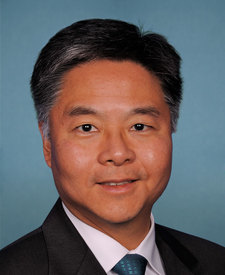
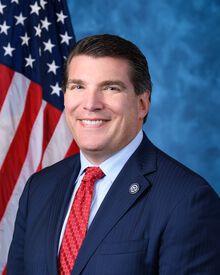
Mr. Lieu (for himself and Mr. Obernolte) introduced the following …
Stakeholder Effects
cui bono?How this legislation distributes effects. Mention counts reflect frequency, not effect magnitude.
Agency Artificial Intelligence Coordination Boards, Challenge.gov prize platform, Chief Artificial Intelligence Officers Council
Positive-direction: Congressional AI oversight committees, DOE national laboratories, Department of Energy AI research program, Federal financial-crime prosecutors, Federal officials vulnerable to AI impersonation, NIST Center for AI Standards and Innovation, NIST artificial intelligence laboratories, National Artificial Intelligence Research Resource
Negative-direction: Agency Artificial Intelligence Coordination Boards, Challenge.gov prize platform, Chief Artificial Intelligence Officers Council, Comptroller General AI officer oversight, Cybersecurity and Infrastructure Security Agency AI incident consultation, Department of Agriculture research programs, Department of Energy AI program offices, Department of Energy data-center energy security analysis, Department of Labor AI whistleblower complaint process, Federal Chief Artificial Intelligence Officers, Federal agencies deploying AI systems, Federal agencies participating in AI standards bodies, Federal agencies procuring AI systems, Federal agencies subject to AI governance updates, Federal agencies using AI, Federal agencies using AI systems, Federal contracting officers evaluating qualified offerors, Federal courts hearing AI whistleblower actions, Federal district courts hearing digital forgery claims, Federal statistical data providers, General Services Administration council support, Government Accountability Office AI oversight staff, Internal Revenue Service credit administration, Internal Revenue Service section 45BB administration, Labor Department AI Workforce Research Hub, Major federal agencies adopting AI, NIST AI development guidance staff, NIST AI vulnerability management program, NIST federal AI standards program, NIST international standards portal, NIST small-business AI resource program, NIST standards meeting pilot program, NSF NAIRR Program Management Office, National Institutes of Health grant staff, National Science Foundation AI capacity awards staff, National Science Foundation AI education awards staff, National Science Foundation AI literacy awards staff, National Science Foundation AI literacy support, National Science Foundation AI prize program, National Science Foundation AI scholarship program staff, National Science Foundation agricultural research coordination, National Science Foundation centers evaluation staff, Office of Management and Budget AI governance staff, Small Business Administration resource partners
AI Grand Challenges prize competitors, AI developers using NIST best-practice guidance, AI developers using voluntary risk guidance
Positive-direction: AI Grand Challenges prize competitors, AI developers using NIST best-practice guidance, AI developers using voluntary risk guidance, AI employers partnering with education centers, AI safety research consortium members, AI security incident reporters, AI testbed operators, Employees earning NICE cybersecurity credentials, Employees earning cybersecurity credentials, Energy-efficient AI computing researchers, Entities sharing proprietary AI information with NIST, National Artificial Intelligence Research Resource users, Organizations assessing AI system risk, United States AI researchers using NAIRR, United States AI standards participants, United States standards meeting attendees
Negative-direction: AI system operators tracking vulnerabilities, NAIRR applicants connected to covered foreign countries, Private-sector NAIRR donors
AI education research awardees, AI fellowship recipients, AI literacy curriculum research grantees
Agricultural AI research institutions, Cancer AI prize competition winners, Centers for Agricultural Research Education and Workforce Development
NAIRR Operating Entity faces effects in multiple directions
Positive-direction: Agricultural AI research institutions, Cancer AI prize competition winners, Centers for Agricultural Research Education and Workforce Development, Generative AI health-care research grantees
Negative-direction: NAIRR Advisory Committees
AI whistleblower protection framework, AI whistleblowers, Federal agency employees affected by AI deployment
Individuals affected by biased federal AI datasets, Individuals affected by federal AI decisions, Public users of agency AI interactions
Contractors without cybersecurity education credits, Federal AI acquisition vendors, Federal AI contractors
Positive-direction: Qualified offerors on large federal contracts
Negative-direction: Contractors without cybersecurity education credits, Federal AI acquisition vendors, Federal AI contractors
Small businesses adopting AI, Small businesses funded by federal AI programs, Small businesses using NIST AI profiles
Bill Structure & Actor Mappings
Who is "The Secretary" in each section?
- "Center"
- → Center for AI Standards and Innovation
- "Director"
- → Director of the National Institute of Standards and Technology
- "Secretary"
- → Secretary of Commerce where section 5305 uses Commerce promulgation authority
- "NAIRR"
- → National Artificial Intelligence Research Resource
- "Director"
- → Director of the National Science Foundation unless the section names NIH or NIST
- "Secretary"
- → Secretary of Agriculture in section 241 and Secretary of Energy in section 251 and section 5502
- "Operating Entity"
- → Nongovernmental organization or consortium selected to operate NAIRR
- "Council"
- → Chief Artificial Intelligence Officers Council
- "Director"
- → Director of the Office of Management and Budget for sections 311 through 317; Director of NIST for sections 301 and 321
- "Comptroller General"
- → Comptroller General of the United States
- "Director"
- → Director of NIST
- "Secretary"
- → Secretary of Labor
- "Administrator"
- → Administrator of the Small Business Administration
- "Secretary"
- → Secretary of Labor for AI whistleblower complaints
- "Attorney General"
- → Attorney General for whistleblower reporting channels and federal criminal enforcement context
- "Director"
- → Director of the National Science Foundation unless the section concerns the Internal Revenue Code
- "executive agency head"
- → Head of an executive agency for federal contract scoring preferences
Key Definitions
Terms defined in this bill
Structured adversarial testing in a controlled environment to find flaws, vulnerabilities, harmful outputs, misuse risks, and undesirable AI system behavior.
A NIST-selected subset of AI and critical or emerging technologies from the NSTC/OSTP list for standards participation provisions.
An official designated by an agency head to oversee AI innovation, governance, acquisition, risk management, inventories, monitoring, and compliance.
An intimate visual depiction of an identifiable individual created or altered with software, machine learning, AI, or another technological means that falsely represents the person or the intimate conduct and appears authentic to a reasonable viewer.
A Federal-law violation related to or committed during AI development, deployment, or use, or failure to respond to a substantial and specific AI-related danger to public safety, public health, or national security.
Employer-paid costs for employees earning undergraduate, graduate, or industry-recognized cybersecurity credentials tied to NICE Cybersecurity Workforce Framework roles.
Computing, data, educational tools, AI testbeds, and related resources made available through the National Artificial Intelligence Research Resource.
A data system, software, application, tool, or utility using machine learning or other AI, excluding common commercial products with embedded AI.
We use a combination of our own taxonomy and classification in addition to large language models to assess meaning and potential beneficiaries. High confidence means strong textual evidence. Always verify with the original bill text.
Learn more about our methodology