No Antisemitism in Education Act of 2026
Summary
What This Bill Does
The bill requires federally assisted local educational agencies and higher-education institutions to address discrimination motivated by antisemitism as vigorously as other discrimination prohibited by title VI of the Civil Rights Act. The requirement covers conduct by students and employees as well as institutional policies. Federal enforcement agencies and covered educational institutions must consider the antisemitism definition and contemporary examples incorporated by Executive Order 13899 when assessing discriminatory intent. That reference points to the International Holocaust Remembrance Alliance working definition.
Who Benefits and How
Jewish students and employees facing discriminatory treatment gain an express parity requirement and the enforcement mechanisms available under section 601 of the Civil Rights Act. Families seeking consistent institutional responses may benefit from a specified standard. The bill does not require a favorable finding in every complaint or make every expression of political disagreement unlawful.
Who Bears the Burden and How
School administrators, university compliance staff and federal civil-rights enforcement agencies must apply the specified approach when evaluating evidence and institutional responses. Covered institutions face enforcement exposure if they do not satisfy the funding condition. The text expressly preserves First Amendment rights and does not preempt state antidiscrimination laws. Application therefore still requires attention to protected expression and the facts of a discrimination claim, rather than treating the incorporated examples as automatic findings of illegality.
Key Provisions
- Requires covered schools and universities to treat antisemitic discrimination as vigorously as other title VI discrimination.
- Requires consideration of the incorporated definition and examples when assessing discriminatory intent.
- Provides section 601 enforcement mechanisms while protecting First Amendment rights and preserving state antidiscrimination laws.
Evidence Chain:
This summary is generated from the full bill text using AI analysis. Expand "Detailed Analysis" below for identified beneficiaries/burden bearers with clause-level evidence links.
At a Glance
What This Bill Does
Condition federal education assistance on equally vigorous treatment of antisemitic discrimination and require consideration of the incorporated antisemitism definition.
Key Policy Areas
Education, Civil Rights
Primary Purpose
Condition federal education assistance on equally vigorous treatment of antisemitic discrimination and require consideration of the incorporated antisemitism definition.
Policy Domains
No Antisemitism in Education Act of 2026
Identified Gains
- Jewish students
- Jewish employees
- Families seeking equal treatment
Identified Costs
- Local educational agency administrators
- University compliance staff
- Federal civil-rights enforcement agencies
Sponsors

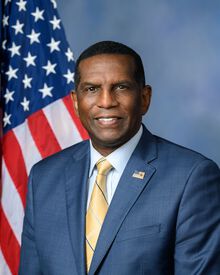


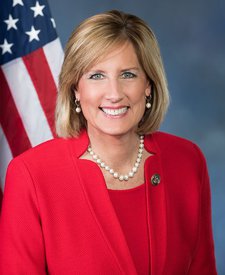
Legislative Progress
ReportedPlaced on the Union Calendar, Calendar No. 660.
Committee on the Judiciary discharged.
Reported (Amended) by the Committee on Education and Workforce. H. …
Additional sponsors: Mr. Baumgartner, Mr. Smith of New Jersey, Mr. …
Reported from the Committee on Education and Workforce with an …
Committee on the Judiciary discharged; committed to the Committee of …
Ordered to be Reported (Amended) by the Yeas and Nays: …
Committee Consideration and Mark-up Session Held
Referred to the Committee on Education and Workforce, and in …
Introduced in House
Stakeholder Effects
cui bono?How this legislation distributes effects. Mention counts reflect frequency, not effect magnitude.
Bill Structure & Actor Mappings
Who is "The Secretary" in each section?
- "schools"
- → Local educational agencies defined by ESEA section 8101
- "enforcement"
- → Federal departments and agencies enforcing relevant law
- "institutions"
- → Institutions of higher education defined by Higher Education Act section 102
We use a combination of our own taxonomy and classification in addition to large language models to assess meaning and potential beneficiaries. High confidence means strong textual evidence. Always verify with the original bill text.
Learn more about our methodology