To require the United States Executive Director at the International Monetary Fund to advocate for increased transparency with respect to exchange rate policies of the People’s Republic of China, and for other purposes.
Analysis under review: This bill has generated analysis that may be too generic or incomplete. Clause-level evidence remains available below.
Summary
What This Bill Does
This bill, To require the United States Executive Director at the International Monetary Fund to advocate for increased transparency with respect to exchange rate policies of the People’s Republic of China, and for other purposes., changes federal law or congressional policy affecting foreign governments, international partners, and aid recipients. The main policy domain is Foreign Policy, Government Operations, Finance.
Who Benefits and How
foreign governments, international partners, and aid recipients may benefit from new authority, funding, eligibility, regulatory clarity, or reduced risk created by the bill.
Who Bears the Burden and How
federal implementing agencies, foreign governments, international partners, and aid recipients may take on implementation duties, reporting obligations, compliance costs, or oversight responsibilities.
Key Provisions
- Section H015F0314E8204966A7C472AB29661320: 1. Short title This Act may be cited as the China Exchange Rate Transparency Act of 2023.
- Section H89C5FFCF987E4F37BD9023660BED788F: 2. Findings The Congress finds as follows: Under Article IV of the Articles of Agreement of the International Monetary Fund (IMF), the People’s Republic of...
- Section HBD60DB912523448C89AC062C19BFAE5B: 3. Advocacy for increased exchange rate transparency from China The Secretary of the Treasury shall instruct the United States Executive Director at the...
- Section H895021E29C164254BAC60721F245C5D1: 4. Sunset This Act shall have no force or effect on or after the date that is 30 days after the earlier of— the date that the United States Governor of the IMF...
Evidence Chain:
This summary is generated from the full bill text using AI analysis. Expand "Detailed Analysis" below for identified beneficiaries/burden bearers.
At a Glance
What This Bill Does
This bill, To require the United States Executive Director at the International Monetary Fund to advocate for increased transparency with respect to exchange rate policies of the People’s Republic of China, and for other purposes., changes federal law or congressional policy affecting foreign governments, international partners, and aid recipients.
Key Policy Areas
Foreign Policy, Government Operations, Finance
Primary Purpose
This bill, To require the United States Executive Director at the International Monetary Fund to advocate for increased transparency with respect to exchange rate policies of the People’s Republic of China, and for other purposes., changes federal law or congressional policy affecting foreign governments, international partners, and aid recipients.
Policy Domains
Whole bill
Identified Gains
Contextual inference, no direct clause citation- foreign governments, international partners, and aid recipients
Contextual inference, no direct clause citation
Identified Costs
Contextual inference, no direct clause citation- federal implementing agencies
- foreign governments, international partners, and aid recipients
Contextual inference, no direct clause citation
Sponsors
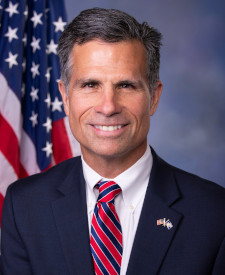



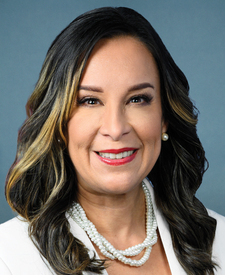
Legislative Progress
ReportedAdditional sponsors: Mr. Nickel, Mr. Lawler, Ms. Lee of Nevada, …
Reported with an amendment, committed to the Committee of the …
Mr. Meuser (for himself, Mr. Donalds, and Mr. Loudermilk) introduced …
Stakeholder Effects
cui bono?How this legislation distributes effects. Mention counts reflect frequency, not effect magnitude.
Chinese government monetary authorities, Chinese state-owned enterprises involved in forex markets, US Treasury Department
Bill Structure & Actor Mappings
Who is "The Secretary" in each section?
- "secretary_of_treasury"
- → Secretary of the Treasury
We use a combination of our own taxonomy and classification in addition to large language models to assess meaning and potential beneficiaries. High confidence means strong textual evidence. Always verify with the original bill text.
Learn more about our methodology