USA 6G Global Leadership Act
Summary
What This Bill Does
The USA 6G Global Leadership Act states that the United States has national-security, economic, and foreign-policy interests in winning global 6G leadership and that China uses nonmarket practices to accelerate 5G and 6G development, constrain secure telecommunications access, and disadvantage trusted vendors. It assigns the Ambassador at Large for Cyberspace and Digital Policy to coordinate and lead U.S. diplomatic efforts before the 2026 International Telecommunication Union Plenipotentiary Conference and the 2027 World Radiocommunication Conference. The Ambassador must coordinate across State, Commerce, and other federal agencies; promote ITU leadership candidates aligned with U.S. economic and security objectives; consult U.S. private-sector entities; brief Congress quarterly; advance U.S. interests for WRC-2027; conduct diplomatic outreach; and perform other Secretary-prescribed duties. Within 90 days, State must report on PRC and Russian efforts to use the ITU or other forums to constrain digital freedom, expand ITU internet-governance authority, influence developing countries, and shape standards. The State Secretary, coordinating with the International Development Finance Corporation and U.S. Trade and Development Agency, should support telecommunications infrastructure projects that promote trusted vendors in developing countries and use U.S. technology or allied technology when U.S. goods and services are unavailable, through feasibility studies, development loans, direct investments, and other support. State must report within one year on those projects. Within 90 days, State must also report on the U.S. strategy to promote and dominate 6G globally, including allied market leadership, standard-setting engagement, AI and critical-technology competition, and low-earth orbit satellite roles.
Who Benefits and How
U.S. telecommunications companies benefit from a diplomatic strategy to promote trusted 6G vendors and compete in global standard-setting. Allied technology vendors benefit when project assistance can use allied goods and services if U.S. technology is unavailable. Developing-country telecommunications users benefit if projects expand secure connectivity through trusted vendors. The State Department cyber diplomacy office benefits from a clear mandate for ITU and WRC engagement. DFC and USTDA project teams benefit from a statutory role supporting telecommunications infrastructure. Congressional foreign-affairs, energy, commerce, and transportation committees benefit from quarterly briefings and strategy reports. U.S. satellite and AI firms benefit from recognition of low-earth orbit satellites and critical technologies in the 6G strategy.
Who Bears the Burden and How
The Ambassador at Large for Cyberspace and Digital Policy must coordinate ITU, WRC, private-sector, agency, congressional, and diplomatic work. The Secretary of State must prepare 90-day PRC/Russia and 6G strategy reports and a one-year project report. State, Commerce, DFC, and USTDA staff must coordinate project assistance and diplomatic engagement. PRC state-owned telecommunications firms face U.S.-led competition and trusted-vendor diplomacy. Russian and PRC standards advocates face scrutiny for efforts to constrain digital freedom or expand ITU internet-governance authority. Federal project finance staff must evaluate feasibility studies, development loans, direct investments, and other support for telecommunications infrastructure.
Key Provisions
- States U.S. interest in winning global 6G leadership and countering PRC nonmarket telecommunications practices.
- Directs the cyber diplomacy Ambassador to lead U.S. efforts for the 2026 ITU Plenipotentiary Conference and 2027 World Radiocommunication Conference.
- Requires private-sector consultation, interagency coordination, quarterly congressional briefings, and diplomatic outreach.
- Requires a 90-day report on PRC and Russian efforts in ITU, internet governance, digital freedom, and standards influence.
- Authorizes project assistance for trusted telecommunications infrastructure using U.S. or allied technology.
- Requires a one-year project report and a 90-day global 6G dominance strategy.
Evidence Chain:
This summary is generated from the full bill text using AI analysis. Expand "Detailed Analysis" below for identified beneficiaries/burden bearers with clause-level evidence links.
At a Glance
What This Bill Does
Directs the State Department to lead U.S. 6G diplomacy by having the Ambassador at Large for Cyberspace and Digital Policy coordinate U.S. efforts for the 2026 ITU Plenipotentiary Conference and 2027 World Radiocommunication Conference, consult U.S. private-sector entities, brief Congress quarterly, counter PRC and Russian efforts to shape digital-freedom and internet-governance standards, coordinate State, Commerce, DFC, and USTDA project support for trusted telecommunications infrastructure in developing countries, prioritize U.S. and allied technology, report on projects within one year, and submit a 90-day global 6G dominance strategy.
Key Policy Areas
Telecommunications, 6G, Foreign Policy, Technology Competition
Primary Purpose
Directs the State Department to lead U.S. 6G diplomacy by having the Ambassador at Large for Cyberspace and Digital Policy coordinate U.S. efforts for the 2026 ITU Plenipotentiary Conference and 2027 World Radiocommunication Conference, consult U.S. private-sector entities, brief Congress quarterly, counter PRC and Russian efforts to shape digital-freedom and internet-governance standards, coordinate State, Commerce, DFC, and USTDA project support for trusted telecommunications infrastructure in developing countries, prioritize U.S. and allied technology, report on projects within one year, and submit a 90-day global 6G dominance strategy.
Policy Domains
House resolution provisions
Identified Gains
- U.S. telecommunications companies
- Allied technology vendors
- Developing country telecommunications users
- State Department cyber diplomacy office
- DFC project teams
- USTDA project teams
- Congressional foreign affairs committees
- U.S. satellite firms
- U.S. AI firms
Identified Costs
- Ambassador at Large for Cyberspace and Digital Policy
- Secretary of State
- State Department staff
- Commerce Department staff
- DFC project finance staff
- USTDA project staff
- PRC telecommunications firms
- Russian standards advocates
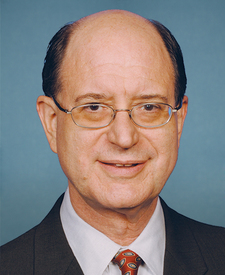
Sponsors



Legislative Progress
ReportedOrdered to be Reported by the Yeas and Nays: 41 …
Committee Consideration and Mark-up Session Held
Referred to the House Committee on Foreign Affairs.
Introduced in House
Ms. Johnson of Texas (for herself and Mrs. Biggs of …
Stakeholder Effects
cui bono?How this legislation distributes effects. Mention counts reflect frequency, not effect magnitude.
Developing country telecommunications users, PRC telecommunications firms, Russian standards advocates
Positive-direction: Developing country telecommunications users, U.S. telecommunications companies
Negative-direction: PRC telecommunications firms, Russian standards advocates
Congressional commerce committees, Congressional foreign affairs committees, DFC project finance staff
Positive-direction: Congressional commerce committees, Congressional foreign affairs committees
Negative-direction: DFC project finance staff, Secretary of State, State Department cyber diplomacy office, USTDA project staff
Allied technology vendors, U.S. AI firms, U.S. satellite firms
Bill Structure & Actor Mappings
Who is "The Secretary" in each section?
- "dfc"
- → International Development Finance Corporation
- "state"
- → Secretary of State
- "ustda"
- → United States Trade and Development Agency
- "ambassador"
- → Ambassador at Large for Cyberspace and Digital Policy
We use a combination of our own taxonomy and classification in addition to large language models to assess meaning and potential beneficiaries. High confidence means strong textual evidence. Always verify with the original bill text.
Learn more about our methodology