China Exchange Rate Accountability Act of 2026
Summary
What This Bill Does
The Exchange Rate Accountability Act of 2026 amends the Bretton Woods Agreements Act to create a U.S. review and opposition process for certain International Monetary Fund quota increases. At least seven days before consideration of a quota increase for a foreign IMF member that is one of the 10 largest IMF shareholders, the Treasury Secretary must report to House Financial Services and Senate Foreign Relations with a determination on three criteria. The member must not appear to have violated Article VIII obligations in the prior 12 months based on public data; must maintain transparent exchange-rate policies and practices and publish credible balance-of-payments data; and, if it recorded a current-account surplus, must not have persistently managed its exchange rate against the U.S. dollar to prevent effective balance-of-payments adjustment or gain unfair competitive advantage in international trade. If the member fails any criterion, Treasury must instruct the U.S. Governor of the IMF to use the voice and vote of the United States to oppose the quota increase. The President may waive the opposition requirement by reporting to Congress that the waiver is important to the U.S. national interest and explaining why. The bill clarifies that quota proposal consideration does not include consent to an authorized amendment to the IMF Articles of Agreement and sunsets the section after seven years.
Who Benefits and How
Congressional financial-services and foreign-relations committees benefit from advance Treasury reports on IMF quota increases for major shareholders. U.S. manufacturers and exporters benefit if the United States opposes quota increases for countries that manipulate exchange rates or publish unreliable external data. Treasury international finance officials benefit from a statutory framework for evaluating exchange-rate and balance-of-payments criteria. U.S. trade enforcement advocates benefit from a tool linking IMF governance support to currency and trade behavior. IMF transparency advocates benefit from stronger incentives for major shareholders to publish credible balance-of-payments data. The U.S. IMF Governor benefits from clear voting instructions when criteria fail.
Who Bears the Burden and How
The Treasury Secretary must prepare determinations at least seven days before covered quota proposals and instruct opposition when criteria fail. Major IMF shareholders seeking quota increases face scrutiny over Article VIII compliance, exchange-rate transparency, balance-of-payments data, and current-account surplus behavior. The U.S. IMF Governor must oppose covered quota increases when Treasury determines a failure and no waiver applies. The President must justify any national-interest waiver to Congress. IMF staff and member governments may face delays or opposition in quota negotiations. Countries accused of unfair exchange-rate management may face reputational and governance costs.
Key Provisions
- Requires Treasury reports before IMF quota increases for top-10 IMF shareholders.
- Requires determinations on Article VIII compliance, exchange-rate transparency, credible balance-of-payments data, and exchange-rate management for trade advantage.
- Directs the U.S. IMF Governor to oppose quota increases when a covered member fails any criterion.
- Allows a presidential national-interest waiver with a report to Congress.
- Clarifies proposal consideration and sunsets the section after seven years.
Evidence Chain:
This summary is generated from the full bill text using AI analysis. Expand "Detailed Analysis" below for identified beneficiaries/burden bearers with clause-level evidence links.
At a Glance
What This Bill Does
Requires the Treasury Secretary at least seven days before IMF quota-increase consideration for any top-10 IMF shareholder to report to Congress whether the member complied with Article VIII obligations, maintains transparent exchange-rate practices, publishes credible balance-of-payments data, and has not persistently managed its exchange rate against the U.S. dollar to prevent balance-of-payments adjustment or gain unfair trade advantage; if the member fails any criterion, Treasury must instruct the U.S. IMF Governor to oppose the quota increase unless the President reports a national-interest waiver, and the section sunsets after seven years.
Key Policy Areas
International Finance, Trade, Treasury, IMF
Primary Purpose
Requires the Treasury Secretary at least seven days before IMF quota-increase consideration for any top-10 IMF shareholder to report to Congress whether the member complied with Article VIII obligations, maintains transparent exchange-rate practices, publishes credible balance-of-payments data, and has not persistently managed its exchange rate against the U.S. dollar to prevent balance-of-payments adjustment or gain unfair trade advantage; if the member fails any criterion, Treasury must instruct the U.S. IMF Governor to oppose the quota increase unless the President reports a national-interest waiver, and the section sunsets after seven years.
Policy Domains
House resolution provisions
Identified Gains
- Congressional financial services committees
- Congressional foreign relations committees
- U.S. manufacturers
- U.S. exporters
- Treasury international finance officials
- Trade enforcement advocates
- IMF transparency advocates
Identified Costs
- Treasury Secretary
- Major IMF shareholders seeking quota increases
- United States IMF Governor
- President of the United States
- IMF staff
- Countries accused of currency management
Sponsors
Legislative Progress
ReportedReported with amendments, committed to the Committee of the Whole …
Ordered to be Reported by the Yeas and Nays: 32 …
Committee Consideration and Mark-up Session Held
Referred to the House Committee on Financial Services.
Introduced in House
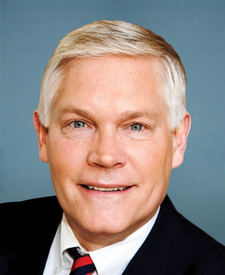
Mr. Sessions introduced the following bill; which was referred to …
Stakeholder Effects
cui bono?How this legislation distributes effects. Mention counts reflect frequency, not effect magnitude.
Congressional financial services committees, Treasury international finance officials, United States IMF Governor
Positive-direction: Congressional financial services committees
Negative-direction: Treasury international finance officials, United States IMF Governor
Countries accused of currency management, Major IMF shareholders seeking quota increases
Bill Structure & Actor Mappings
Who is "The Secretary" in each section?
- "governor"
- → United States Governor of the International Monetary Fund
- "treasury"
- → Secretary of the Treasury
- "president"
- → President of the United States
We use a combination of our own taxonomy and classification in addition to large language models to assess meaning and potential beneficiaries. High confidence means strong textual evidence. Always verify with the original bill text.
Learn more about our methodology