Strengthening Export Controls Compliance Act
Summary
What This Bill Does
The Strengthening Export Controls Compliance Act updates Export Control Reform Act compliance-assistance duties. Congress finds that Commerce must help U.S. persons comply with export controls, keep the public apprised of policy and regulatory changes, assist small and medium-sized businesses, and provide guidance through the BIS annual update conference. The bill replaces section 1757(c) with a requirement that the President submit a plan every two years to help U.S. persons, especially small and medium-sized U.S. businesses, with export licensing and other ECRA processes. The plan should include Commerce counseling on applications and controlled-item identification, virtual and in-person trainings, seminars, conferences, compliance-plan review, license-condition follow-up, and company-specific consultations. The Commerce Secretary must host an annual Update Conference on Export Controls and Policy, list it on the BIS website, and open it to the general public. Before major new rules, BIS must conduct dedicated public and industry outreach explaining the rule's intent and implementation to strengthen compliance. The bill also amends the annual ECRA report to require information on advisory opinion and commodity classification requests, including requests submitted, opinions or classifications issued, average processing times, and redacted advisory opinions of general applicability posted.
Who Benefits and How
Small and medium-sized exporters benefit from counseling, trainings, seminars, compliance-plan review, and company-specific consultations. U.S. businesses subject to export controls benefit from dedicated outreach before major rules and annual public conference access. BIS outreach staff benefit from a statutory plan and conference framework for compliance assistance. Trade compliance officers benefit from more information on advisory opinions, commodity classifications, and processing times. Congressional export-control committees benefit from more detailed annual reporting. Export-control attorneys benefit from redacted advisory opinions of general applicability and clearer public guidance.
Who Bears the Burden and How
The President and Commerce Department must prepare a biennial industry outreach plan. BIS compliance-assistance staff must provide counseling, trainings, seminars, conference access, rule-specific outreach, compliance-plan review, and license-condition follow-up. BIS report writers must add advisory opinion and commodity classification metrics to the annual report. Exporters requesting advisory opinions or classifications may face more transparent processing statistics. Federal budget managers may need to support expanded outreach. BIS website administrators must list the annual conference and post redacted advisory opinions when applicable.
Key Provisions
- Requires a biennial industry outreach plan for export licensing and compliance assistance.
- Directs Commerce counseling, trainings, seminars, conferences, compliance-plan review, license-condition follow-up, and company-specific consultations.
- Requires an annual public Update Conference on Export Controls and Policy listed on the BIS website.
- Requires dedicated public and industry outreach before major new export-control rules.
- Adds advisory opinion and commodity classification request counts, issuance counts, processing times, and posted redacted opinions to the annual ECRA report.
Evidence Chain:
This summary is generated from the full bill text using AI analysis. Expand "Detailed Analysis" below for identified beneficiaries/burden bearers with clause-level evidence links.
At a Glance
What This Bill Does
Requires the President every two years to submit an export-control industry outreach plan focused especially on small and medium-sized U.S. businesses, directs Commerce counseling, virtual and in-person training, compliance-plan review, license-condition follow-up, and company-specific consultations, requires BIS to host an annual Update Conference on Export Controls and Policy open to the public, requires dedicated outreach before major new export-control rules, and expands the annual Export Control Reform Act report to include advisory opinion and commodity classification request counts, issuance counts, processing times, and redacted opinions posted.
Key Policy Areas
Export Controls, Compliance Assistance, Small Business, Trade
Primary Purpose
Requires the President every two years to submit an export-control industry outreach plan focused especially on small and medium-sized U.S. businesses, directs Commerce counseling, virtual and in-person training, compliance-plan review, license-condition follow-up, and company-specific consultations, requires BIS to host an annual Update Conference on Export Controls and Policy open to the public, requires dedicated outreach before major new export-control rules, and expands the annual Export Control Reform Act report to include advisory opinion and commodity classification request counts, issuance counts, processing times, and redacted opinions posted.
Policy Domains
House resolution provisions
Identified Gains
- Small exporters
- Medium sized exporters
- U.S. businesses subject to export controls
- BIS outreach staff
- Trade compliance officers
- Congressional export control committees
- Export control attorneys
Identified Costs
- President of the United States
- Commerce Department
- BIS compliance assistance staff
- BIS report writers
- Exporters requesting advisory opinions
- Federal budget managers
- BIS website administrators
Sponsors


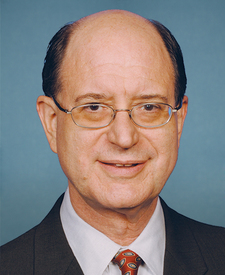
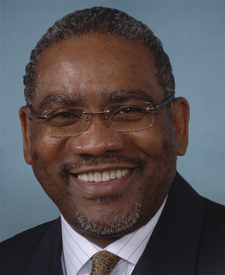

Legislative Progress
ReportedOrdered to be Reported by the Yeas and Nays: 39 …
Committee Consideration and Mark-up Session Held
Referred to the House Committee on Foreign Affairs.
Introduced in House
Mr. Amo (for himself and Mr. Shreve) introduced the following …
Stakeholder Effects
cui bono?How this legislation distributes effects. Mention counts reflect frequency, not effect magnitude.
Exporters requesting advisory opinions, Medium sized exporters, Small exporters
BIS compliance assistance staff, BIS report writers, BIS website administrators
Positive-direction: Congressional export control committees
Negative-direction: BIS compliance assistance staff, BIS report writers, BIS website administrators
Bill Structure & Actor Mappings
Who is "The Secretary" in each section?
- "bis"
- → BIS compliance assistance staff
- "commerce"
- → Department of Commerce
- "president"
- → President of the United States
We use a combination of our own taxonomy and classification in addition to large language models to assess meaning and potential beneficiaries. High confidence means strong textual evidence. Always verify with the original bill text.
Learn more about our methodology